Imperial-Era Cuba and the Caribbean, 94 Albumen Photographs Documenting American Tourism, Colonial Culture, Horse-Drawn Transportation, and Caribbean Local Life, circa 1905
Photograph
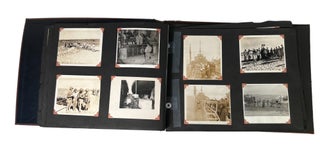
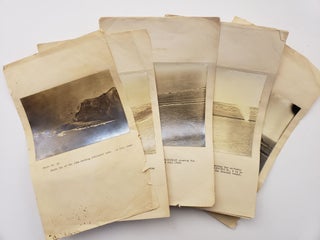
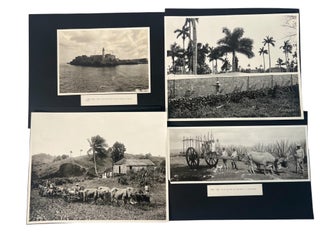
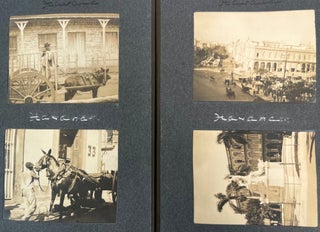
An extensive early twentieth-century photographic album documenting American tourists traveling from Miami through Cuba and the Caribbean, circa 1905, during the expansion of United States political and commercial influence throughout the region. Particularly significant are the photographs of Havana and Matanzas in the years immediately following the Spanish-American War of 1898, when Spain relinquished control of Cuba and the United States occupied the island until 1902. Although Cuba achieved formal independence, the Platt Amendment of 1901 preserved American rights of intervention, placing the photographs within a formative period of American imperial influence in the Caribbean. The album captures this changing political landscape through historic Spanish colonial fortifications, monumental architecture, bridges, and commercial streets navigated by horse drawn carriages, while documenting local labor alongside the emergence of American tourism. The itinerary also extends through British and Danish colonial territories, documenting a Caribbean region still divided among competing European imperial powers.Photo album containing 94 albumen photographs, all approximately 4.5 x 3.5 inches, mounted on black album leaves with handwritten geographical captions, circa 1905. The Cuban photographs include substantial views of Havana's historic Morro Castle and lighthouse, the elaborate Baroque architecture of Havana Cathedral, and the Fuente de la India, an 1837 marble monument depicting an allegorical Indigenous woman. Particularly engaging photographs document horse-drawn carriages, local drivers handling harnessed animals, cobblestone streets, and crowded commercial districts, including a storefront advertising "El Casino. Sombrerería" and "Camisería de C. Hermida." Photographs captioned "Matanzas" include waterfront buildings, a substantial iron truss bridge carrying animal-drawn traffic, and public monuments, including a view of the city's civic square apparently predating the installation of its José Martí monument in 1909. The Camagüey photographs document colonial buildings, ox-drawn agricultural wagons, and residential streets. The wider Caribbean sequence includes the Berkeley Memorial clock in St. Kitts, erected in 1883, and the British imperial lion carved at Gun Hill, Barbados, in 1868, upon which American visitors pose for photographs. Particularly significant are photographs of an American couple traveling in a small animal-drawn carriage accompanied by a Black local man, connecting the development of Caribbean tourism to the labor of local residents. Additional photographs document a working steam locomotive and passenger carriage of the Barbados Railway, sugar-era windmills, churches, coastal settlements, and tropical landscapes. Handwritten geographical captions further identify St. Thomas, St. Croix, Dominica, La Guaira in Venezuela, Mount Pelée in Martinique, and Miami, where formally dressed American travelers pose amid the gardens and substantial resort architecture of the city's early development.
The photographs provide valuable documentation of American leisure travel alongside the political and social structures of the colonial Caribbean. Views of St. Thomas and St. Croix preserve the Danish West Indies before their transfer to the United States in 1917, while the monumental lion at Gun Hill offers a particularly striking example of British imperial symbolism incorporated into the experience of visiting tourists. Equally significant are the contrasts between wealthy American travelers in formal Edwardian clothing and Black Caribbean residents engaged in transportation, provisioning, and agricultural labor. The photographs of working railways, iron bridges, and animal-drawn vehicles document transportation networks connecting Caribbean ports, inland communities, and agricultural districts during the early twentieth century. Photographs exhibit occasional toning and fading, with minor handling wear to the album leaves. Overall in very good condition.
Item #23994
Price: $980.00
See all items in Imperialism & Colonialism, World Culture & Travel, Transportation Systems, Caribbean
See all items in International & Global Culture, Labor, Environment & Industry, World History by Geography
Suggested Transportation SystemsBrowse All



Suggested CaribbeanBrowse All



Suggested World History by GeographyBrowse All