Panama Canal Construction Photo Archive Documenting Indigenous and Afro Caribbean Life During Early U.S. Excavation Efforts
Photograph
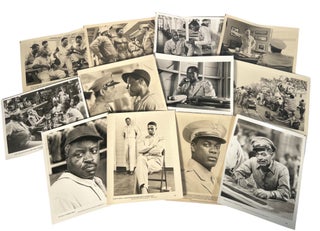
Archive of 35 original photographs documenting the construction environment of the Panama Canal alongside the daily lives of Indigenous and Afro-Caribbean Panamanian communities during the transitional period between the failed French canal enterprise and the establishment of sustained American engineering operations in the early twentieth century. The photographs record one of the largest infrastructure projects in modern history while simultaneously preserving visual evidence of the social and racial realities surrounding canal construction in Panama. The material documents canal excavation systems and colonial labor hierarchies through photographs of dredging operations, excavation zones, maritime transport, military personnel, and local communities, revealing how industrial expansion and U.S. imperial presence transformed both the landscape and population of the canal corridor. At the same time, the archive provides important documentary evidence of Indigenous and Afro-Caribbean life largely absent from official engineering narratives of the canal.Archive consists of 35 original silver gelatin photographs ranging in size from approximately 3 x 4 inches to 8 x 10 inches, most mounted on black paper album leaves, with three larger separately captioned prints. The photographs depict excavation sites, dredging machinery, rail systems, canal embankments, steamships, barges, and early lock construction associated with the Panama Canal project. Two landscape views document the Culebra Cut, later renamed the Gaillard Cut, showing steep excavation walls and exposed earthworks in one of the most dangerous and labor-intensive sectors of the canal. Maritime photographs portray vessels anchored near jungle shorelines and construction zones, emphasizing the interconnection of shipping and excavation infrastructure. Numerous images focus on local Panamanian communities and river life, including men navigating dugout canoes through densely vegetated waterways, women and children gathered at riverbanks washing clothing, children posed informally outdoors, and larger community groups photographed in traditional dress. One image depicts a hunter displaying and roasting a wild animal over an open fire. Additional photographs show American naval personnel aboard ship and canal officials surveying terrain near construction areas. Several photographs visually juxtapose Indigenous or Afro-Caribbean laborers with American personnel, preserving evidence of the racial stratification embedded within canal construction and administration during the period of expanding U.S. control in Panama.
The archive captures Panama during a period of profound geopolitical and environmental transformation as the canal became central to American strategic and commercial expansion in Latin America following the separation of Panama from Colombia in 1903. While official canal photography often emphasized engineering achievement and technological progress, these vernacular photographs preserve the broader human environment surrounding the project, including the communities displaced, employed, or reshaped by transisthmian construction. The images of Indigenous and Afro-Caribbean Panamanians are particularly significant for documenting everyday life and labor conditions within the canal zone during the emergence of American colonial administration and segregated labor systems. Minor sunning and occasional curling to several larger photographs; album leaves show expected age wear, while images remain clear and well preserved overall. Very good condition. A visually rich and historically layered archive documenting the intersection of infrastructure, imperial expansion, labor, and local life during the construction of the Panama Canal.
Item #22021
Price: $650.00
See all items in World Indigenous Peoples, Mexico, South & Central America
See all items in Chicano & Latin American History, Indigenous Peoples, International & Global Culture, Photography, Archive
See all items by Indigenous Afro-Caribbean Panamanian
See all items in Caribbean
Suggested Mexico, South & Central AmericaBrowse All


Suggested World Indigenous PeoplesBrowse All





Suggested International & Global CultureBrowse All




Suggested PhotographyBrowse All