World War I Era Havana Photographs Showing Rural Cuban Life, Harbor Views, and American Military Presence
Photograph
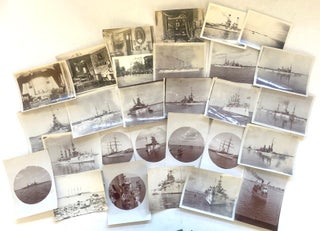
Polk, George Washington Jr., Havana and rural Cuba photo archive, 1915, documents Cuba through the viewpoint of an American military traveler during the Platt Amendment era, when U.S. power shaped Cuban sovereignty, port security, naval access, and commercial movement. The photographs record ships in Havana Harbor, coastal fortifications, rural dwellings, Cuban farmers, agricultural landscapes, and colonial plazas, providing insight into how U.S. military personnel visually encountered Cuba just before American entry into World War I. The Platt Amendment gave the United States broad authority to intervene in Cuban affairs and required Cuba to lease land for naval stations, remaining central to U.S.-Cuba relations until its repeal in 1934; this archive therefore places vernacular travel photography within a larger framework of military oversight and commercial access.Polk, George Washington Jr. Havana, Cuba vernacular photo collection. Havana, Cuba: unpublished, December 1915. Twenty-eight silver gelatin photographs pasted to album pages, with some loose or partially detached, ranging from approximately 2 x 2½ inches to 4½ x 3½ inches, many with handwritten ink annotations dated December 22 to 29, 1915. The images include vessels anchored in Havana Harbor, harbor views from on board ship, Morro Castle and other coastal fortification views, colonial civic plazas, local laborers and civilians, thatched rural huts or bohíos, sugarcane fields, and agricultural scenes captioned “Orange Trees & Coconut Palms Near Havana.” One photograph is captioned “Cuban Farmer & Son Near Havana Dec 22, 1915,” giving the archive direct documentary value for rural family life and American observation of Cuban agricultural communities. Other captions identify boats as “U.S.C. 5th Protectors off Havana” and refer to the United Fruit Company steamer Abangarez on the Havana-Colon route; the Abangarez was a United Fruit Company passenger and cargo vessel completed in 1909 and later brought under United States registry during World War I.
The photographs combine military, commercial, and rural subjects in a compact record of U.S.-Cuban contact. Polk’s annotations and the repeated Potchernick-Birdsong Co. Kodak Place, San Antonio, Texas stamps on versos indicate that the images were developed in the United States after the trip or sent home for processing, preserving the path by which overseas military travel became a personal photographic record. Polk’s later military service is supported by burial and veterans’ records identifying George Washington Polk Jr. as born May 13, 1889, died July 27, 1976, and buried at Fort Rosecrans National Cemetery; the supplied description identifies him as later a Colonel in the U.S. Army Air Corps and instructor in the early U.S. Air Force. Most photographs lightly pasted along one edge to scrapbook leaves, with some detached or partially affixed; a few corner creases, otherwise sharp images with strong contrast, good to very good overall. Focused 1915 Cuba archive linking Havana Harbor, rural Cuban labor, vernacular architecture, United Fruit maritime movement, and American military observation during the U.S. protectorate period.
Item #22478
Price: $450.00
See all items in Caribbean, World War I
See all items in American History & Americana, International & Global Culture, Military & War, Photography
See all items by U S. Navy in Cuba
See all items in Caribbean; Texas
Suggested World War IBrowse All


Suggested CaribbeanBrowse All



Suggested Military & WarBrowse All


Suggested American History & AmericanaBrowse All