Manchuria Khingan Railway Expansion and Rural Life in Manchuria Photographs, 1903
Photograph
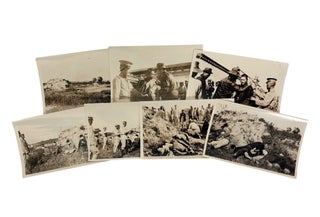
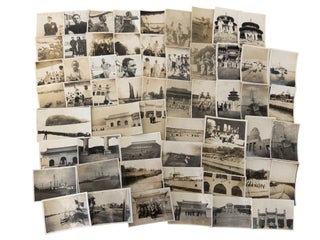
Chinese Eastern Railway and rural Manchuria photo archive depicting railway travel across Manchuria in 1903, documenting the rapid transformation of northeastern China into one of the most contested transportation corridors of the early twentieth century. Created only months before the outbreak of the Russo-Japanese War, the photographs record a landscape where imperial railway construction, traditional village life, and foreign travel briefly occupied the same space. The French captions identify the photographer as part of the growing community of European travelers who crossed northern China by rail during the final years of the Qing dynasty, when newly completed railway lines made regions previously reached only by caravan or river increasingly accessible.Photo archive of 7 silver gelatin photographs, ranging from approximately 3 x 4 to 4 x 6.25 inches, Manchuria and northern China, 1903. Most prints bear contemporary handwritten French captions identifying locations and events, including "Montée des monts Kingan," "Passage du Liao-Ho," "Attendant le train de secours," and "Scène champêtre au village de Che-San-Ling." The photographs show passenger trains winding through the forested slopes of the Khingan Mountains, travelers gathered beside railway tracks awaiting a rescue train, pedestrians crossing the Liao River by ferry, expansive mountain vistas viewed from the railway, a rural farming scene with villagers, pack animal, and harvested fields near Che-San-Ling, and a ceremonial procession led by musicians carrying traditional instruments and parasols while foreign uniformed soldiers in white tropical helmets march behind.
The photographs were made as Manchuria became the focal point of international competition following construction of the Chinese Eastern Railway between 1897 and 1903, a Russian-financed line that connected the Trans-Siberian Railway with Port Arthur and opened the interior of Manchuria to unprecedented commercial and military movement. By 1903 Russia's expanding railway presence and continued military occupation had become an international diplomatic crisis, with negotiations over withdrawal collapsing only months before war erupted with Japan in February 1904. These photographs preserve the region immediately before that transformation, showing railway travel functioning alongside agricultural villages, river crossings, and ceremonial life that had defined Manchuria long before foreign concessions arrived. The French captions also reflect the wave of French-speaking diplomats, missionaries, engineers, businessmen, and independent travelers who moved through China after the Boxer Rebellion, using the expanding railway network to record landscapes and communities that had only recently become accessible to European visitors. Light surface wear, minor edge wear, and expected age toning; several photographs mounted with original manuscript captions. Overall in very good condition. A visual record of railway expansion, cross-cultural travel, and everyday life in Manchuria at the moment the region stood on the threshold of the Russo-Japanese War.
Item #23640
Price: $885.00
See all items in Imperialism & Colonialism, Transportation Systems, Urban Development & Industrialization, Travel & Cultural Photography, China
See all items in International & Global Culture, Labor, Environment & Industry, Photography, World History by Geography
See all items by Khingan Railway Manchuria
See all items in China
Suggested Transportation SystemsBrowse All





Suggested ChinaBrowse All




Suggested PhotographyBrowse All
Suggested World History by GeographyBrowse All