Colonial Naval Surveillance in China Following the Boxer Uprising, 58 Photos, 1933-43
Photograph
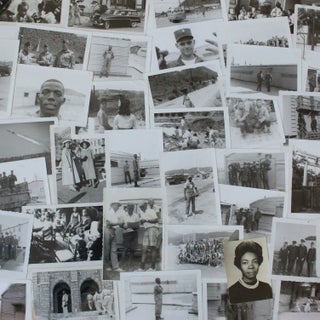
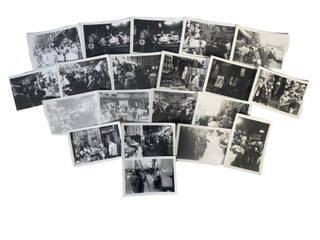
Colonial Italian Navy photo archive depicting sailors of the gunboat Lepanto in China, circa 1933 to 1943 documenting Italy's Tianjin concession, Italy's formal colonial territory in China, granted in 1901 following the Boxer Rebellion. It covered approximately half a square kilometer and was strategically located on the east bank of the Hai River. Tianjin concession was governed by an Italian military official and maintained its own police force and legal framework. the Italian Navy maintained a strategic presence in China with personnel and several vessels, including the gunboats Lepanto and Carlotto, to protect Italian concessions in Tianjin and Shanghai. Originally built as an Azio class minelayer, Lepanto reached Shanghai in 1933 and was reclassified as a gunboat in 1934 for coastal and Yangtze service protecting Italian citizens, missions, and treaty port interests. A United States Navy photograph places the vessel on the Whangpoo River at Shanghai during the mass evacuations of 1937, where foreign warships occupied the same congested waterway as refugee steamers and commercial traffic. The archive records this overseas station from the viewpoint of its sailors, moving between shipboard hierarchy, armed readiness, collective leisure, Chinese urban life, and monumental sites visited under naval escort.Photo archive of 58 silver gelatin photographs, ranging from 2" x 2" to 2" x 3.5", China, circa 1933 to 1943. The photographs show Lepanto moored in Chinese harbors; Italian sailors posed on deck, beside shipboard fittings, and beneath the motto “In hoc signo vinces”; officers addressing assembled crews; uniformed men gathered around deck guns; rifle practice on open ground; sailors carrying packs and weapons; and formal and informal portraits of ratings, petty officers, and decorated officers. Group photographs place sailors at the Temple of Heaven and before other Chinese ceremonial buildings, gates, monuments, and courtyards, while wider views record Shanghai and Tientsin waterfronts, docks, municipal architecture, Chinese junks, sampans, bridges, rail lines, and harbor shipping. Several images show Chinese residents at close range, including children, boatmen, laborers, and crowds encountered during shore leave; others depict shipboard entertainments, meals, athletic groups, relaxed deck scenes, and men photographed in work clothes apart from formal naval ceremony. The recurrence of the vessel, uniformed crews, weapons exercises, official gatherings, and organized excursions establishes the working structure of an Italian station ship rather than a general tourist itinerary.
Italy’s naval deployment in China descended from the foreign military privileges established after the Boxer Uprising, including the Italian concession at Tientsin and the maintenance of armed detachments, consular facilities, and river patrol vessels. Lepanto replaced the aging gunboat Sebastiano Caboto and spent a decade operating from Shanghai and along the Yangtze, using its shallow draft to reach places inaccessible to larger warships during years of civil conflict, Japanese expansion, and the Sino Japanese War. Following Italy’s armistice with the Allies, the crew scuttled Lepanto at Shanghai on September 9, 1943, to prevent seizure; Japan raised and recommissioned the vessel as Okitsu in 1944, and the Republic of China received it after Japan’s surrender, operating it as Hsien Ning. Light surface wear, toning, occasional creasing and minor edge wear; photos remain legible and mostly clean. Overall in very good condition. A detailed visual record of how an Italian gunboat crew carried naval authority, Fascist state ceremony, armed preparedness, and foreign privilege into the ports and public spaces of Republican China.
Item #23694
Price: $885.00
See all items in Imperialism & Colonialism, Imperialism & Colonialism, Military & War Photography, China
See all items in International & Global Culture, Military & War, Photography, World History by Geography
See all items by China Colonial Navy
See all items in China
Suggested ChinaBrowse All





Suggested PhotographyBrowse All




Suggested World History by GeographyBrowse All