

Indigenous Pacific Islanders Amid World War II: Photograph Album of Native Life, American Servicemen, and Devastated Island Landscapes, c. 1944
Photograph
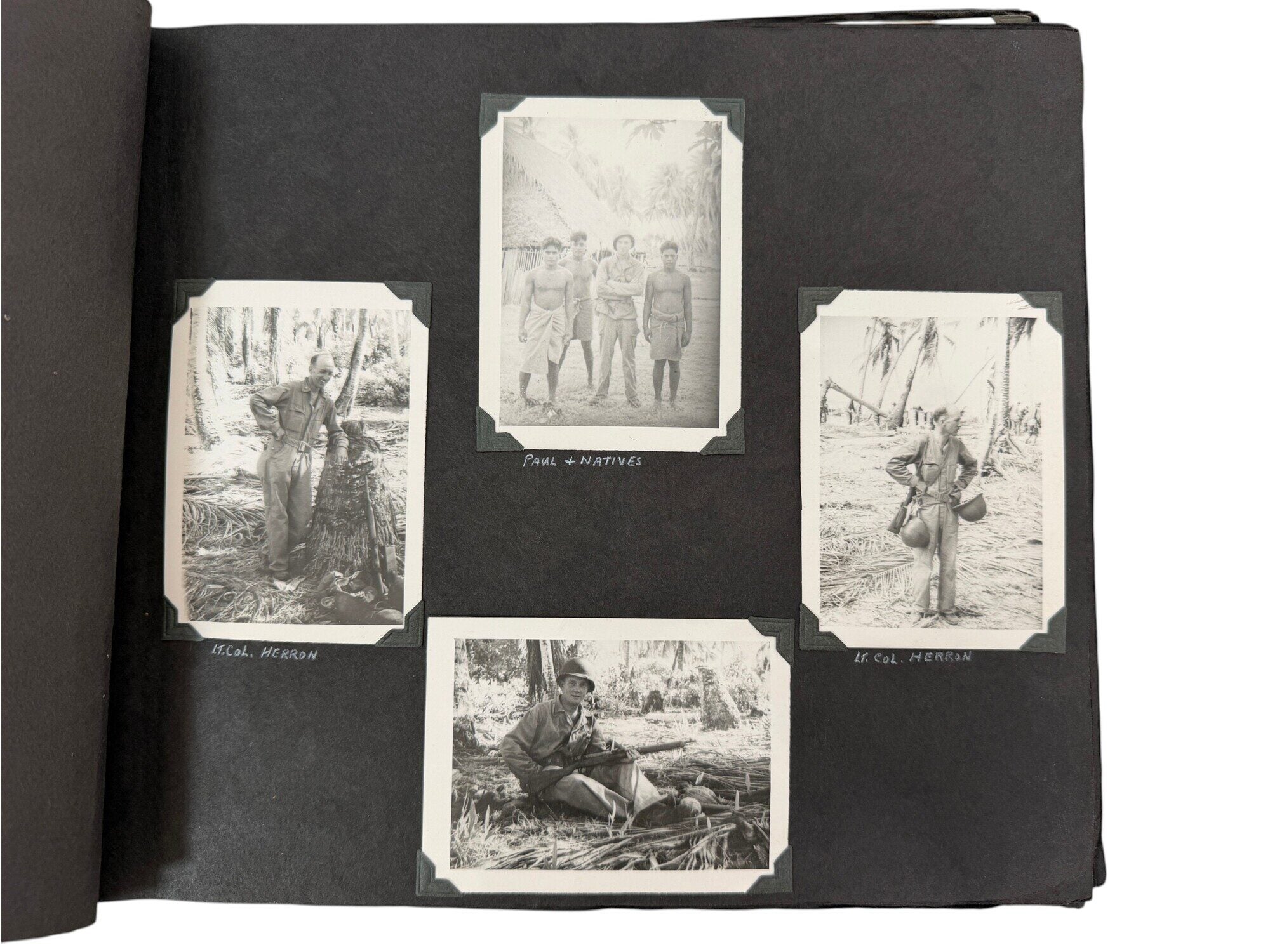
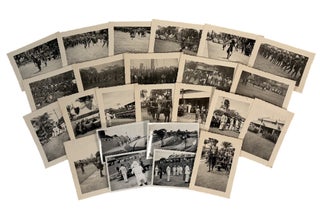
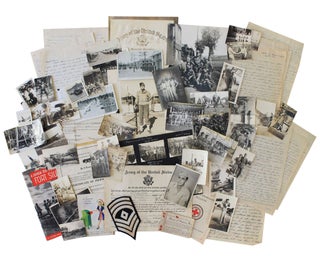
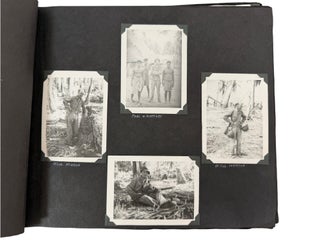
World War II photograph album documenting American military personnel amid devastated Pacific island landscapes, alongside photographs of Indigenous inhabitants and their settlements. Images of shattered defensive positions and makeshift encampments record the physical aftermath of island warfare, while portraits of local families preserve encounters between American servicemen and communities whose homelands became military objectives. The album brings battlefield destruction and civilian life into the same personal record.Album containing 106 pieces, comprising 103 silver gelatin photographs and three pieces of ephemera. Likely Gilbert or Marshall Islands. Photographs measure mostly 4 x 5 inches, mounted with corner mounts on black leaves; album measures 10½ x 12½ inches, with a “US Marine Corps” label on the opening page. Military views show servicemen beside captured Japanese weapons, a damaged tank, and concrete fortifications. Other photographs depict sandbagged positions, tents, and an American flag raised among stripped palm trees. Extensive views of craters and collapsed structures document the destruction of both built environments and tropical vegetation. Several photographs show bodies lying amid battlefield debris. Handwritten captions identify Japanese equipment, including a machine gun and a “3" Gun,” using the period derogatory abbreviation for Japanese.
Photographs of Indigenous islanders include women seated with children, groups gathered beneath coconut palms, and an American serviceman posing with local men. Views of thatched dwellings and a stone-lined well document aspects of settlement construction and water infrastructure. Captions such as “Native Girl” and “Paul & Natives” preserve the compiler’s generalized terminology while leaving the subjects’ names and community affiliations unrecorded. These photographs offer material for studying American representations of Pacific peoples and the proximity of civilian communities to military operations. The destruction pictured belongs to the broader context of the Allied advance across the Pacific, in which amphibious assaults secured islands for further military operations.
The three pieces of ephemera comprise a Japanese ten-yen banknote, a five-cent “Contractors Pacific Naval Air Bases / Wake Canteen” coupon, and an “Imperial Domain of the Golden Dragon” card dated 1944. The latter commemorates crossing the 180th meridian aboard a United States naval vessel, a customary unofficial recognition of Pacific passage. The Wake Island coupon is a collected artifact and does not by itself establish that the compiler served there. Album leaves show edge wear and occasional small tears; photographs exhibit scattered fading, minor creasing, and occasional marks. Overall very good condition. A substantial visual record for studying the material consequences of Pacific warfare and American servicemen’s encounters with Indigenous island communities.
Item #24101
Price: $550.00
See all items in World Indigenous Peoples, Imperialism & Colonialism, World Indigenous Peoples, World War II, Military & War Photography, Other (International)
See all items in Indigenous Peoples, International & Global Culture, Military & War, Photography, World History by Geography
See all items by Pacific Theater Indigenous Peoples
Suggested World War IIBrowse All



Suggested World Indigenous PeoplesBrowse All




Suggested Other (International)Browse All
Suggested Indigenous PeoplesBrowse All