South African Colonialism and Public Space in Muizenberg, Cape Town, 1942
Photograph
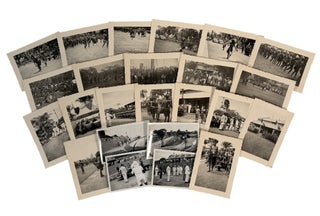
Unknown photographer, Muizenberg photo archive, 1942, documents a Cape Town seaside suburb during the late colonial period, before apartheid became formal state policy in 1948 but after generations of racial hierarchy had already shaped land, labor, movement, and public amenities in South Africa. The photographs record Muizenberg’s resort landscape through mountainside views, beachfront play areas, promenades, shopping streets, pedestrians, automobiles, and a street scene with Black locals, providing insight into how leisure infrastructure and everyday public space operated within a segregated colonial society. Muizenberg had earlier entered imperial history through the 1795 British campaign against the Dutch Cape Colony, and the extension of the railway to Muizenberg in the late nineteenth century helped turn it into a major seaside destination for Cape Town day-trippers and holiday visitors.Twelve black-and-white and sepia photographs, each approximately 3½ x 2½ inches, Muizenberg, Cape Town, South Africa, 1942. Several versos carry contemporary inscriptions locating and dating the views, including “Muizenberg / Sept. 1942.” Four bird’s-eye views look down from the mountainside across the gridded beachfront town to False Bay, surf lines, colonial-era buildings, roadways, and the beach, with one image including a man standing in the foreground. Three photographs center on a sandy beachfront playground with metal slides, swings, bathing boxes, nearby buildings, and parked automobiles. Other scenes show shopping plazas, pedestrians, motor traffic, shop signs, and theater signage in the commercial streets. The most socially pointed image shows primarily Black pedestrians crossing a street toward a small plaza; the photograph documents Black presence within the town’s public landscape, although the supplied evidence does not confirm that the specific site was formally segregated.
The archive’s value lies in its concise record of how colonial Muizenberg appeared on the ground during World War II: an ordered leisure suburb of beach facilities, automobile access, commercial streets, and elevated scenic viewpoints, alongside the less centered but visible presence of Black residents or workers in urban space. Its beach and town views are especially relevant to the study of South African public space before formal apartheid, when older colonial and municipal practices already structured access and visibility along racial lines. Minor wear, light curling, and contemporary inscriptions on several versos; overall very good. Focused Cape Town photo archive preserving Muizenberg’s wartime resort environment, from False Bay overviews and beach recreation to the street-level setting in which colonial leisure and racial hierarchy coexisted.
Item #23233
Price: $485.00
See all items in World Indigenous Peoples, World Indigenous Peoples, Imperialism & Colonialism, Travel & Cultural Photography, Vernacular & Community Photography, Africa
See all items in Indigenous Peoples, International & Global Culture, Military & War, Photography, World History by Geography
See all items in South Africa, Africa
Suggested World Indigenous PeoplesBrowse All




Suggested AfricaBrowse All



Suggested PhotographyBrowse All





Suggested World History by GeographyBrowse All