World War II Segregated Black Troops in U.S. Occupation of Japan and the Philippines, Photograph Archive 1943-1946
Photograph
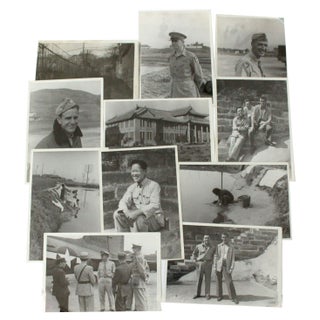
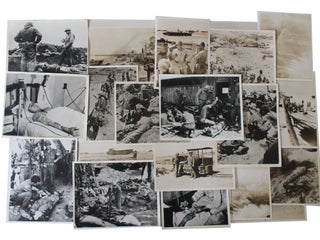
Photo archive documents the experiences of African American and white soldiers during and after World War II, with a particular focus on the postwar occupation of Japan and the Philippines. African American and white United States Army soldiers in occupied Japan and the Philippines appear throughout this World War II and immediate postwar photograph archive of 16 original photographs documenting the military presence established in Asia following Japan’s surrender in 1945. United States occupation forces entered Japan under the authority of the Allied command led by Douglas MacArthur, overseeing demilitarization, economic stabilization, and reconstruction of Japanese infrastructure. The photographs document American servicemen returning from deployment in the Pacific and participating in the early occupation environment, including logistical operations, military transport, and everyday life among U.S. troops stationed abroad. Several images specifically depict African American soldiers, providing visual evidence of Black military service during a transitional moment when the U.S. armed forces remained segregated yet were increasingly dependent on specialized technical personnel and logistical units supporting large occupation forces across Asia.Archive of 16 items consisting of 15 black and white silver gelatin photographs and one language manual documenting American military personnel in Japan, the Philippines, and the United States during and immediately after World War II. Photographs range in size from approximately 3.5 x 2 inches to 10 x 8 inches and include formal portraits, group images of soldiers disembarking from a military transport ship in San Francisco after returning from Asia, scenes of military activity in Japan, and documentation of damaged wartime infrastructure. One portrait shows an African American soldier in full uniform wearing a shoulder patch for the Japan Logistical Command, a unit responsible for supply distribution, transportation networks, and infrastructure support for American occupation forces in Japan. Another photograph depicts an African American soldier with technician rank insignia on his sleeve chevron, indicating a specialized technical role within the Army’s wartime ranking system. Informal photographs provide glimpses of daily life, including a soldier seated in a rickshaw with an inscription on the reverse reading, “This is what is used for a taxi over here, it's called a RICKSHAW. The guy in the seat is sometimes called a sgt. when they can think of nothing worse (Ha Ha).” Another image captures soldiers gathered outside a military barracks, while a photograph captioned “Shadow of C-54 falls upon Sons of the (Rising) Sun on arrival at Ie Shima, 20 August 1945, enroute to Manila” records the arrival of a U.S. transport aircraft shortly after the end of the Pacific war.
Japanese: A Guide to the Spoken Language. Washington: War Department, 1943. Issued to American military personnel preparing for operations in the Pacific, the manual reflects the practical linguistic training provided to soldiers expected to interact with Japanese civilians and local labor forces during military operations and the occupation period. The guide includes phonetic instruction and dialogues designed for rapid language acquisition. One instructional passage advises soldiers: “To learn to imitate the sounds of Japanese you should listen to the records at least six or seven times. The English will be given first, followed by the Japanese. Then repeat the Japanese out loud, and say it good and loud. Remember! Repeat every Japanese phrase right after you hear it.” Illustrated dialogue exercises show soldiers asking for directions in Japanese while another voice interjects, “Hey! Anybody here speak any English?” The photographs and language manual together illustrate everyday realities of U.S. military life in Asia during the transition from wartime operations to occupation governance following Japan’s surrender. Photographs exhibit minor edge wear and light creasing consistent with period handling. The language guide shows moderate handling wear with slight staining and creased pages but remains fully legible. Overall condition very good.
Item #21549
Price: $1,250.00
See all items in African American Military Service, Imperialism & Colonialism, Japan, South & Southeast Asia
See all items in African American History, Military & War, World History by Geography
See all items by U S. Army
See all items in Japan, Philippines
Suggested African American Military ServiceBrowse All



Suggested JapanBrowse All



Suggested African American HistoryBrowse All



Suggested World History by GeographyBrowse All