


Elementary Education Act Implementation in Rural Gloucestershire Documented Through Kemble School Archive, 1871–1904
Ephemera and pamphlets
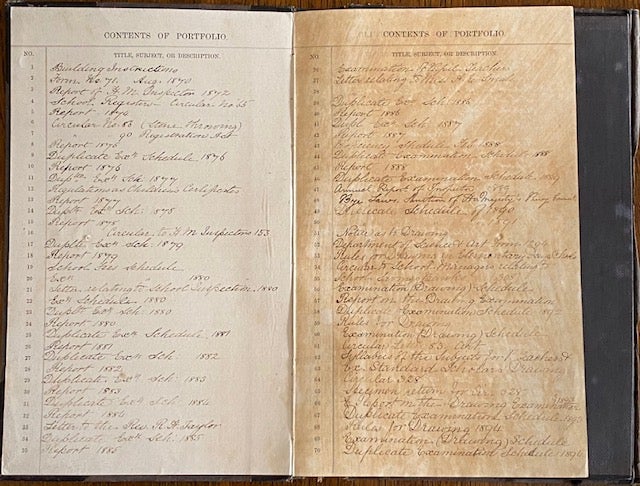
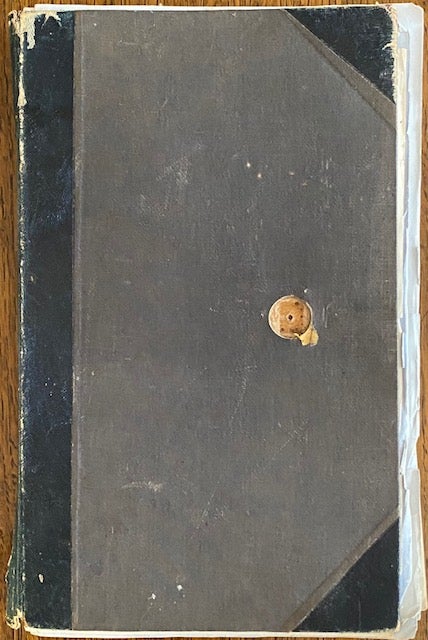
Kemble Parochial School. Record Book, 1871–1904, constitutes a sustained documentary record of rural English education during the formative decades following the Elementary Education Act of 1870, commonly known as the Forster Act. Established in direct response to this legislation, which mandated compulsory elementary education for children aged five to thirteen in England and Wales and instituted state oversight and inspection, Kemble Parochial School offers a continuous administrative record of how national educational reform was implemented at the parish level. The archive captures the practical realities of compulsory schooling: certification requirements for teachers, standardized curricula, state inspection protocols, and fluctuating rural enrollment. Through retained annual reports, official circulars, and examination schedules listing enrolled pupils by name, the collection documents the institutionalization of public elementary education and the negotiation between church authority and centralized state control in late nineteenth-century Gloucestershire.Kemble Parochial School. Record Book. Kemble, Cirencester, Gloucestershire, 1871–1904. Collection of over 100 documents on approximately 180 large legal-size leaves, many written on both sides. Unbound, housed in original protective black cloth boards. Comprises printed Circulars issued by the Education Department and handwritten retained copies of reports submitted by the school to government inspectors. The earliest document is a Circular of Instructions and Rules for school construction. Annual reports by Principal A. G. W. Wilts begin in 1872, describing an initial enrollment of eighteen pupils taught by headmistress Ms. Hopkinson in inadequate premises pending completion of a new schoolroom and teacher’s residence. Reports track enrollment growth to forty-nine by 1875 and approximately eighty by the late 1890s, alongside repeated references to inspection standards, deficiencies in arithmetic and mandated needlework instruction, and the ongoing struggle of successive teachers to secure formal certification. A handwritten 1880 letter from Rev. R. H. Taylor questions whether the school qualifies as a public elementary school under Section VII of the 1870 Act, reflecting denominational tensions surrounding state inspection. Education Department circulars further illuminate social concerns of the period, including notices warning teachers to deter pupils from damaging telegraph wire insulators, with penalties described as imprisonment and flogging.
Spanning more than three decades, the archive documents the transformation from informal parish instruction to standardized, state-supervised education embedded within a national bureaucratic framework. The records illuminate rural responses to compulsory attendance, clerical apprehension over non-denominational governance, and the administrative burden placed on small village schools adapting to inspection regimes and credentialing requirements. Enrollment decline to three pupils by 1904 underscores demographic and institutional shifts at the turn of the century. Large sheets of blue and white paper, generally clear and legible; occasional dog-earing; a few corner losses from minor chewing; most leaves complete and intact. Overall very good condition. A remarkably complete parish-level archive preserving the lived implementation of the Elementary Education Act and the restructuring of English public education in the late nineteenth century.
Item #16092
Price: $1,850.00
See all items in Women’s Education
See all items in Law, Incarceration & Public Policy, Women’s History & Feminism, Archive
See all items by Kemble Parochial
See all items in England
Suggested Women’s EducationBrowse All


Suggested Women’s History & FeminismBrowse All





Suggested Law, Incarceration & Public PolicyBrowse All




Suggested ArchiveBrowse All


