Postwar Women's Factory Labor and Apparel Production Photo Archive, circa 1950s
Photograph
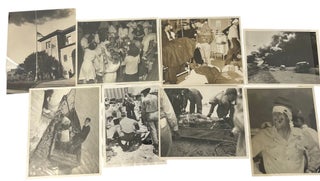
Garment factory photographs documenting women’s industrial sewing labor, machine based apparel production, and managerial oversight in the postwar United States, circa 1950s, with direct evidence of how mass clothing manufacture depended on large sewing rooms, specialized equipment, and gendered factory work. Archive documents the production floor as a working system rather than a single portrait scene, placing rows of women at Pfaff machines beside piles of cut or partly finished garments, while a separate executive portrait and staged equipment views link shop floor labor to administration and industrial sales culture. The group matters because postwar clothing production relied heavily on women’s wage labor in factories where speed, repetition, and machine specialization turned fabric into standardized output for a growing consumer economy.Photo archive of 5 Large silver gelatin photographs, each 8" x 10", circa 1950s. Two photographs show the main sewing room from wider angles, with long rows of women seated at machine stations beneath suspended electric lines and task lighting, while large heaps of striped fabric or finished garments spill across tables and benches in the foreground. The workers are positioned close together in a dense production space organized around straight runs of tables and sewing heads, with little separation between labor stations and material flow. One photograph isolates a woman operating a large Pfaff industrial unit in a cleaner demonstration setting, while another gives a close technical view of a Pfaff machine head and work plate. A fifth photograph shows an older male executive or manager seated in an office.
Postwar apparel production expanded through factories that combined assembly line logic with skilled but repetitive needlework, and women formed a large share of that labor force in garment plants across the United States. The Pfaff machines represent the technological side of production, while the sewing room views show the human structure that made the machines profitable with women handling fabric continuously at closely arranged stations under managerial control. Light handling wear and minor curling to edges. Overall very good condition. The archive preserves the relationship between labor, machinery, and output at a moment when industrial clothing manufacture still depended on concentrated factory work before later shifts toward overseas production transformed the industry.
Item #23326
Price: $480.00
See all items in Industrialization, Manufacturing, and Infrastructure, Labor & Labor Movements, Documentary & Press Photography, Women’s Labor & Employment
See all items in Labor, Environment & Industry, Photography, Women’s History & Feminism
See all items by Women's Factory Labor
Suggested Industrialization, Manufacturing, and InfrastructureBrowse All





Suggested PhotographyBrowse All