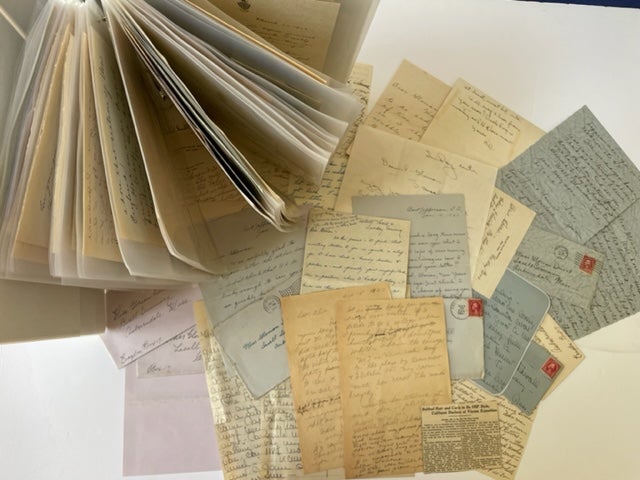
Women's Education and Social Life Archive at Lasell Seminary School, 1926–1927
Archive
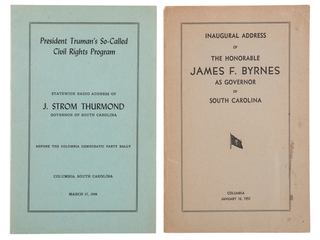
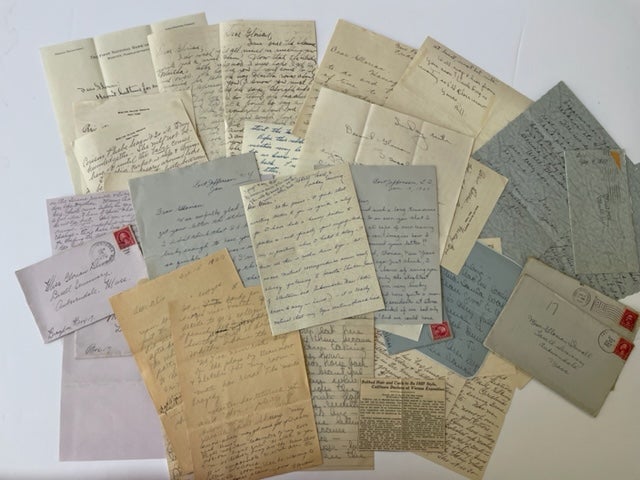
Large archive of personal correspondence (1926–1927) documenting the student years of Glorian Duvall Devereux of Shelter Island, New York, offers concentrated evidence of women’s finishing-school education, courtship, and upper- and middle-class white youth culture immediately preceding the Great Depression. Created during Devereux’s enrollment at Lasell Seminary School in Newton, Massachusetts, the letters record the lived experience of a women’s seminary founded in 1851 to educate socially established young women within carefully supervised moral and social boundaries. Correspondence from female classmates and friends and from numerous male admirers across Pennsylvania, Arizona, Georgia, New York, Massachusetts, Maryland, Ohio, South Carolina, and Connecticut forms a geographically wide but socially cohesive network. The archive provides name-level documentation of how femininity, respectability, mobility, and heterosexual pairing were negotiated within the institutional structure of a New England finishing school during the late Jazz Age.Archive comprises approximately 175 handwritten and typed letters addressed to Glorian Duvall Devereux, dating from 1926 to 1927, accompanied by two small photographs, one Valentine, several business cards, and two pamphlets. Letters are written on personal and collegiate stationery and postmarked from multiple states, reflecting an interregional social circle tied to collegiate and fraternity life as well as to women’s seminary education. Content centers on daily routine, academic life, social restrictions, romantic attachment, jealousy, fraternity culture, and anxieties about reputation. Devereux refers to Lasell ironically as the “cemetery,” language echoed by correspondents who contrast her regulated environment with male collegiate autonomy. One Amherst fraternity member describes Lasell’s institutional goal of producing “model and educated ladies” while recounting fraternity hazing practices, underscoring asymmetrical gender expectations. Female correspondents express reluctance about returning to school and frustration with confinement, while male writers assert emotional initiative and social mobility. Together the materials document gendered performance, courtship etiquette, and the social vocabulary of privilege among white American youth in the final years of national economic expansion.
Produced two years before the financial collapse of 1929, the archive preserves the assumptions of stability and class continuity that characterized elite youth culture on the eve of economic dislocation. The letters situate women’s education within broader systems of surveillance, marriage expectation, and family reputation that structured inter war gender formation. The enclosed photographs and ephemera deepen the evidentiary value of the correspondence by linking text to image and material culture. Moderate age toning throughout; occasional small edge tears from opening; folds and minor creases consistent with mailing; photographs with light silvering at edges but images remain clear; pamphlets lightly worn at extremities. Overall very good condition. A cohesive and substantial body of primary material documenting institutional women’s education, regional courtship networks, and gendered social constraint in the final years before the Great Depression reshaped American youth culture and class security.
Item #15263
Price: $1,250.00
See all items in New York, Women’s Education
See all items in American History by State, Women’s History & Feminism, Archive, Autographs, Manuscripts & Letters
See all items by Female Student Letter Archive
See all items in Massachusetts, New York
Suggested Women’s EducationBrowse All



Suggested New YorkBrowse All




Suggested ArchiveBrowse All




Suggested American History by StateBrowse All