Gay Sunshine Newspaper Archive Documenting Radical Gay Liberation Politics and Queer Literary Culture, 1972–1977
Archive
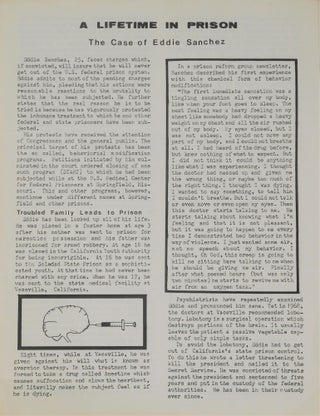
Archive of Gay Sunshine issues documenting systems of post-Stonewall gay liberation organizing, radical queer publishing, and underground LGBTQ cultural production during the 1970s. The material documents how activists, writers, and liberation collectives used independent print networks to coordinate political critique, circulate prisoner testimony, challenge police violence, and construct alternative queer intellectual communities outside mainstream media institutions. Founded in San Francisco in 1970 by Winston Leyland and figures associated with the Gay Liberation Front, Gay Sunshine functioned as both a political newspaper and later a literary journal, revealing the mechanisms through which radical gay activists debated assimilation, organized direct action campaigns, amplified incarcerated voices, and developed a transnational queer literary culture. The archive provides primary-source evidence for the study of post-Stonewall liberation politics, queer anti-carceral activism, underground press history, and the emergence of gay literary publishing in the United States.Archive consists of seven issues of Gay Sunshine published between 1972 and 1977, printed on tabloid-format newsprint or journal stock and issued folded as published. [1] Gay Sunshine No. 11 (February/March 1972). Cover photograph depicts protestors carrying signs including “Gay Revolution Now” and “S.I.R. Does Not Speak for All Gays.” Includes “Gays Zap SIR,” documenting confrontations between liberation activists and the more conservative Society for Individual Rights over legislative strategy and movement leadership. [2] Gay Sunshine No. 12 (April 1972). Features cover artwork by Tom Bisset satirizing police authority. Includes “Gay Death at Vacaville,” addressing the death of prisoner Wesley Ashmore at the California Medical Facility alongside prisoner letters and accounts of institutional abuse and neglect. [3] Gay Sunshine No. 14 (August 1972). Cover art by Rink bearing the phrase “We Are All Fugitives,” continuing the publication’s focus on criminalization, surveillance, and social marginalization within queer life. [4] Gay Sunshine No. 15 (October/November 1972). Includes Winston Leyland’s memorial article “Movement Martyr: Ralph Schaffer (1928–1972)” commemorating the Los Angeles activist and anti-police organizer. Also features “The Metaphysics of Gay Liberation,” articulating a radical anti-assimilationist philosophy grounded in erotic politics and liberation theory. [5] Gay Sunshine No. 17 (March/April 1973). Literary-focused issue featuring an extended interview with poet John Wieners conducted by Charles Shively discussing Beat literary culture, Black Mountain College, sexuality, and poetic consciousness. [6] Gay Sunshine No. 18 (June/July 1973). Devoted substantially to poet Harold Norse, including discussion of queer literary networks, avant-garde writing, psychological struggle, and artistic survival, alongside contributions from Charles-Henri Ford. [7] Gay Sunshine No. 33/34 (Summer/Fall 1977). Expanded double issue in perfect-bound journal format featuring portraits of Tennessee Williams and Robin Maugham. Includes Winston Leyland’s major interview with Williams discussing censorship, queer identity, literature, and transvestism, reflecting the journal’s evolution into a major forum for gay intellectual and literary culture.
These issues document the transformation of queer radical publishing during the decade following Stonewall, moving from street-level protest journalism toward a broader intellectual and literary project while retaining commitments to anti-police activism, prison abolitionist critique, and liberation politics. Particularly significant is the publication’s sustained attention to incarcerated queer people, anti-assimilationist organizing, and experimental literary culture at a moment when mainstream gay institutions increasingly pursued electoral respectability and integrationist politics. The interviews with John Wieners, Harold Norse, and Tennessee Williams additionally preserve important testimony concerning twentieth-century queer literary networks and artistic self-fashioning. General toning, edgewear, occasional creasing, and minor chipping consistent with fragile newsprint production; issues No. 12 and No. 15 with loss at lower left corners. Overall good to very good condition. A foundational archive of radical gay liberation publishing and early post-Stonewall queer intellectual life.
Item #21820
Price: $450.00
See all items in California, Gay Liberation & Activism, LGBTQ+ Media & Popular Culture, Gay Liberation & Activism, Social Activism
See all items in American History by State, LGBTQ+ History, Social Activism & Protest, Archive
See all items by Gay Sunshine
See all items in California
Suggested Social ActivismBrowse All




Suggested CaliforniaBrowse All


Suggested LGBTQ+ HistoryBrowse All


Suggested ArchiveBrowse All