Fifth Massachusetts Infantry on the Texas and Mexican Border During the Punitive Expedition, 56 Photographs, 1916-1918
Photograph
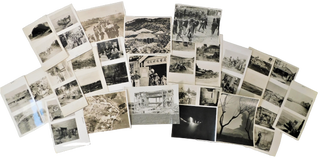
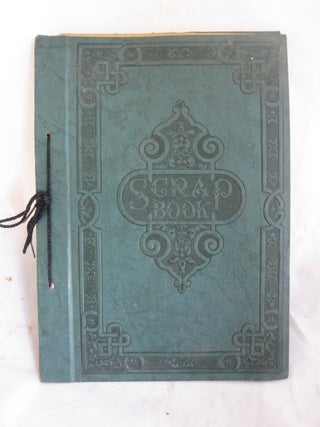
Fifth Massachusetts Infantry Mexican Border photo and ephemera archive, 1916 to 1917, documenting the mobilization, encampment, training, movement, and social organization of a Massachusetts National Guard regiment sent to the Southwest during the crisis surrounding Pancho Villa and the U.S. Punitive Expedition into Mexico. President Woodrow Wilson called National Guard units into federal service in June 1916 after Villa’s March attack on Columbus, New Mexico and Brigadier General John J. Pershing’s subsequent advance into Mexico; by the end of the campaign, most of the National Guard had been federalized and concentrated along the border. The Fifth Massachusetts Infantry was among the state organizations serving in the El Paso region, contemporary reports identifying its soldiers among the thousands of militiamen stationed there, while individual companies also operated from points including Las Cruces. The photographs and accompanying papers record that mobilization from inside the regiment, identifying officers and enlisted men, mapping camps and patrol country, recording the material organization of military life, and preserving the correspondence and commemorative culture that connected service on the border to home.Disbound album archive of 56 silver gelatin photographs and 13 pieces of ephemera, including a piece of Texas cotton and a "Mexican cigarette," handwritten letters and verse, newspaper clippings, and a First Annual Dinner handout for the Fifth Massachusetts Infantry; photographs approximately 3 x 4.75 inches and album leaves approximately 5.5 x 7.25 inches, principally Texas and New Mexico, 1916 to 1917. Many photographs carry handwritten captions identifying people, locations, and events. A regimental band poses with cornets, horns, drums, and other instruments, the large bass drum lettered “Fifth Massachusetts Infantry Boston”; a lineup of five uniformed men before wooden camp buildings is identified as “Sergt. Maj. Gamble; Maj. Thomas; Sergt. Peters; Sergt. Murphy; Sergt. Bugler Ray.” Individual portraits identify “Francis Smith” and “Chaplain Rollins" among others, while other photographs record color guards, soldiers with rifles, mounted men, trucks and military transport, tent streets, inspections, camp formations, and servicemen relaxing outside quarters. Landscape views follow the regiment through the border environment, with captions referring to Camp Cotton, El Paso, Mount Franklin, Las Cruces, the Rio Grande, and the Mexican border. One photograph captioned “Wrecked Tent Aug 17, 1916” records damage within camp; another, “Mexican Doby Hut / Aug. 23, 1916,” shows four Mexican children before an adobe dwelling. Ephemera extends the record beyond the camera: newspaper clippings concern the Fifth Massachusetts and border duty, the unit dinner program documents post deployment regimental commemoration, and handwritten correspondence includes a poem describing the anticipation of seeing a loved one again from the train home.
The 1916 mobilization placed citizen soldiers from state National Guard organizations into a rapidly expanded federal border defense system while Pershing’s Regular Army expedition pursued Villa inside Mexico. Guardsmen arriving in the Southwest encountered tent encampments, shortages, unfamiliar heat and terrain, road marches, drills, trench digging, weapons training, patrol assignments, and border guard duty; Army histories describe Camp Cotton near El Paso as initially austere, with soldiers sleeping on the ground and constructing drainage and sanitation works before facilities improved later that summer. The 1916 border deployment also preceded American entry into the First World War by less than a year, giving National Guard organizations practical experience in mobilization, camp administration, transport, discipline, and field service immediately before a much larger federal call to arms. Album leaves disbound with edge chipping, tears, losses around binding holes, and scattered mounting residue; photographs show light to moderate silvering, fading, creasing, and surface wear, with ephemera variously toned and worn. Overall in good condition. A regimental record of how the Fifth Massachusetts Infantry lived, trained, moved, and maintained unit identity during the United States military mobilization along the Mexican border in 1916.
Item #23981
Price: $1,500.00
See all items in Massachusetts, Texas, Borderlands, Border Wars, Mexican Revolution, Borderlands, Border Wars, Mexican Revolution, Military & War Photography, Mexico, South & Central America
See all items in American History by State, Chicano & Latin American History, Military & War, Photography, World History by Geography
See all items by Fifth Massachusetts Infantry Border War
Suggested Borderlands, Border Wars, Mexican RevolutionBrowse All





Suggested MassachusettsBrowse All




Suggested TexasBrowse All



Suggested PhotographyBrowse All