World War II Pacific Theater and Occupation of Japan 1943 to 1946 Photographs of Combat and African American Military Presence any labeled with locations such as Saipan, Tarawa, Attu, and Wake Island
Photograph
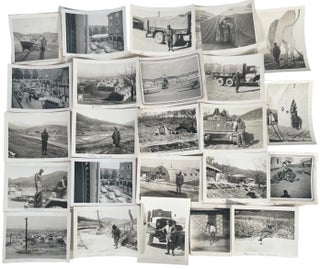
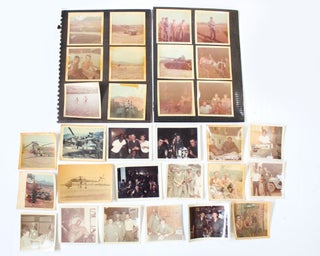
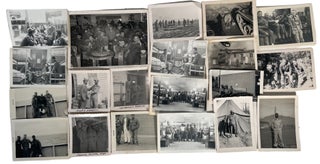
World War II Pacific photographs, circa 1943 to 1946, document both active combat operations and the immediate postwar occupation of Japan, providing direct visual evidence of battlefield conditions and the transition to U.S. military governance following Japanese surrender. The archive juxtaposes frontline engagements across major Pacific campaigns with scenes of occupation, including the presence of an African American soldier interacting with Japanese civilians, offering material for research into military history, race in the armed forces, and the social dynamics of occupation. By combining combat imagery with postwar documentation, the group captures two phases of American military activity in the Pacific Theater within a single visual record.Fifteen black and white silver gelatin photographs ranging approximately from 3 x 2 inches to 11 x 8 inches, consisting of both candid snapshots and professionally produced military images. The combat subset includes labeled views of Saipan, Tarawa, Attu, Wake Island, and Kwajalein Atoll, depicting amphibious landings, jungle and urban fighting, and prisoner capture. One photograph labeled “Burst Blockhouse” shows Marines confronting a Japanese soldier emerging from a destroyed bunker, while another labeled “Marines march off one of the very few Jap prisoners taken at Tarawa” depicts a prisoner being escorted across a devastated beach. Additional images show aerial bombardment and advancing troops across contested terrain. The occupation subset includes photographs of American personnel in Japan, notably an African American soldier seated with a Japanese woman amid damaged surroundings, and another image of a rickshaw transporting an American serviceman through an urban street. Two smaller snapshots include handwritten verso inscriptions identifying individuals and location, including reference to a dispensary at Camp Majstic near Gifu, Honshu. Other photos labeled with locations such as Saipan, Tarawa, Attu, and Wake Island
Produced during the final campaigns of the Pacific War and the subsequent Allied occupation, these photographs document both the intensity of combat against Japanese forces and the reconfiguration of daily life under U.S. control. The inclusion of an African American soldier within the occupation imagery situates the archive within the broader context of a segregated military operating abroad, highlighting the role of Black servicemen in both combat and administrative environments. The contrast between battlefield destruction and postwar civilian interaction underscores the rapid shift from warfare to occupation, preserving visual evidence of how military presence extended into social and cultural exchange in Japan. Light wear and minor handling marks, with clear images and legible annotations; overall condition very good.
Item #21437
Price: $750.00
See all items in African American Military Service, World War II, African American Photography, Military & War Photography
See all items in African American History, Military & War, Photography, Archive
See all items by WWII African American Soldiers
Suggested African American Military ServiceBrowse All



Suggested World War IIBrowse All

Suggested African American PhotographyBrowse All




Suggested African American HistoryBrowse All
![African American History] [Black Power Movement] Early Kwanza Document by Harriet Smith Defining. Harriet Smith.](https://maxrambod.cdn.bibliopolis.com/pictures/16380.jpg?width=320&height=427&fit=bounds&auto=webp&v=1622745951)