British Colonial Rule at Aden and Identified 20th Fortress Company Royal Engineers, 1931 to 1932
Photograph
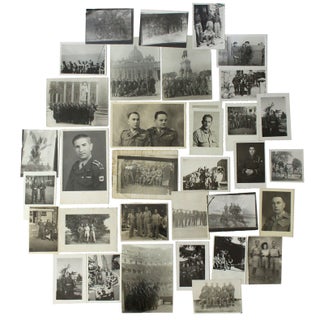
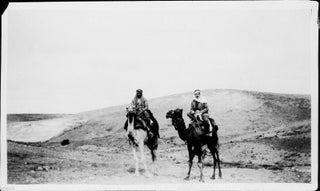
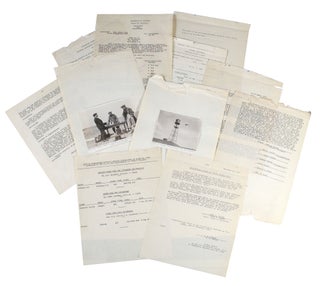
British colonial garrison photo archive depicting the 20th Fortress Company Royal Engineers at Aden, Arabia, 1931 to 1932, during Britain’s reorganization of colonial defense around air power, locally recruited forces, and a reduced permanent British ground establishment. Aden occupied a strategic position between the Red Sea and Indian Ocean and remained administratively attached to British India, while responsibility for its defense had passed from the War Office to the Air Ministry in 1928. By July 1931 Aden Command combined No. 8 Bomber Squadron and an RAF armored car section with the Aden Protectorate Levies, Royal Artillery, and the Aden Fortress Company, Royal Engineers. The photographs identify men serving inside that establishment and record the personnel, hierarchy, ceremony, recreation, dress, and colonial environment behind Britain’s projection of military power from Aden.Photo archive of 10 silver gelatin photographs, 3 x 5.5 , Aden, Arabia, 1931 to 1932. Several versos are inscribed “20th (F.) Coy. R.E. Aden Arabia” and carry dates including 23 April 1931, 9 May 1932, and 3 June 1932. One football team photograph can be matched to an image published in the August 1931 issue of the Royal Engineers journal "The Sapper," allowing fifteen members of the company to be identified: Sappers Dearlove, Summers, Hodgkins, Norman, Mason, Seath, Rhoades, Hopkins, Flanagan, and Pringle; Lance Sergeant Davey; Lance Corporal Warman; Lieutenant Digby Scawen Blunt; Lance Sergeant E. Brown; and Lance Sergeant Larkin. Contemporary service research places Brown with the 20th Fortress Company from 30 December 1930 until March 1932 and identifies Blunt as the company’s sole officer when Brown arrived; Captain T. A. N. Bent replaced Blunt as commanding officer in April 1931. Brown, a qualified instructor in fieldworks, appears seated beside Blunt in the football photograph and was promoted to sergeant on 11 January 1932. Other photographs show officers and enlisted men in formal company groups; service dress with peaked caps, puttees, chevrons, medal ribbons, and Sam Browne equipment; and tropical dress consisting of shorts, long socks, short sleeved shirts, boots, and sun helmets. Football teams pose around presentation cups, with one ball carrying lettering associated with the 20th Fortress Company. A large ceremonial view shows troops marching across an Aden parade ground accompanied by a military band, with motor vehicles, spectators, colonial buildings, and the steep volcanic terrain rising behind the settlement. Two photographs show likely British military personnel with camels, including one serviceman mounted on a saddled camel and another scene with several camels and their handlers.
The photographs record the British military presence at Aden, whose strategic importance derived from its position at the entrance to the Red Sea on the imperial route to India. That importance increased substantially after the opening of the Suez Canal in 1869 made the Mediterranean, Red Sea, and Indian Ocean passage a principal artery of British communications with South Asia. Still administered through British India when these photographs were made, Aden functioned as a fortified port, coaling and communications station, and military base from which Britain protected maritime traffic and extended colonial authority into the surrounding Aden Protectorate.
The 20th Fortress Company formed a specialist Army component of this interwar colonial establishment. Under the RAF dominated Aden Command, Royal Engineers served alongside artillery, aircraft, armored cars, and the locally recruited Aden Protectorate Levies within a defense system designed to maintain the base and project British power beyond the port with a smaller conventional garrison. The photographs record the Royal Engineers within this system at ground level, documenting the personnel, military hierarchy, tropical service, ceremony, recreation, and physical environment of an imperial station whose importance rested on control of one of Britain’s principal maritime routes. Light surface wear, occasional creasing and edge wear, with toning and fading to several photographs. Overall in good condition.
Item #23893
Price: $280.00
See all items in Imperialism & Colonialism, Technology, Engineering & Innovation, Aviation, Arabia, Europe
See all items in Military & War, Science, Medicine & Technology, Space & Aviation, World History by Geography
See all items by Colonial British Garrison in Aden
Suggested ArabiaBrowse All

Suggested AviationBrowse All




Suggested EuropeBrowse All


Suggested World History by GeographyBrowse All