
Hejaz Missionary Encounter and Bedouin Desert Travel Following the Formation of Saudi Arabia 1927
Photograph
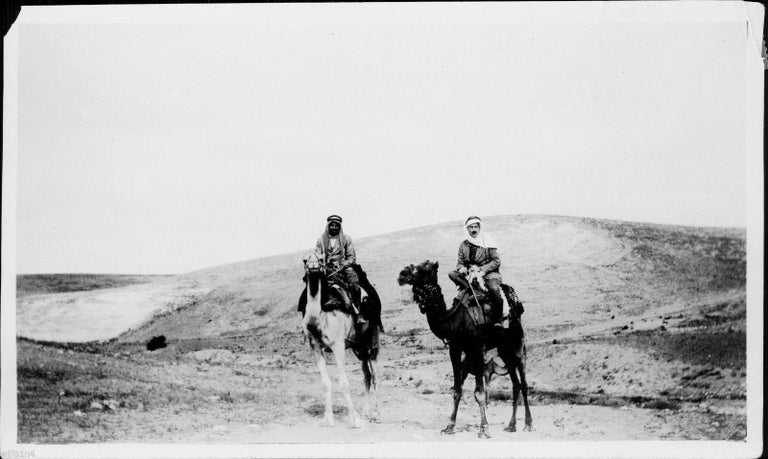
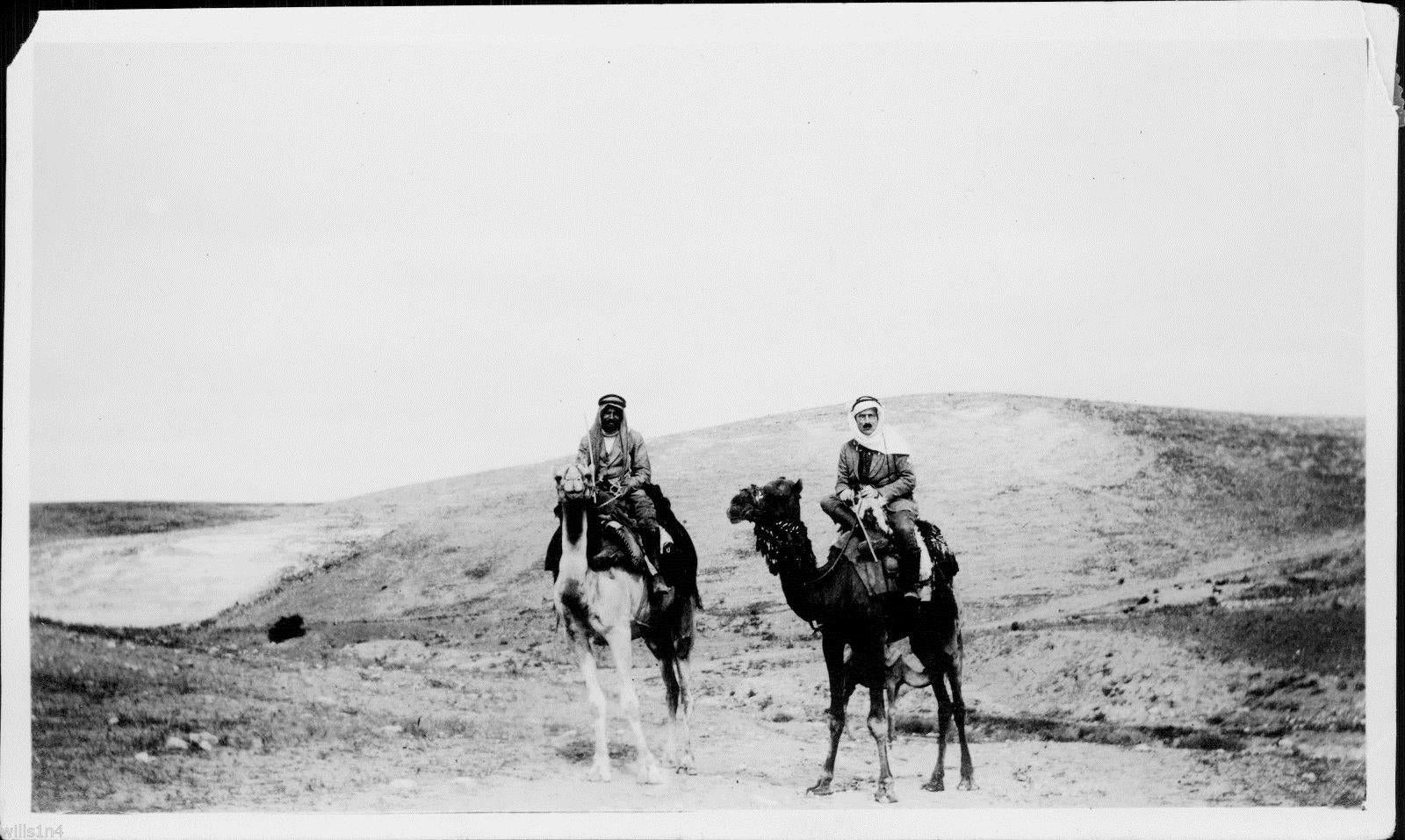
Breaden, George W. Three photographs of Bedouin life and missionary travel in the Hejaz, 1927, document domestic shelter, desert transportation, and contact between local inhabitants and American Protestant missionaries during the consolidation of the Kingdom of Hejaz and Nejd under Ibn Saud. The images preserve a Bedouin family beneath a tent, men gathered beside an early automobile, and Breaden traveling by camel with a local companion, providing visual evidence for the study of Arabian social life, material culture, mobility, and Christian missionary ambitions on the peninsula. Breaden and Reverend William F. Smalley, representatives of the Palestine and Arabian Border Mission of the Christian and Missionary Alliance, entered the Hejaz through Ma’an and Aqaba in November 1927 to investigate the feasibility of establishing missionary and educational work; Saudi authorities arrested them and expelled them through Jeddah, barring their reentry into the Hejaz and Nejd.Three original vernacular photographs, each approximately 3½ × 5½ inches, made in the Arabian Peninsula in 1927. The first shows members of a Bedouin family gathered beneath the shade of a low desert tent, recording the shelter’s textile construction and the arrangement of its inhabited space. The second depicts several Bedouin men standing beside a period automobile in open desert terrain, juxtaposing customary dress with motorized travel and illustrating the coexistence of established desert lifeways and newer transportation technologies. The third shows George W. Breaden and a Bedouin companion mounted on camels, with the surrounding arid landscape emphasizing the practical importance of camel transport beyond established roads. Manuscript notations appear on the versos and may provide further evidence of sequence, location, or identification.
The photographs were made only months after Ibn Saud was proclaimed King of the Hejaz in January 1926 and shortly before his territories were renamed the Kingdom of Saudi Arabia in 1932; they therefore belong to a period of political centralization rather than the French colonial administration invoked in the original description. Breaden’s attempted survey also reveals how foreign missionary organizations evaluated the peninsula as a possible field for religious and educational expansion, while his arrest records the new government’s control over foreign religious activity. Two photographs lack one corner, without reported loss to the principal subjects; all three have verso notations and light evidence of handling. Good. The group combines intimate observations of Bedouin domestic and transportation practices with documented evidence of an unsuccessful American missionary initiative in the Hejaz.
Item #14508
Price: $120.00
See all items in Imperialism & Colonialism, Travel & Cultural Photography, Arabia
See all items in International & Global Culture, Photography, World History by Geography
See all items by Bedouins Arabian Desert
See all items in Arabia
Suggested ArabiaBrowse All



Suggested PhotographyBrowse All



Suggested World History by GeographyBrowse All