China: Public Execution and Revolutionary Violence during the Collapse of Qing Imperial Authority, circa 1900s
Photograph
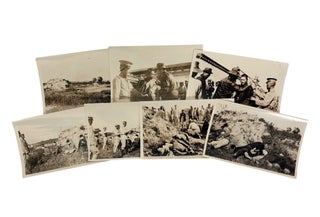
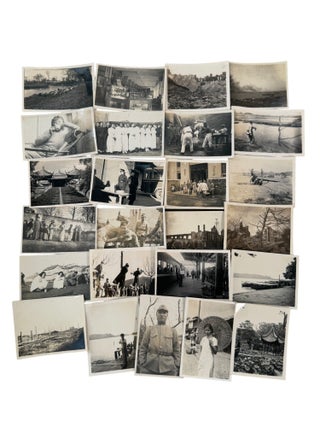
Chinese Revolutionary era photo archive depicting public executions, military justice, and urban violence during the collapse of Qing imperial authority, circa 1900 to 1911, documenting how the machinery of state punishment evolved amid foreign intervention and domestic revolution. Made during the decade that followed the Boxer Rebellion and culminated in the 1911 Revolution, the photographs record a China whose sovereignty had been profoundly weakened by imperial competition, indemnities, foreign occupations, and unequal treaties. Public executions remained among the most visible demonstrations of governmental authority as Qing officials, provincial armies, and later revolutionary forces each struggled to establish legitimacy during one of the most turbulent transitions in modern Chinese history.Photo archive of 6 silver gelatin photographs, ranging from approximately 2.5 x 3.5 to 4 x 5 inches, China, circa 1900 to 1911. The largest photograph depicts the Canton Army Revolutionary street execution, showing a condemned prisoner immediately before execution before a substantial public gathering. Earlier photographs show prisoners escorted through crowded streets by armed soldiers; an execution carried out before assembled spectators; military personnel operating field artillery; urban streets littered with casualties in the aftermath of fighting; and another image depicting soldiers marching detainees through a large crowd under armed guard. Another photograph depicts executed bodies suspended in wooden cages above a commercial street, displayed beside shop signs as a public warning intended to discourage rebellion and reinforce state authority through highly visible spectacle. Throughout the archive, executions function not as isolated punishments but as carefully staged public demonstrations of military and governmental authority, witnessed by civilians and conducted within the highly visible spaces of Chinese cities during a period of political upheaval.
The photographs span the years in which China experienced successive crises that reshaped the country's political order. The Boxer Rebellion of 1900 prompted the intervention of the Eight Nation Alliance and the occupation of Beijing, leaving the Qing government financially crippled by the Boxer Indemnity while foreign powers expanded their influence over Chinese railways, ports, customs administration, and commercial concessions. Reform movements, anti-dynastic organizations, and provincial military leaders emerged within this atmosphere of diminished sovereignty, culminating in the Xinhai Revolution of 1911 and the collapse of more than two millennia of imperial rule. The Canton execution photograph belongs to the revolutionary struggles that followed this transformation, while the earlier photographs establish the longer continuum of coercion, military justice, and public punishment through which both the late Qing state and its successors sought to impose order amid imperial encroachment and political fragmentation. Rather than documenting battlefield combat alone, the archive records the visible exercise of state violence during the final years of imperial China, when executions, military patrols, and public displays of force became inseparable from the competing claims of empire, revolution, and national sovereignty. Light surface wear, scattered edge wear, and moderate age toning; several photographs with rounded corners and minor handling creases. Overall in good condition. This archive demonstrates how public execution and military coercion became instruments of political authority in China during the era of foreign imperial intervention and the collapse of the Qing dynasty.
Item #23641
Price: $3,500.00
See all items in Imperialism & Colonialism, Other (Law/Policy), Imperialism & Colonialism, China
See all items in International & Global Culture, Law, Incarceration & Public Policy, Military & War, World History by Geography
See all items by Chinese Public Execution
See all items in China
Suggested Other (Law/Policy)Browse All


Suggested ChinaBrowse All



Suggested World History by GeographyBrowse All