India and Nepal Photo Album of 150 Photographs Documenting Religion, Culture, Tensing Norgay and Himalayan Communities, 1960s
Photograph
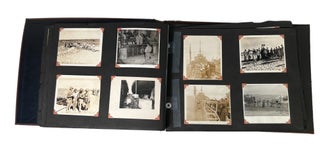
South Asia photo album recording Darjeeling, Nepal, Calcutta, and Agra in the 1960s, in a post Independence view of how religious life, urban crowding, tourism, and Himalayan community identity were being documented by a foreign traveler across India and Nepal. The album showcases the various landscapes of cultural and religious identity throughout South Asia with Muslim architecture in Agra, Buddhist and Hindu temple spaces in the Himalayan region, crowded Calcutta streets captioned in French as an overpopulated refugee city, and repeated portraits of Nepali villagers, Sherpas, women, and children. In the decades after 1947, Indian cities such as Calcutta were absorbing refugee movement, housing pressure, and widening informal street economies, while Himalayan communities in Darjeeling and Nepal were increasingly pulled into road building, porterage, mountaineering, border trade, and tourism, conditions that form the broader social world around the album’s portraits and landscapes.Photo archive of 150 silver gelatin photographs and a small group of color snapshots, most measuring 2.5" x 3.75", album measuring 10.5" x 14", Darjeeling, Nepal, Calcutta, and Agra, circa early 1960s. Black paper leaves with corner mounts and French captions, opening with a map of India labeled in French and moving through place based sequences. Agra pages include captioned views of the “Le Mausolée d’Itimad ud Daula,” façades, pierced marble screens, and views of the Taj Mahal. Buddhist material includes a page captioned “Temple Bouddhique,” with rooflines, bells, carved doors, and ornamental details. Nepal and Darjeeling sections show prayer flags strung across roads, mountain slopes, a ridge top cabin, bundled men in traditional clothing, and a captioned portrait of “Le sherpa Tensing Norgay.” Other leaves caption “Nepalais” and “Mère Népalaise,” pairing a woman carrying a child in a basket with village children, hillside portraits, and small groups gathered outdoors. Calcutta appears through elevated city views, dense commercial streets, market scenes, bridge approaches, pavement sleeping and sitting areas, and close portraits captioned “mendiantes” and “fumeuse de pipe.” A color image captioned “Danseuse du Kashmir” and several small color snapshots extend the album’s attention to costume and regional customs.
By the 1960s, Independence had ended British rule, but it had not eased the pressures of displacement, poverty, overcrowding, and uneven development that shaped eastern Indian urban life, and the Calcutta pages make those conditions visible through street congestion, market trading, informal rest spaces, and the compiler’s own language about refugees and overpopulation. In the Himalayan sections, the album does not directly picture hunger, land scarcity, or labor migration in explicit terms, yet those pressures formed the lived context of many Nepali and Sherpa communities during this period, when cash income often depended on carrying, service work, seasonal movement, and the new international economy of trekking and mountaineering that made figures such as Tenzing Norgay globally recognizable. Minor edge and corner wear from cornering; images clean and clear; binding and boards intact. A 1960s record of post Independence South Asia, combining sacred architecture, urban hardship, and Himalayan portraiture.
Item #23226
Price: $785.00
See all items in India, South & Southeast Asia, World Religion & Philosophy
See all items in International & Global Culture, Archive
See all items by Nepal Tensing Norgay
See all items in Nepal; India
Suggested World Religion & PhilosophyBrowse All



Suggested South & Southeast AsiaBrowse All



Suggested IndiaBrowse All



Suggested ArchiveBrowse All