Meiji and Taishō Era Japan in Stereoscopic Photography Underwood & Underwood Educational Views of Religion and Daily Life, circa 1900s
Photograph
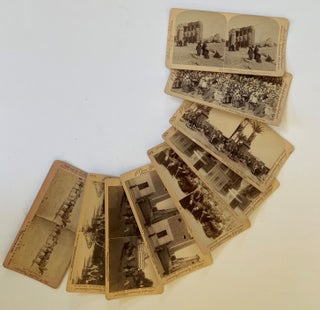
Underwood & Underwood stereoview archive documents Japanese religious practice, labor, and urban life during the late Meiji and early Taishō periods, when Japan consolidated imperial power and expanded its global presence following the Russo-Japanese War and First Sino-Japanese War. Produced in the early 1900s for Western educational and commercial audiences, these images form part of a stereographic system that shaped transnational understanding of Japan through immersive visual media. The archive presents a geographically wide survey including Kyoto, Nikko, Tokyo, Aso-San, Ikaho, Kobe, Mount Fuji, Lake Chuzenji, Yokohama, and Kamakura, documenting both religious sites and everyday activity. It supports research in early photography, visual anthropology, tourism studies, and the construction of Japanese identity within Western-facing media.Collection of 20 black-and-white stereoviews by Underwood & Underwood, albumen prints mounted on original gray card stock with printed captions along the margins and extensive descriptive text on the verso. Each stereoview measures approximately 3.5 x 7 inches. Views include religious and architectural landmarks such as the Inari shrine in Kyoto with priests and fortune tellers, pilgrim stairways at Nikko, the Great Buddha at Kamakura, and torii gate corridors filled with worshippers. Additional scenes depict rice cultivation in flooded paddies, coastal fishing labor, market activity with women in patterned kimono, and artisanal production including pottery and metalwork. The sequencing of images reflects a deliberate balance between sacred, rural, and urban subjects, consistent with Underwood & Underwood’s educational stereograph programs.
These stereoviews circulated during a period of intensified global interest in Japan, as the nation positioned itself simultaneously as an imperial power and a site of cultural distinction for foreign audiences. Visual materials such as these contributed to a transpacific exchange in which Japan was presented through dual frameworks of tradition and modernization, aligning with Western expectations while documenting real shifts in infrastructure, labor, and religious continuity. The United States and Japan maintained expanding commercial and cultural ties during this period, even as racialized tensions and immigration debates developed in parallel. Light edge wear and occasional fading primarily affecting printed text; images remain clear; overall very good condition. A cohesive visual archive illustrating the role of stereoscopic photography in shaping early 20th-century Western perceptions of Japan.
Item #22641
Price: $850.00
See all items in World Culture & Travel, Early Photography, Japan
See all items in International & Global Culture, Photography, World History by Geography, Archive
See all items by Meiji Taishō eras Japanese life
See all items in Japan
Suggested Early PhotographyBrowse All



Suggested JapanBrowse All



Suggested PhotographyBrowse All



Suggested ArchiveBrowse All