African American Social Life Vernacular Photography Archive Brooklyn and Beyond Family Education and Civic Life 1910s to 1950s
Photograph
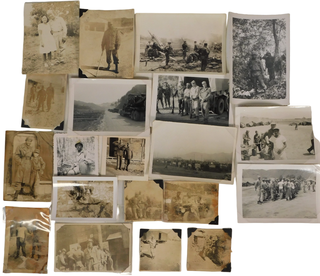
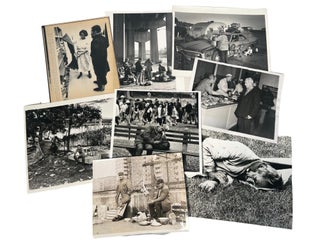
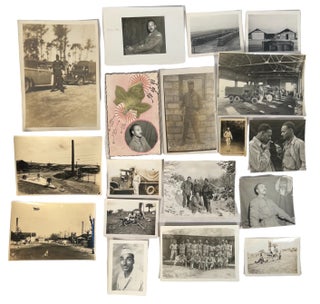
Vernacular photograph archive. 1910s–1950s. This grouping documents African American social life across domestic, educational, and public settings during the first half of the twentieth century, with strong ties to Brooklyn and indications of broader geographic movement beyond New York. The photographs provide primary visual evidence of Black family structure, educational attainment, and civic participation across multiple generations, including a formal graduation portrait marking access to higher education, studio portraiture produced within Black commercial networks, and a street parade scene linking African American and Mexican American community presence. Together, the images establish a continuum from segregated schooling in the early twentieth century through mid-century urban life, with particular attention to how individuals presented themselves within family, institutional, and public contexts.Archive of 16 gelatin silver photographs, all black and white, measuring approximately 3.5 x 2.5 to 4.5 x 3 inches, with two album leaves retaining mounted images. The majority of the photographs depict African American domestic life, including outdoor snapshots of children posed in yards with wooden houses, porches, and picket fencing, and informal scenes of girls playing, posing, and performing for the camera. A studio portrait stamped “Pope Studio, 1154 Fulton St., BKLYN 16, N.Y.” shows a young woman seated at a telephone table in formal dress and heels, composed within a controlled interior setting associated with a Black-owned photography business in Bedford-Stuyvesant. A graduation portrait presents a young woman in cap and gown holding a diploma, wearing wire-frame glasses, photographed in a professional studio setting. A group of four images shows a man and young girl posed with a 1931 Packard automobile, including scenes of the man kneeling to interact with the child and both seated on the bumper in a wooded setting. A street parade photograph depicts a mixed Mexican American and African American procession moving past a storefront reading “Zapatería El León / Lion Shoe Store,” with participants carrying the American flag, a Mexican flag, and a religious banner. The archive also includes a class photograph likely dating to the 1910s, showing Black schoolchildren and teachers posed before a clapboard school building, with formal dress indicating institutional structure within segregated education.
The photographs span a period that includes Jim Crow segregation, the Great Depression, World War II, and the early postwar era, when African American communities in cities such as Brooklyn expanded through migration and developed robust social, educational, and commercial institutions. The presence of a Black studio imprint, formal graduation imagery, and civic parade participation demonstrates participation in both community-based and public-facing forms of representation, while the earlier school photograph situates the archive within the longer history of segregated Black education. Light edge wear and handling marks; one photograph with staining at the top margin; overall very good. A cohesive visual record of African American life across private and public spheres, documenting generational change and community formation in the first half of the twentieth century.
Item #21808
Price: $550.00
See all items in African American Family & Community Life, New York
See all items in African American History, American History by State, Photography, Archive
See all items by African American Family Vernacular Photo
See all items in New York
Suggested New YorkBrowse All



Suggested African American HistoryBrowse All




Suggested PhotographyBrowse All

Suggested ArchiveBrowse All