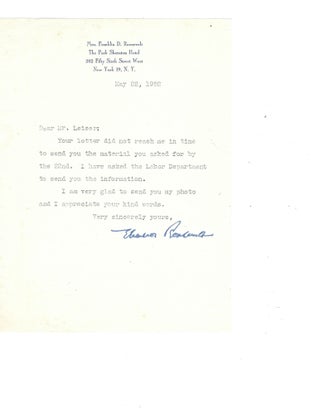
Identified Handwritten Record of Barter-Based Mathematics in Early American Economy, Pennsylvania 1808-1829.
Manuscripts & Autographs
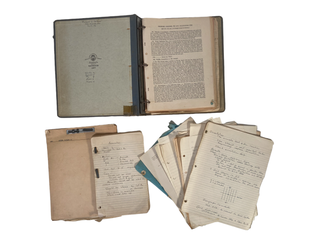
[Pennsylvania Education] Early 19th-Century Barter Arithmetic Notebook of Samuel Weidner of Bucks County, Pennsylvania. Manuscript arithmetic notebook comprising 62 handwritten pages, approximately 12 × 7½ inches, kept intermittently from December 1808 through 1829 by Initiated when Weidner was about seventeen years old and continued into adulthood, the notebook reflects more than two decades of engagement with mathematical practice and arithmetic problem-solving. The first half of the notebook appears to derive from Weidner’s later years of schooling, while later entries show sustained study and refinement over time. The volume is organized with titled lessons — including “Loss and Gain,” “Fellowship,” and “Exchange” — each followed by explanatory definitions, rules, and worked examples written entirely by hand. The terms and computations center on barter arithmetic, a system of reckoning used in early American commercial exchange and financial calculation before the dominance of formalized, mass-market textbooks.The notebook’s content documents foundational concepts in early American practical mathematics. Under “Loss and Gain,” Weidner writes, “Loss and Gain is a method of computing the profits or loss on the purchase or sale of goods,” and connects this rule explicitly to “Barter.” In the section titled “Fellowship,” he defines the concept as “the rule for adjusting the several quota of the loss or gain of any joint adventure of a bankruptcy effect,” and articulates the principle that “the sum of the several shares must equal the whole gain or loss.” Elsewhere, under “Exchange,” he describes the operation of converting between monetary units using the “rule of three.” Among the long division examples are extended calculations such as “1265.50 divided by 165191.02” and “2000 divided by 6840912,” showing both the complexity of the computational practice and the student’s facility with multi-digit arithmetic. These problem types illuminate how arithmetic instruction in early nineteenth-century Pennsylvania was deeply tied to commercial reasoning, currency conversion, and practical financial literacy. As a student-produced manuscript maintained over more than two decades, this notebook provides unique longitudinal evidence of how arithmetic was studied outside the context of printed textbooks in the early Republic. It offers direct insight into the pedagogy and cognitive strategies behind trade-oriented mathematics, preserving both formal definitions and the internal logic of rules that guided everyday economic calculation. For institutional collections, the volume is significant as a rare example of extended personal engagement with mathematical practice in antebellum America, bridging youth education and adult application in a commercially oriented rural environment. Condition: The notebook displays expected wear for a working manuscript of its age, including light soiling and handling wear; the handwriting across all 62 pages remains clear and legible. Overall condition: Very Good.
Item #19717
Price: $480.00
See all items in Pennsylvania, Other (Science/Tech)
See all items in American History & Americana, American History by State, Science, Medicine & Technology, Autographs, Manuscripts & Letters
See all items by Pennsylvania Early Education
See all items in Pennsylvania
Suggested Other (Science/Tech)Browse All


Suggested PennsylvaniaBrowse All



Suggested Science, Medicine & TechnologyBrowse All


Suggested American History & AmericanaBrowse All