Nuclear Reactor Destruction on Atmospheric Return: Early U.S. Nuclear Spaceflight Reentry and Disposal Study, 1963
Pamphlet
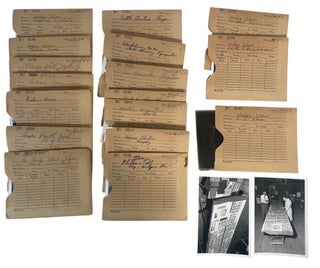
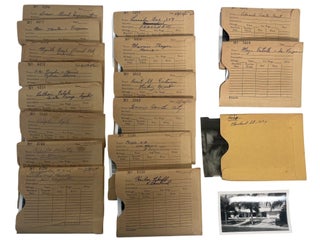
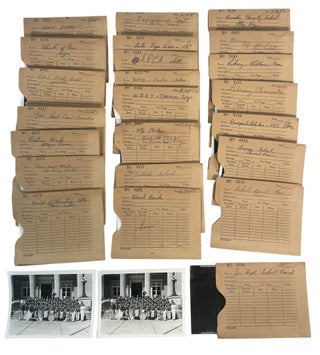
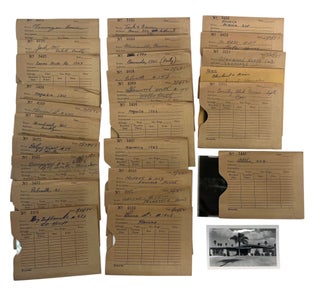
A 1963 U.S. Air Force and General Dynamics study addressing one of the fundamental hazards of early nuclear spaceflight: what would happen to an orbiting nuclear reactor and its fuel during an uncontrolled return through the Earth’s atmosphere. Prepared by R. W. Andrews of the Advanced Technology Laboratory, General Dynamics/Astronautics, for the Air Force Weapons Laboratory at Kirtland Air Force Base, the report develops scaling methods for modeling the heating, structural failure, and dispersal of nuclear fuel elements under reentry conditions. Its November 1963 date places the work during active American development of SNAP era space nuclear systems, shortly before the 1965 launch of SNAP 10A, the first U.S. nuclear reactor placed in orbit, when the fate of reactor fuel during unsuccessful missions had become a defined aerospace safety problem.Andrews, R. W. Re Entry and Disposal Phenomena for Nuclear Auxiliary Power Systems: The Scaling of Processes of Significance in the Re Entry of Nuclear Fuel Elements. Kirtland Air Force Base, New Mexico: Research and Technology Division, Air Force Systems Command, Air Force Weapons Laboratory, 1963. Technical Documentary Report RTD TDR 63 3002. Prepared under Contract No. AF29(601) 5893 by the Advanced Technology Laboratory, General Dynamics/Astronautics, San Diego, California. 39 pages. 8.5 x 11 inches. The abstract states that the study formulates model scaling laws for physical phenomena associated with “re entry and dispersal of the debris from an orbiting nuclear reactor or power source,” specifically addressing tumbling and free fall, aerodynamic heating, thermal stresses and temperature, gas desorption, and expansion in homogeneous solids. Andrews develops prototype scale trajectories for spheres and tumbling rods, examines aerodynamic heating under hypersonic flight and ground test conditions, and considers transient heating, degassing, and stresses produced in homogeneous materials. The publication review leaf bears manuscript approval signatures of project and USAF personnel, while the foreword acknowledges discussions with specialists associated with General Dynamics/Astronautics and the Air Force program. This copy preserves extensive institutional use evidence: an “AEROTHERM LIBRARY” stamp, “RECEIVED OCT 19 1966” stamp, “KEEP PUNCHED” marking, accession number 021594, project and task fields, adhesive classification or routing labels, and manuscript report numbers and shelf annotations across the front wrapper.
The report belongs to the period in which American space nuclear engineering had to address not only reactor performance in orbit but the consequences of launch failure, orbital decay, and uncontrolled return through the atmosphere. Reentry engineering required proving through scaled ground tests that nuclear fuel elements robust enough for launch and operation would nevertheless heat, fragment, melt, or disperse predictably during atmospheric return. Moderate toning and handling wear to wrappers, with institutional stamps, labels, and manuscript markings as described; interior leaves generally clean with light age toning. Overall good condition. A technical record of the effort to make the destruction and atmospheric behavior of nuclear spacecraft components calculable before nuclear power systems entered operational use in orbit.
Item #23992
Price: $1,450.00
See all items in New Mexico, Cold War & Nuclear History, Technology, Engineering & Innovation, Other (Space/Aviation)
See all items in American History by State, Military & War, Science, Medicine & Technology, Space & Aviation
See all items in New Mexico
Suggested Other (Space/Aviation)Browse All


Suggested New MexicoBrowse All


Suggested American History by StateBrowse All