Māori New Zealand Farm Life, African Maritime Labor, and South America Travel during the Golden Age of Steamship Tourism, circa 1918 to 1930
Photograph
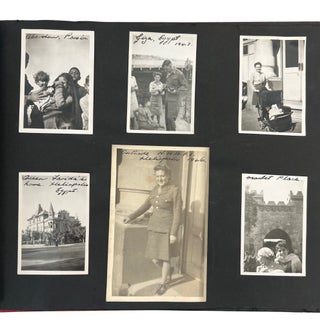
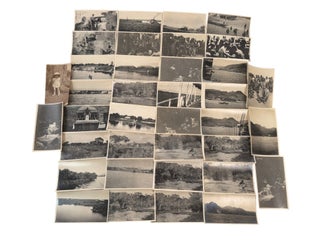
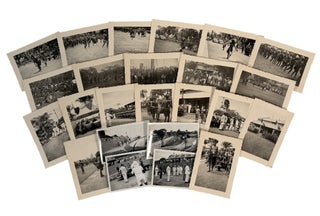
International travel and native documentation photograph album, circa 1918 to 1930, documenting how an English speaking group encountered Māori New Zealand, Atlantic Africa, Chile, California, and the Panama Canal during the golden age of long distance steamship travel and an era of Western imperial expansion across the globe. Photographs record the Māori built environment at Rotorua, the geothermal landscape surrounding Pōhutu geyser, and Cape Verdean men working from small boats beside a passenger vessel at São Vicente. These images preserve the travelers’ view of early twentieth century infrastructure, cities, Indigenous people, labor, and daily life. The album documents Indigenous communities, rural life and economy, and the foreign visitors who photographed and captioned them.Photograph album of approximately 220 silver gelatin photographs in various small formats, New Zealand, Britain, Atlantic Africa, South America, California, and Panama, circa 1918 to 1930. The Rotorua sequence includes two travelers standing before a carved Māori whare, women beside a thermal pool, and visitors at Pōhutu geyser, recording architecture and geothermal land as parts of the tourist economy. The photographs preserve Māori visual culture through the carved meeting house and its ornament, but the captions remain those of visitors and do not identify the house, carvers, guides, or community represented. A photograph captioned “Divers at St Vincent’s off the coast of Africa” shows several small boats clustered around the travelers’ ship, with local men rowing, diving, and working close to the hull. The scene records maritime labor at São Vicente in Cape Verde, a major Atlantic coaling and provisioning port where local workers serviced foreign steamships and performed hazardous labor within an economy controlled by international shipping. Chilean pages show ox drawn traffic in Santiago, streets in Valparaíso and Coquimbo, and residents posed in urban settings, while California photographs include San Juan Capistrano and San Diego’s mission revival architecture. Other photographs show women and men on farms, horse teams plowing fields, harvesting machinery, a steam powered chaff cutter, railway assisted canal operations, cargo handling, passenger steamships, and small boat traffic.
The album belongs to the golden age of passenger travel, when steamship companies expanded international routes and promoted distant ports, Indigenous cultural sites, engineering works, and territories shaped by Western imperial power as components of an increasingly accessible international tourism. At Rotorua, Māori guides, hosts, performers, and communities made tourism possible while government agencies regulated access, presentation, and revenue; the resulting photographs preserve Māori presence and engagement while also recording the selective framework through which visitors encountered Māori culture. At São Vicente, the divers and boatmen appear as laboring figures, their work framed as spectacle from the deck of a foreign vessel. Moderate wear to the album covers and binding, with occasional fading, silvering, and surface abrasion to the photographs; several captions faint but legible. Overall in good condition. A visual record of how Indigenous architecture, labor, land, and historical memory were encountered during the expansion of Western imperial, commercial, and transportation power.
Item #23657
Price: $625.00
See all items in California, World Indigenous Peoples, Africa, Imperialism & Colonialism, Mexico, South & Central America
See all items in American History by State, Indigenous Peoples, International & Global Culture
See all items by South America New Zealand Africa Travel
Suggested AfricaBrowse All


Suggested World Indigenous PeoplesBrowse All


Suggested CaliforniaBrowse All





Suggested Indigenous PeoplesBrowse All