Post-Civil Rights Act Integrated Textile Workforce in Georgia, Textile Manufacturing and Safety in the American South, archive of 107 Photographs, 1966-1969
Photograph
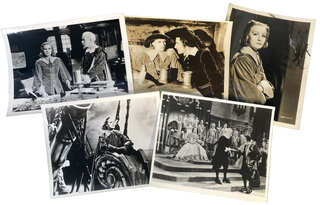
Bibb Manufacturing Company workers, machinery, and safety campaigns inside the Star Mill and No. 2 Mill complexes in Macon, Georgia, photographed between 1966 and 1969, capturing a Southern textile workforce in the years immediately following the Civil Rights Act of 1964 and the federal desegregation orders that opened previously segregated mill jobs to Black workers. Bibb Manufacturing, founded in 1876, was one of the largest textile employers in the American South and a defining institution of Macon's industrial economy for nearly a century. The photographs were taken and assembled by Donald Bailey, who began sweeping floors at Bibb at age fourteen and rose to superintendent of the entire plant, giving the archive an insider's vantage on shop-floor life during the period when EEOC enforcement and Title VII compliance reshaped hiring at Georgia textile mills that had previously reserved skilled positions for white workers.Photo archive of 107 silver gelatin snapshot photographs, 3.5" x 4.5" inches, Macon, Georgia, 1966-1969. Many carry handwritten verso inscriptions in blue and graphite identifying location, date, time of day, department, and subject, including "Star Mill C.S. Slubber No. 8, 2:15 P.M. 12-6-66," "No. 2 Mill 2nd Shift Twisting 3-3-66," "Card Grinding Class No. 2 Carding, Instructor Mr. George Nettles 11-22-66," "Safety Sign Star Mill 10-31-66," and "Christmas 1966." Black women and men work alongside white coworkers throughout the interiors, operating slubbers, spinning frames, twisting machines, and winding equipment, with women shown tending machines in head wraps and aprons. Award ceremony images show supervisors in white short-sleeve shirts and ties handing wrapped boxes to Black and white workers gathered beneath punch-card racks labeled "attendance record." Hand-painted safety posters appear repeatedly, including a stenciled board reading "accidents seekers sign up here, benefits are: suffering, loss time, medical and hospital cost, reduced income" surrounding a posted "Employer's First Report of Injury" form, a cartoon panel contrasting "wrong way to load trucks" with "the correct way is the safe way," a hand-lettered status board reading "green: no accidents for week, blinking red: accident during week, do your part, keep the green light on, help keep Star Mill accident free," and a department-by-department "Accident Record No. Two and Star Mills" tally listing carding, spinning and Abbotts, twisting and winding, baling and shipping, Star CS, and Star WS with lost-time dates running back to 1960. Halloween imagery includes a skeleton mounted to a poster reading "don't be tricked into an accident." Exterior frames record storm-felled trees, collapsed roof panels, and torn fencing across the mill yard, along with group portraits of workers boarding a chartered Bibb bus and standing in front of a Macon street view with a Macon Lodge sign visible in the background.
Bibb Manufacturing operated mills across Macon, Columbus, Porterdale, and Juliette and was a central employer in Georgia's cotton textile belt, a regional industry built on segregated labor through the first half of the twentieth century and forced into integration after the 1964 Civil Rights Act, the 1965 EEOC investigations of Southern textile firms, and the OFCCP textile-industry compliance reviews of the late 1960s that pressured manufacturers receiving federal contracts to hire and promote Black workers into production roles. The safety campaign material documents the parallel rise of industrial safety bureaucracy in the years leading up to the 1970 Occupational Safety and Health Act, when in-house programs like the green-light boards and department accident tallies seen here were the primary mechanism for tracking workplace injury before federal OSHA enforcement existed. Overall in very good condition with handling wear, minor edge nicks, and light surface marks consistent with working snapshots. The combination of a single compiler's vantage across multiple departments, dated verso inscriptions, integrated workforce imagery, and hand-painted safety ephemera documents industrial safety practice, and post-Civil-Rights-Act workplace integration in Georgia.
Item #23438
Price: $750.00
See all items in African American Labor & Employment, Urban Development & Industrialization, Georgia, Labor & Labor Movements
See all items in African American History, American History & Americana, American History by State, Labor, Environment & Industry, Archive
See all items by Bibb Manufacturing Company
See all items in Georgia
Suggested GeorgiaBrowse All




Suggested African American HistoryBrowse All







Suggested ArchiveBrowse All






Suggested American History by StateBrowse All