African American Sharecropper Photographs Documenting Cotton Labor in the Jim Crow South, Circa 1910s–1920s
Archive
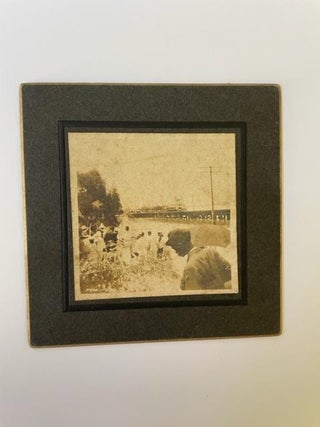
Two original photographs documenting African American sharecropping labor in the rural South during the Jim Crow era, when cotton agriculture remained central to the racial and economic order of the post-Reconstruction United States. The images capture Black agricultural workers engaged in cotton harvesting under the tenant farming and sharecropping systems that dominated much of the Southern economy in the early twentieth century. The photographs provide visual evidence of the physically demanding labor conditions imposed on African American farming families after emancipation, when many formerly enslaved people and their descendants became economically dependent on white landowners through debt-based agricultural contracts. Particularly significant is the informal nature of the images, which preserve direct views of field labor rarely centered within contemporary commercial photography of the period.Collection consists of two black-and-white silver gelatin photographs dating circa 1910s–1920s, each measuring approximately 5.5 x 3.5 inches. Both photographs depict multiple African American cotton laborers working within expansive field rows, likely in a Southern cotton-growing region such as the Mississippi Delta or Georgia Black Belt. In the first image, a man wearing overalls and a broad-brimmed hat crouches prominently in the foreground while harvesting cotton by hand. Additional workers appear farther down the rows, several wearing light-colored hats and long garments that contrast sharply against the darker vegetation. The perspective extends toward a dense tree line, emphasizing the rural isolation of the agricultural setting. The second image provides a closer view of the labor scene, centering on a woman in a long belted dress and straw bonnet bent deeply into the cotton plants while picking. The paired photographs emphasize repetitive manual labor and the physical posture required for cotton harvesting, with workers consistently shown stooped low over the fields. No machinery or mechanized harvesting equipment appears, underscoring the continued dependence on hand labor during this period.
The photographs document the persistence of racialized agricultural labor systems in the South decades after the abolition of slavery. Sharecropping and tenant farming frequently trapped African American families within cycles of debt, restricted mobility, and economic dependency while supplying the labor foundation of the Southern cotton economy well into the twentieth century. Unlike idealized or staged depictions of rural life common in commercial imagery of the era, these photographs focus directly on the realities of field labor and preserve a seldom-documented visual record of Black agricultural workers engaged in cotton harvesting. Light silvering, faint handling creases, and minor corner wear; prints retain strong contrast and clear detail overall. Very good condition. A powerful photographic record of African American labor and rural life under the economic structures of the Jim Crow South.
Item #21705
Price: $450.00
See all items in Reconstruction & Jim Crow, Georgia, Mississippi, Reconstruction & Jim Crow, Labor & Labor Movements
See all items in African American History, American History by State, Civil Rights, Labor, Environment & Industry, Archive
See all items by Sharecropping Jim Crow South
See all items in Georgia, Mississippi
Suggested GeorgiaBrowse All





Suggested MississippiBrowse All




Suggested African American HistoryBrowse All








Suggested ArchiveBrowse All