Civil Rights Movement and Anti Lynching Advocacy NAACP Report on Claude Neal Lynching, 1934
Ephemera and pamphlets
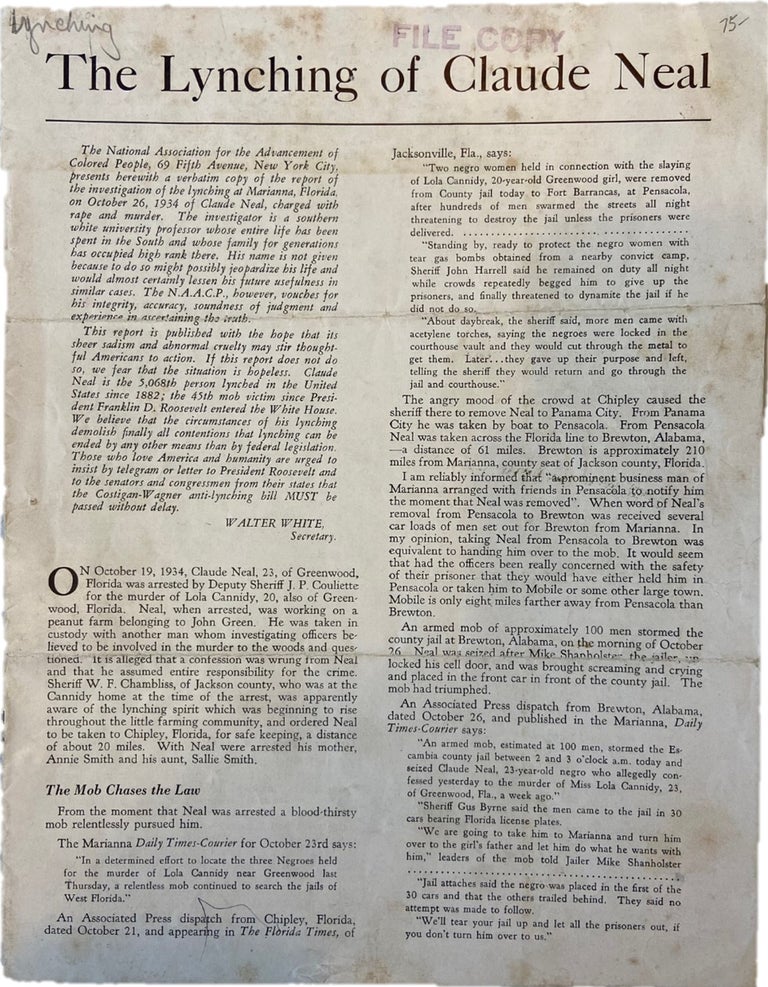
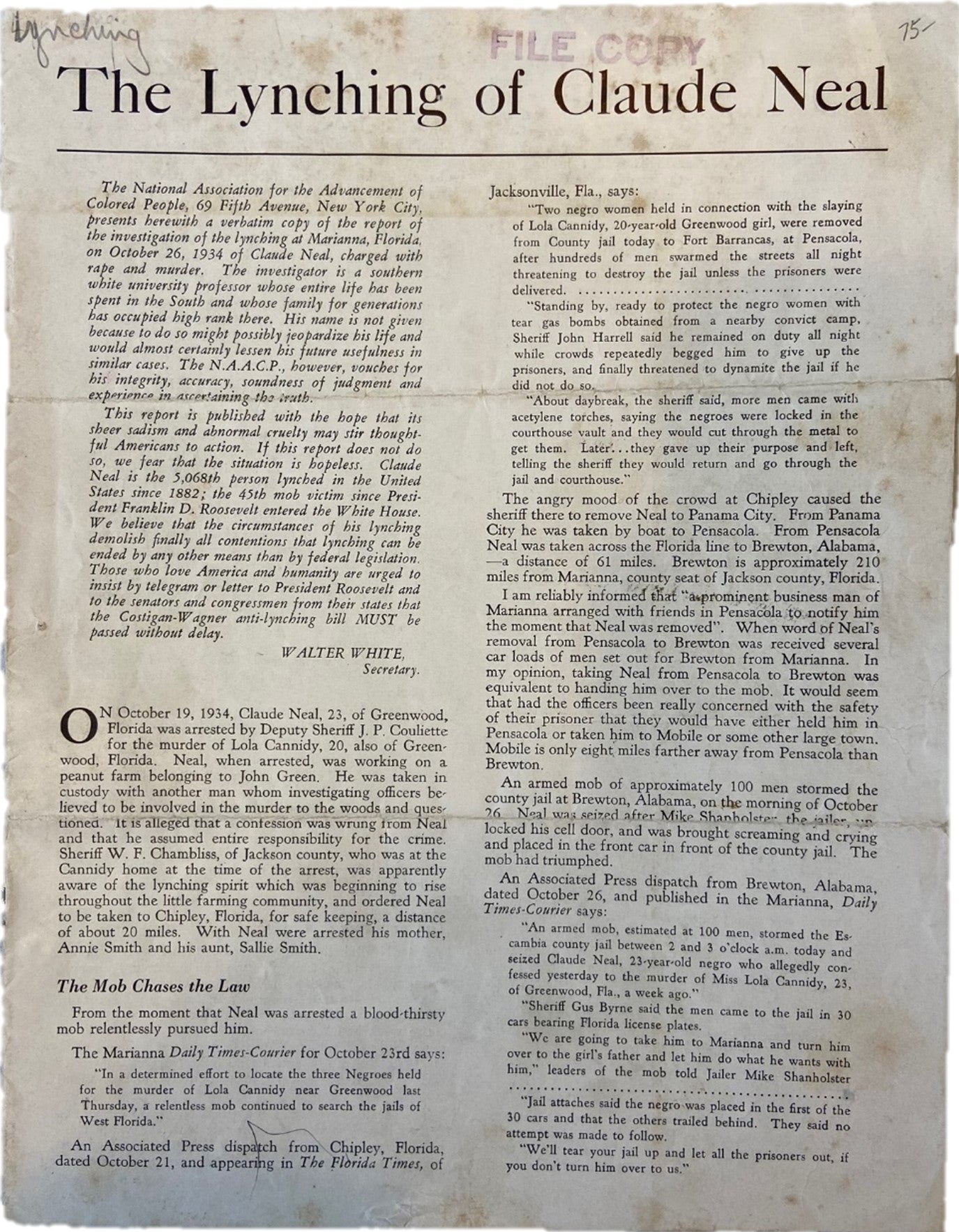
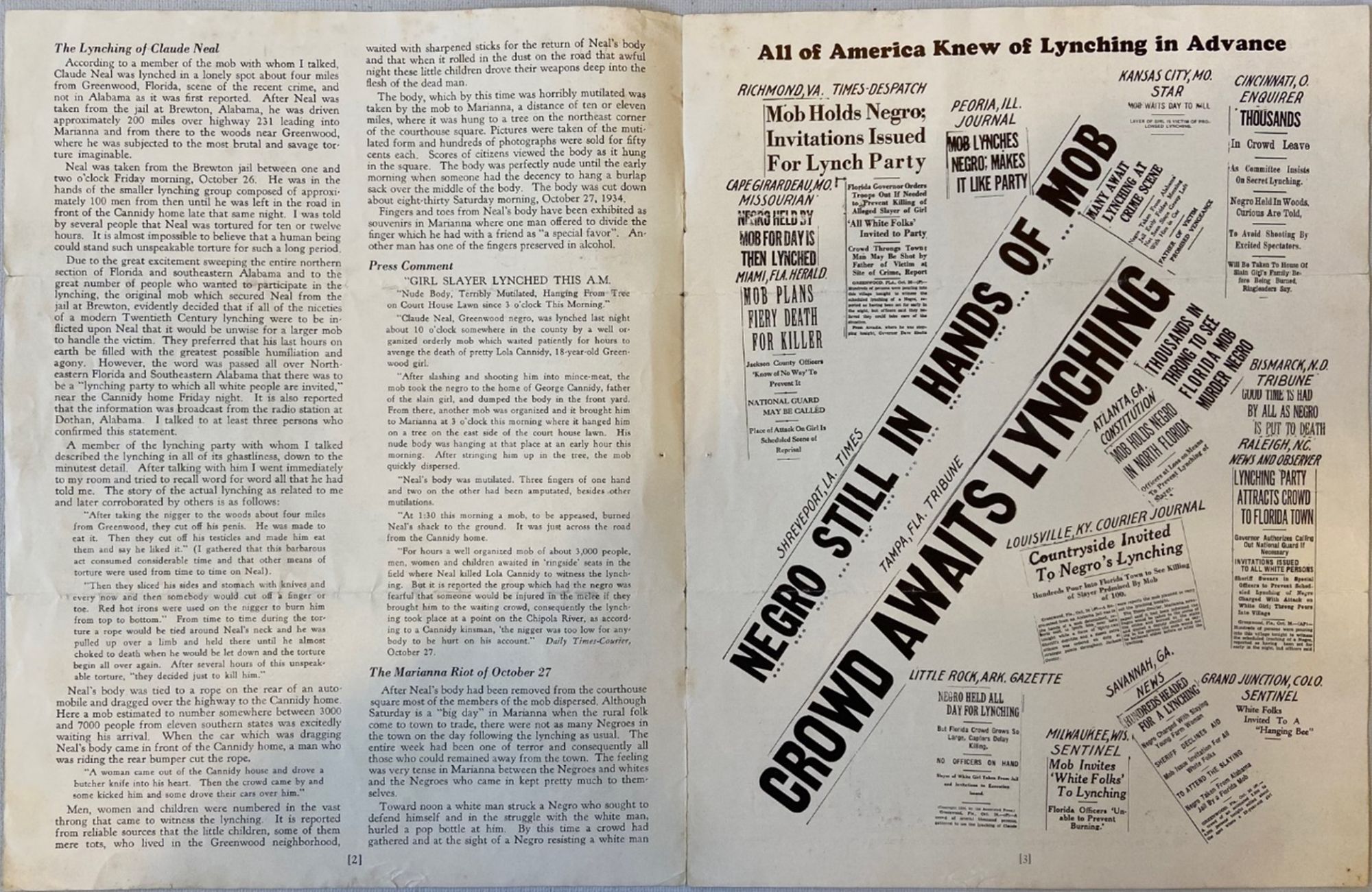
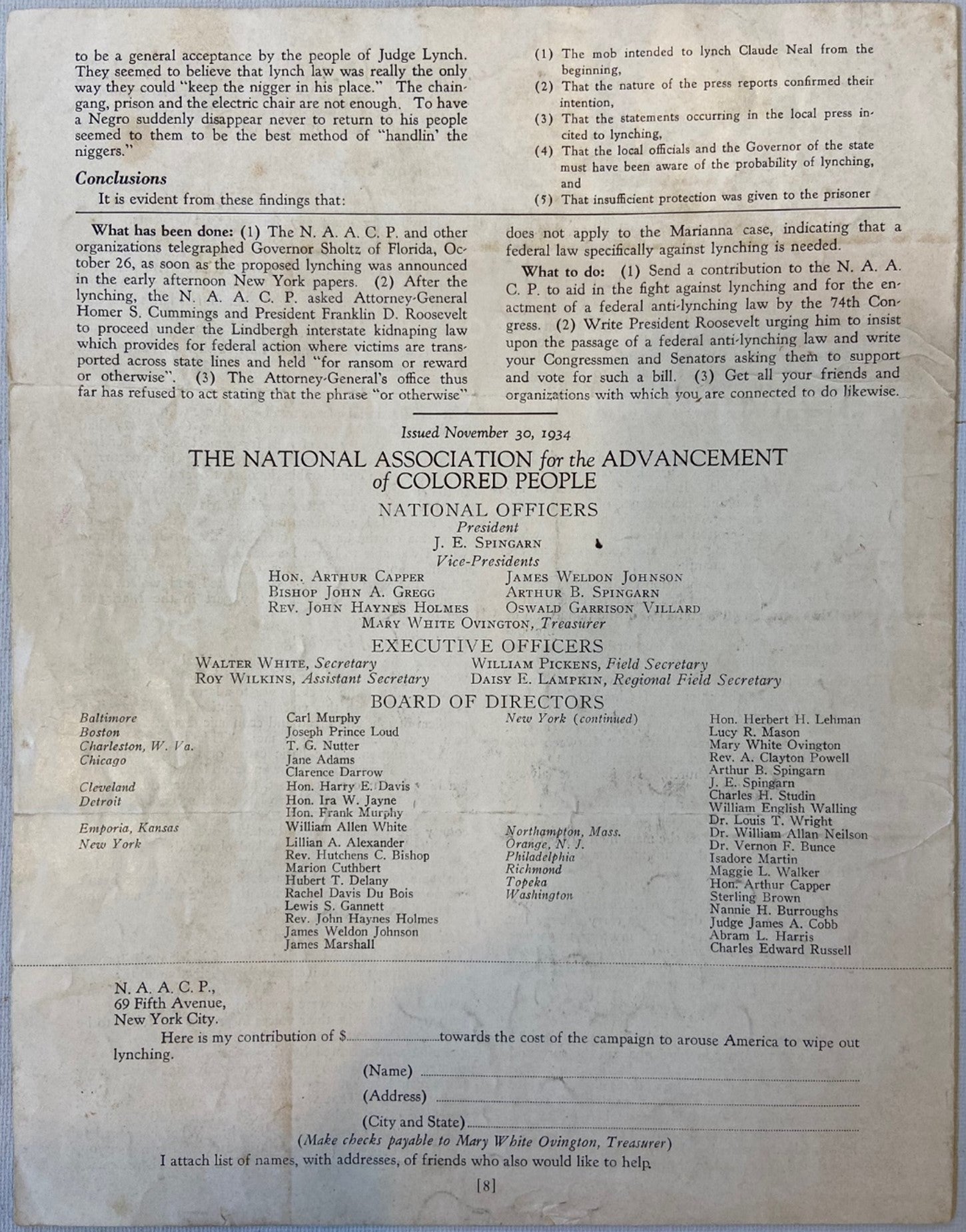
National Association for the Advancement of Colored People. The Lynching of Claude Neal, 1934, documents one of the most widely publicized acts of racial violence in the Jim Crow South and provides direct investigative evidence used in national anti lynching advocacy campaigns. Issued in the immediate aftermath of the October 1934 killing of Claude Neal, a twenty three year old African American farm laborer in Jackson County, Florida, the report establishes the lynching as a premeditated act carried out with broad public knowledge and insufficient intervention by local authorities. Neal had been arrested on charges described as circumstantial and was moved across multiple jurisdictions, including transfer to an Alabama jail, before a white mob abducted him and returned him to Florida. The report records that the lynching was announced in advance as a public spectacle at the Cannady farm, and though the killing itself occurred prior to the scheduled display, Neal’s mutilated body was subsequently exhibited in the courthouse square and on courthouse steps before large crowds. By assembling testimony, press coverage, and photographic evidence, the NAACP positions the case within its national campaign to expose mob violence and press for federal anti lynching legislation.National Association for the Advancement of Colored People. The Lynching of Claude Neal. New York: NAACP, 1934. 8 pages. Illustrated report including photographic reproductions of Neal’s body, a burned cabin identified with his family, and a page compiling contemporary newspaper headlines that promoted or sensationalized the lynching. The publication forms part of the NAACP’s broader investigative and publicity strategy in the 1930s, in which documented cases of racial terror were circulated to mobilize public opinion and influence legislative debate.
Produced during a period of intensified national scrutiny of lynching, the report contributes to the evidentiary record that informed federal anti lynching efforts such as the Costigan Wagner Bill, which sought to establish federal penalties for mob violence but ultimately failed in Congress. The Neal case drew widespread outrage and highlighted the inability or unwillingness of local and state authorities to protect Black prisoners or prosecute perpetrators, reinforcing arguments for federal intervention. The inclusion of photographs and reproduced headlines underscores the dual role of visual and print media in both inciting and condemning racial violence. Light foxing to front and rear pages, with visible fold creases from prior handling and a “FILE COPY” stamp on the front page. Overall good.
Item #17946
Price: $750.00
See all items in Civil Rights Movement, Alabama, Civil Rights Movement, Social Activism
See all items in African American History, American History by State, Civil Rights, Social Activism & Protest
See all items by Anti Lynching Advocacy NAACP
Suggested Civil Rights MovementBrowse All




Suggested Social ActivismBrowse All




Suggested AlabamaBrowse All



Suggested Civil RightsBrowse All