Lesbian Pulp Fiction and Sexual Identity Narratives in Cold War America Mass-Market Paperback Archive, 1955–1964
Collection
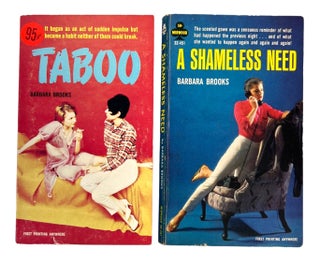
Mid-20th century American lesbian pulp novel archive documents the circulation of same-sex female desire within mass-market publishing during the 1950s and early 1960s, when homosexuality was framed through deviance, criminality, and psychological disorder in both law and popular discourse. Issued between 1955 and 1964, these works demonstrate how lesbian identity entered commercial print through sensationalized narratives that nevertheless provided access to queer representation for a broad readership. The archive includes authors writing under both pseudonyms and given names, notably Valerie Taylor (Velma Nacella Young), whose work departs from dominant exploitative conventions through more sustained attention to lesbian interiority and community. These volumes support research in LGBTQ print culture, Cold War sexual regulation, and the development of lesbian literary expression prior to gay liberation movements.Norday, Michael. Strange Thirsts. New York: Beacon Books, 1955. Marr, Reed. Women Without Men. New York: Gold Medal Books, 1957. Salem, Randy (Pat Perdue). Chris. New York: Beacon Books, 1959. Tryon, Mark. The Twisted Loves of Nym O'Sullivan. New York: Beacon Books, 1960. Taylor, Valerie (Velma Nacella Young). Unlike Others. New York: Midwood-Tower, 1963. Sharon, Sylvia. Sweet Torment. New York: Domino Books, 1964. Six volumes, each approximately 150 to 250 pages, standard mass-market format. Illustrated wrappers employ pulp conventions of eroticized and emotionally charged imagery of women, often paired with taglines emphasizing taboo desire, psychological conflict, and moral tension. Narrative settings range from women’s prisons and domestic interiors to media industries and urban social environments, with recurring themes including confinement, romantic attachment between women, and attempts at “cure” or reintegration into normative society. Unlike Others stands apart for its comparatively direct and empathetic portrayal of lesbian relationships, reflecting Taylor’s involvement with the Daughters of Bilitis.
These works were produced within a regulatory and cultural climate shaped by obscenity enforcement and the legacy of the Comstock Laws, which constrained explicit representation while permitting coded or moralized depictions of same-sex desire. Lesbian pulp fiction functioned as both commercial exploitation and a limited but significant site of visibility for queer readers navigating mid-century stigma. By the early 1960s, shifts in social attitudes and the emergence of homophile organizations began to influence both tone and content, with certain authors introducing more nuanced portrayals of identity and relationship. Minor edge wear to all volumes; two with creasing to spine and light rubbing to wrappers; pages evenly toned as typical for mid-century paperbacks; overall very good condition. A representative grouping illustrating the evolution of lesbian representation within American mass-market publishing before the transformations associated with the Stonewall Riots.
Item #22565
Price: $725.00
See all items in Lesbian Literature & Pulp
See all items in LGBTQ+ History, Archive
See all items by Early Lesbian Pulp novels
Suggested Lesbian Literature & PulpBrowse All




Suggested LGBTQ+ HistoryBrowse All





Suggested ArchiveBrowse All