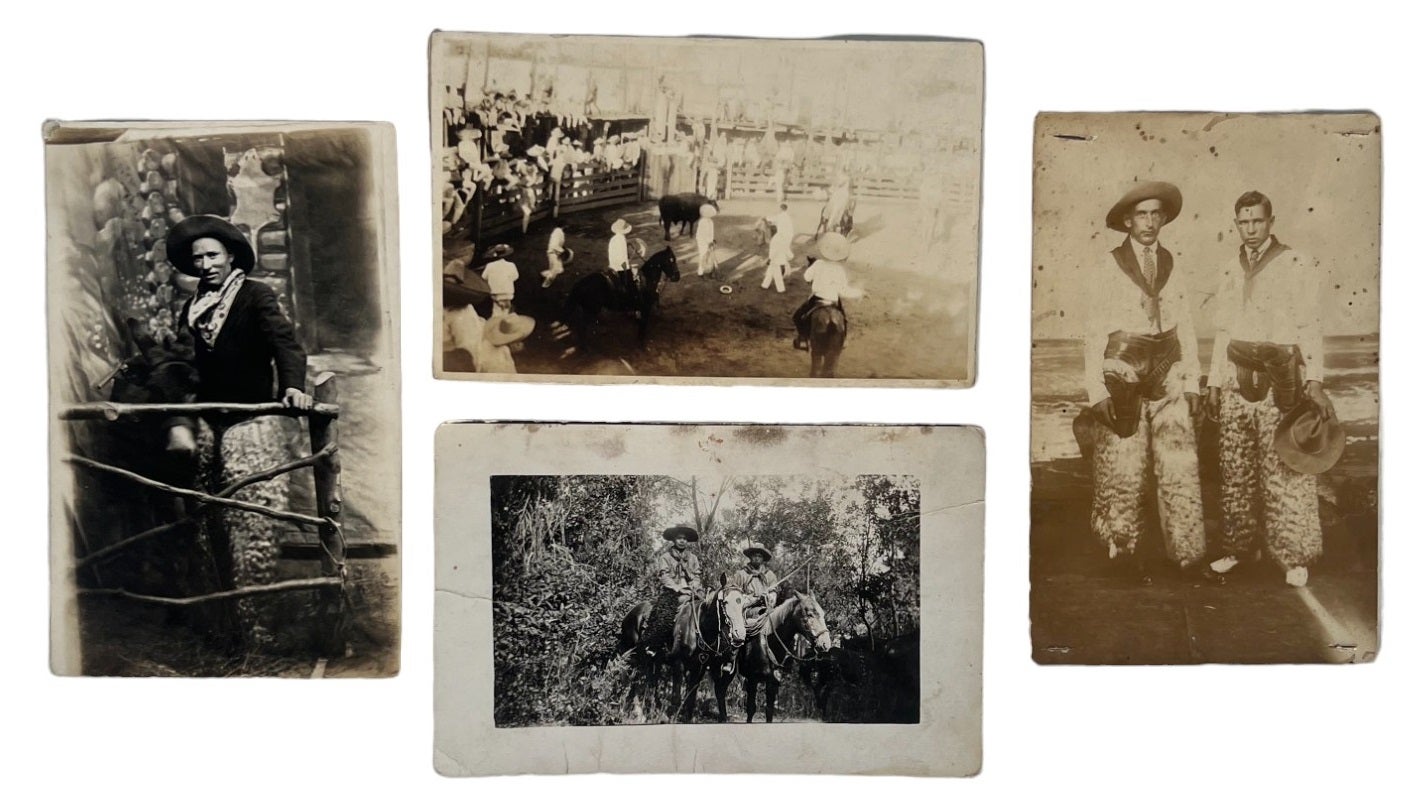


Mexican Photography and Early Twentieth Century Cowboy Culture in Mexico, circa 1910s to 1930s
Photograph
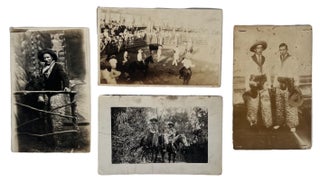
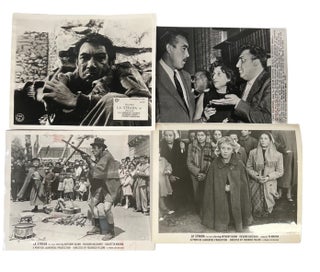
Mexican cowboy archive, circa 1910s to 1930s, documents vaquero dress, horsemanship, and public ranching culture in Mexico through four real photo postcards. The group matters as primary visual evidence of Mexican cowboy identity in the early twentieth century, with attention to clothing, tack, firearms, performance, and the social settings in which vaqueros were photographed. These postcards are especially useful for the study of Western visual culture from a Mexican perspective, since the vaquero tradition long preceded and shaped later cowboy culture in the United States; the Library of Congress notes that “the first cowboys were Spanish vaqueros,” underscoring the importance of Mexican and Spanish equestrian traditions to the broader history of the West.The archive consists of four real photo postcards taken in Mexico, all dating from roughly the 1910s to the 1930s. The cards depict several distinct scenes: two mounted cowboys beneath trees, both wearing broad hats and long sleeves, with large branches secured to their backs; two vaqueros posed together in fur chaps with leather holsters, neckerchiefs, and decorated ties; a larger gathering of cowboys and spectators behind a wooden fence, many in broad hats and light colored clothing, watching riders in an arena or enclosed performance space; and a single cowboy posed with a mule, wearing fur chaps and two bandanas while leaning against a wooden fence. One postcard bears a penciled inscription in Spanish on the verso. Across the group, the recurring visual patterns are traditional hats, fur or leather riding gear, holsters, horses and mule tack, and posed or semi public scenes that place these men within a lived ranching and equestrian culture rather than a fictionalized Western image.
Taken together, the postcards preserve a vernacular record of vaquero self presentation and rural spectacle in Mexico during a period when photography increasingly circulated local identities through inexpensive postcard formats. The Smithsonian American Art Museum has described the vaquero as a figure tied to “the cowboy” and to its Mexican origins, a useful reminder that Mexican horse culture stands at the center of Western history rather than at its margins. Light handling wear overall; one card with penciled Spanish note on verso; images appear clean and well preserved; overall very good. Compact and visually strong group of early Mexican photographic material offering direct evidence of vaquero attire, performance, and identity in the early twentieth century.
Item #19887
Price: $450.00
See all items in Western Americana, Texas, Latino Community & Immigration, Mexico, South & Central America
See all items in American History & Americana, American History by State, Chicano & Latin American History, International & Global Culture, Photography
See all items by Mexican Cowboys
Suggested Western AmericanaBrowse All




Suggested TexasBrowse All


Suggested PhotographyBrowse All




Suggested American History by StateBrowse All