Documentary Evidence of Slavery Sites Albumen Views of St Augustine Market Pavilion González Alvarez House and Mississippi Slave Quarters
Photograph
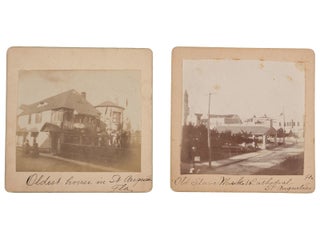
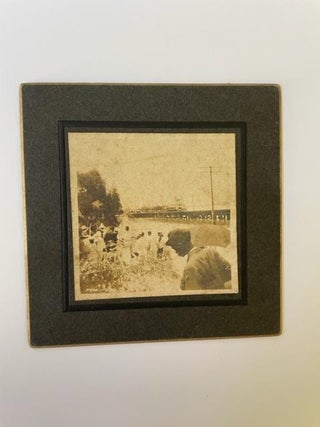
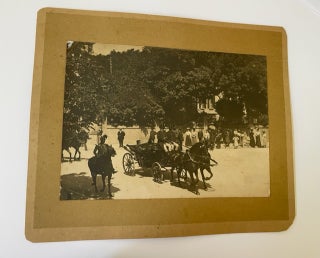
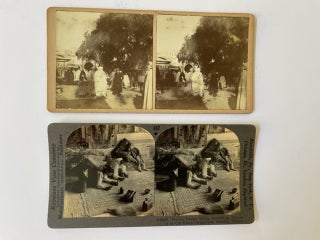
Albumen photographs of slavery-related sites, circa 1890s, document physical locations tied to the sale and habitation of enslaved people in the United States and the persistence of those sites in post-Emancipation visual culture. The images include a pavilion in St. Augustine, Florida identified in contemporary sources as a site where enslaved Africans were bought and sold, a photographic negative depicting outbuildings identified as Mississippi slave quarters, and a mounted view of the González Alvarez House, a colonial structure associated with early settlement in St. Augustine. Together, the photographs provide material evidence of how spaces connected to slavery were recorded, labeled, and circulated in the late nineteenth century, linking architectural survival to the historical memory of enslavement in both the Southeast and the Gulf South.Collection of three albumen photographs. United States, circa 1890s. One mounted photograph, approximately 3 3/16 x 3 inches, bears the ink inscription “Old Slave Market + Cathedral St. Augustine Fla.” and depicts the waterfront pavilion constructed in the early nineteenth century, originally used as a commercial market and identified in local records as a site of slave trading. One photographic negative, approximately 3 1/2 x 3 3/4 inches, shows three small structures identified as Mississippi slave quarters. One mounted photograph, approximately 3 1/8 x 2 5/8 inches, is inscribed “Oldest house in St. Augustine, Fla. Built in the early 1700s,” depicting the González Alvarez House. Mounts and inscriptions indicate a documentary intent linking the images to historically significant sites.
By the late nineteenth century, sites associated with slavery were being reframed within local historical narratives, often presented as landmarks while still retaining traces of their earlier function within systems of forced labor and sale. The identification of the St. Augustine pavilion as a slave market in inscription and record aligns the image with documented urban sites of sale in Spanish and later American Florida, while the Mississippi quarters image extends the archive into the plantation landscape of the postbellum South. The grouping provides a concise visual record of how structures tied to enslavement were preserved, interpreted, and circulated in photographic form decades after abolition. Minor adhesive residue to one mount, small tear to negative, and light toning and staining to mounts; overall good condition.
Item #18587
Price: $750.00
See all items in Slavery & Abolition, Other (American History), Mississippi, African American Photography, Early Photography
See all items in African American History, American History & Americana, American History by State, Photography
See all items by Slavery Market
See all items in Mississippi
Suggested Other (American History)Browse All




Suggested African American PhotographyBrowse All






Suggested Early PhotographyBrowse All




Suggested MississippiBrowse All