Women’s Rights and Labor National Woman’s Party on Minimum Wage Laws and the Equal Rights Treaty 1936
Ephemera
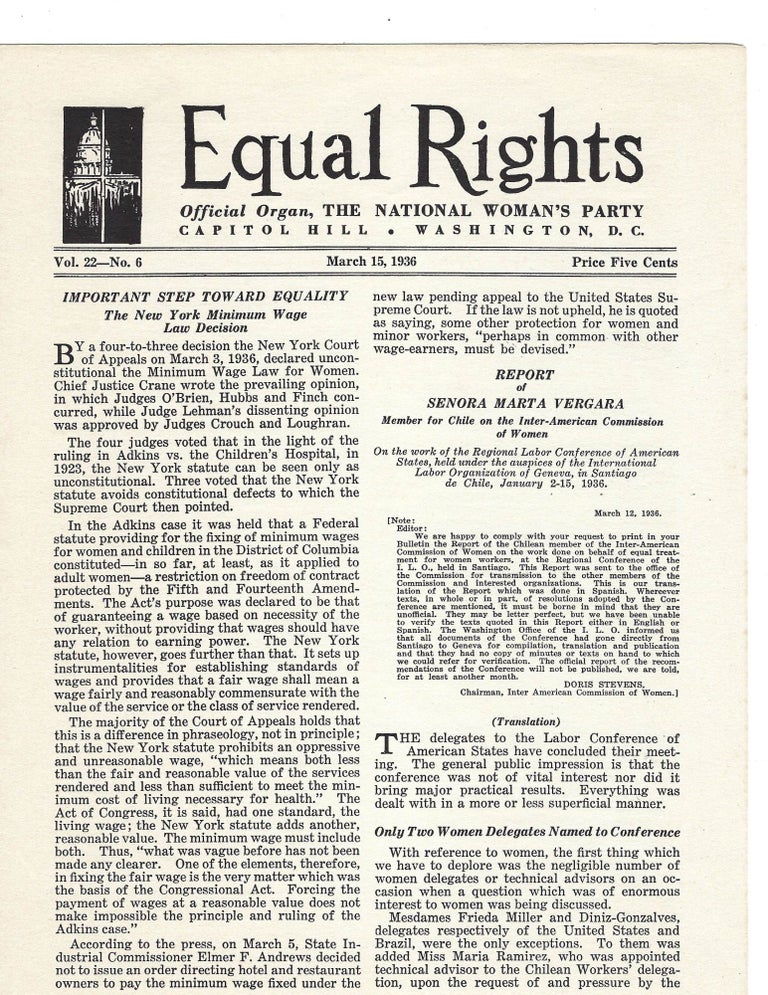
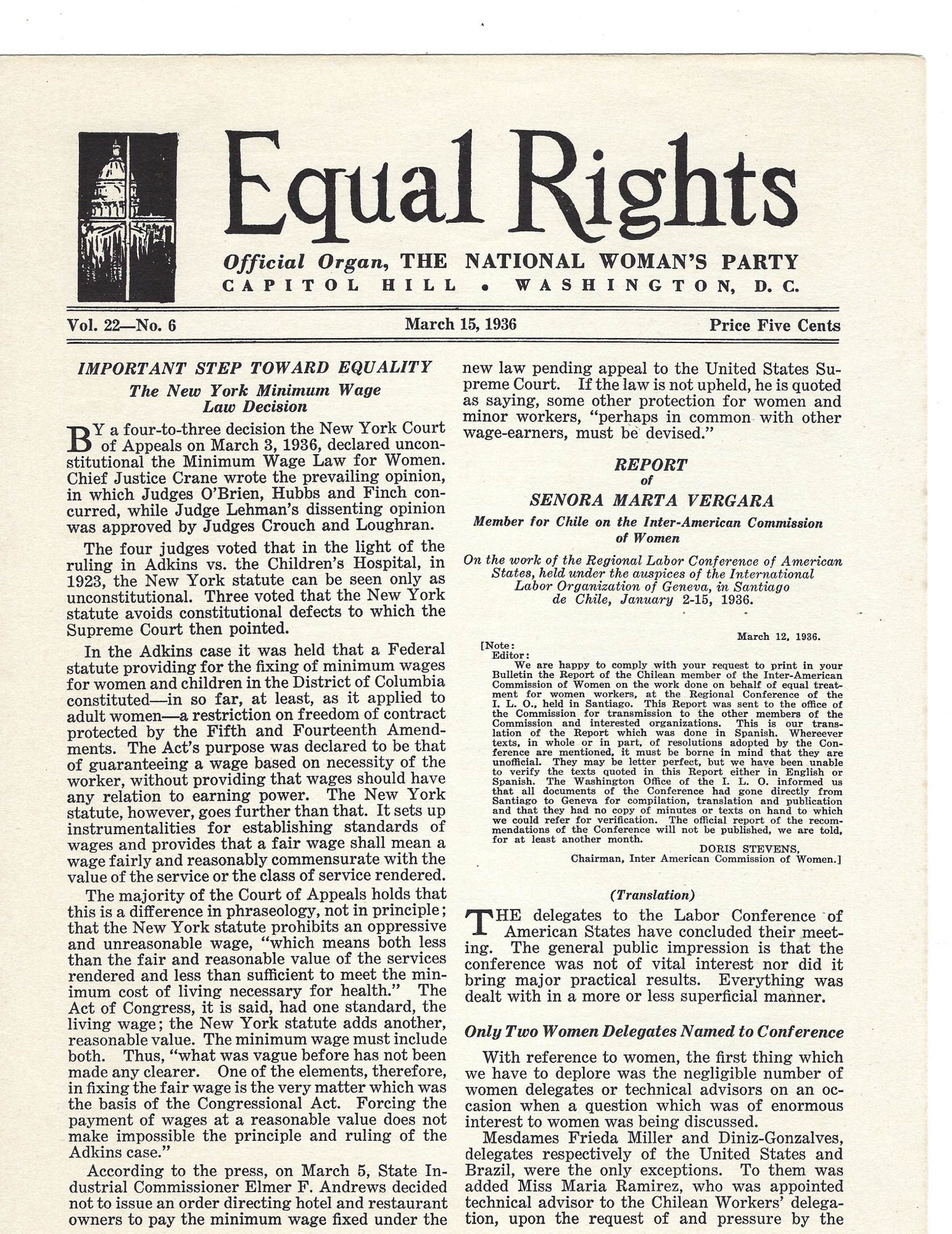
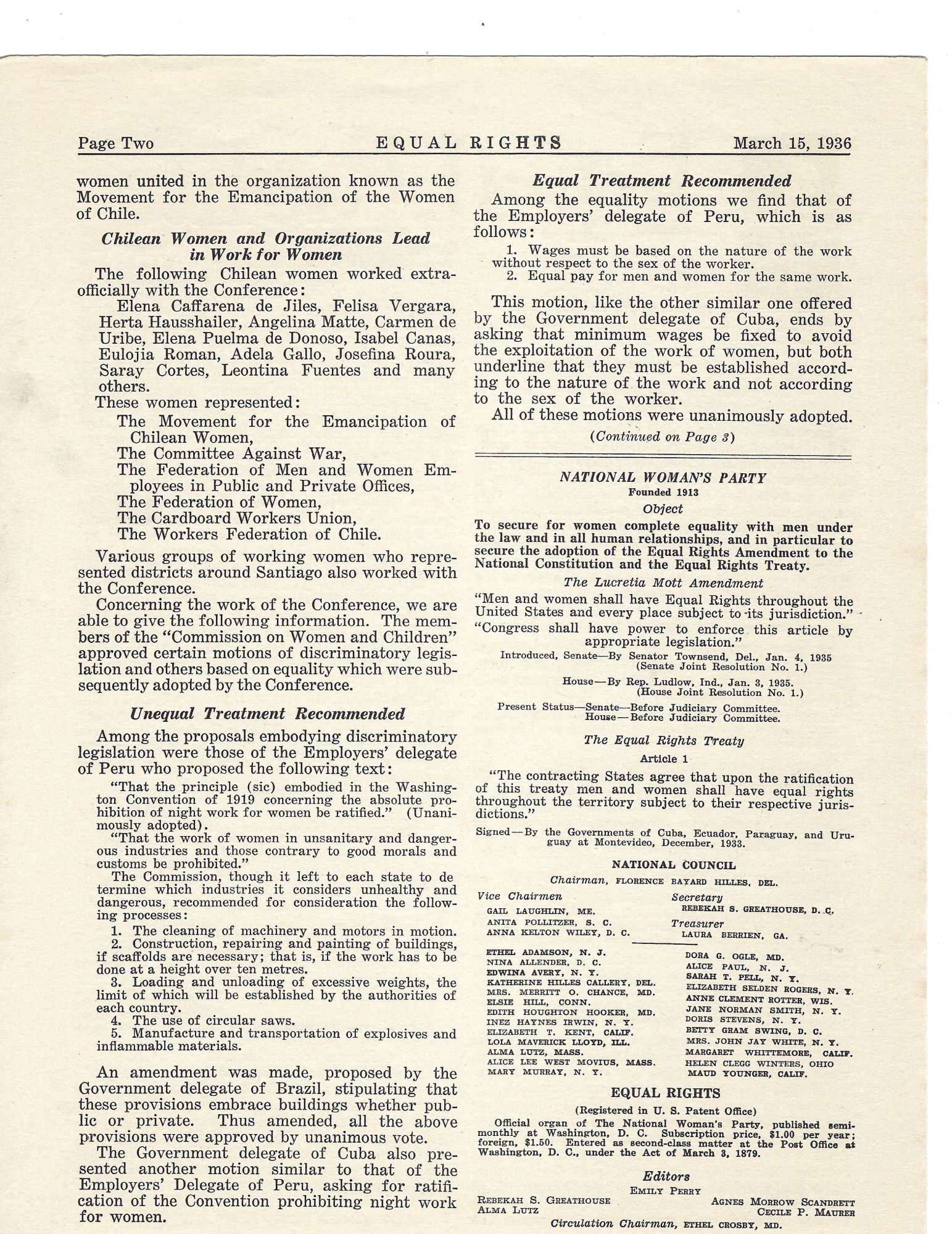
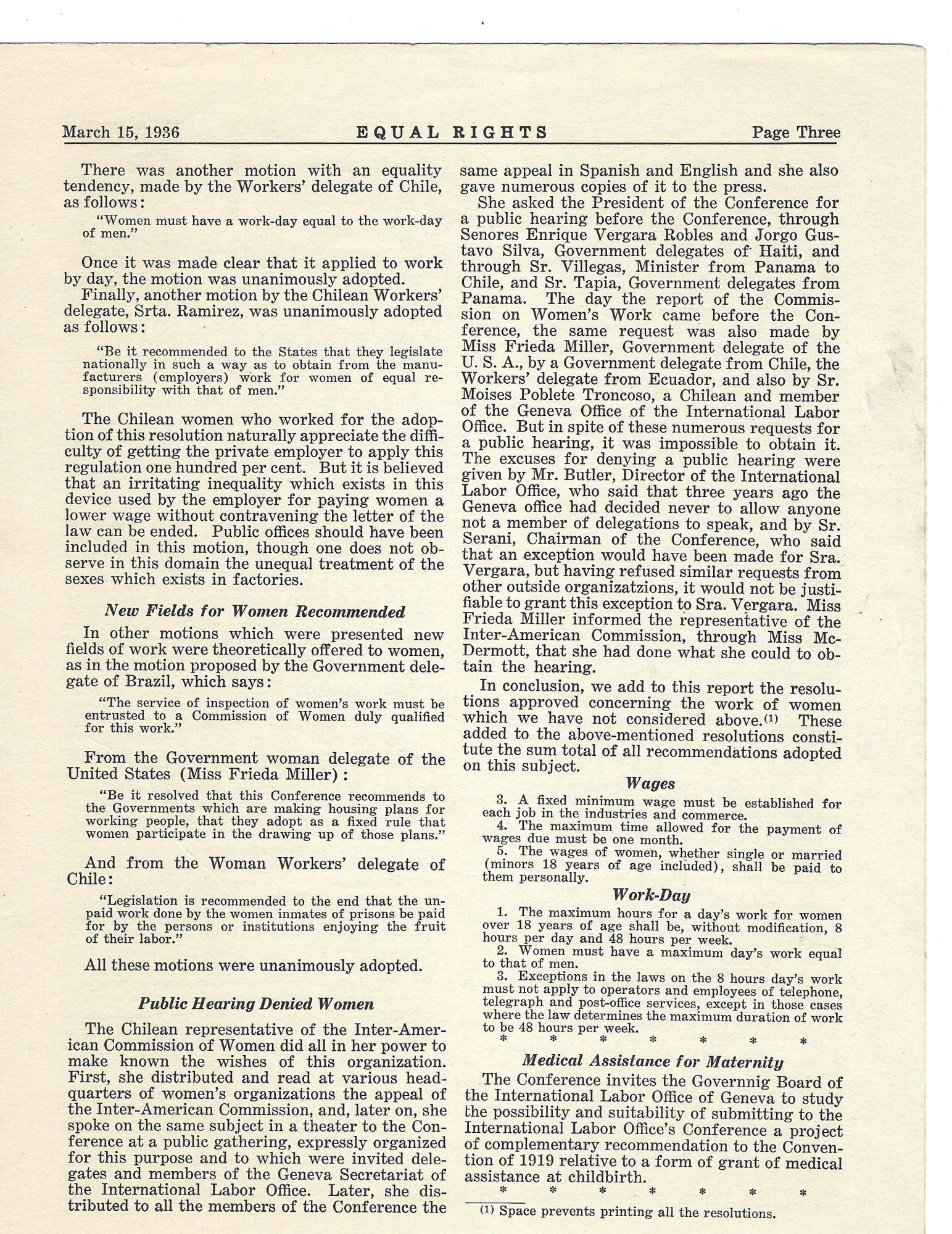
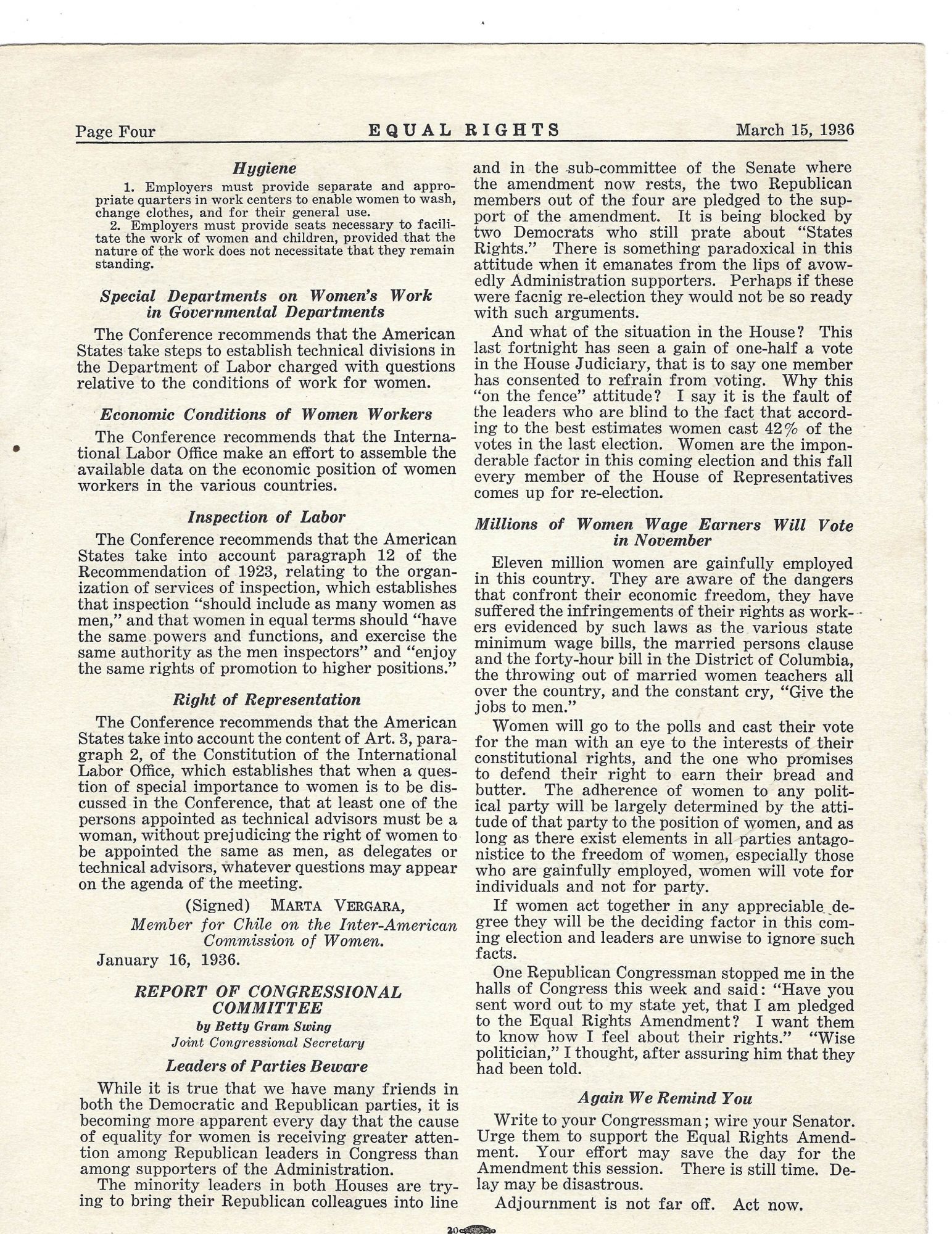
National Woman’s Party. Equal Rights, March 15, 1936, documents the organization’s campaign for legal equality at a time when women’s workplace legislation divided American feminists over whether sex-specific protections advanced or restricted women workers. Founded in 1916 by Alice Paul and Lucy Burns during the suffrage campaign, the National Woman’s Party continued after ratification of the Nineteenth Amendment by advocating the Equal Rights Amendment, then commonly associated with the Lucretia Mott Amendment, and by opposing laws that imposed legal distinctions based solely on sex. This issue addresses the New York minimum wage controversy, international equal-rights efforts, and proposed workplace protections for women and children.National Woman’s Party. Equal Rights. Vol. 22, No. 6. March 15, 1936. 4 pages. 8 1/2 x 11 inches. Official organ of the National Woman’s Party. The issue reports on the New York minimum wage case after the New York Court of Appeals struck down the state law regulating minimum wages for women; the United States Supreme Court subsequently affirmed that judgment in Morehead v. New York ex rel. Tipaldo on June 1, 1936. It also discusses the Equal Rights Treaty signed at Montevideo by Cuba, Ecuador, Paraguay, and Uruguay, part of the National Woman’s Party’s effort to establish sex equality in international law. Another article addresses workplace hygiene and a resolution requiring employers to provide women with separate quarters for washing, changing clothes, and general use, as well as seats for women and children when the work did not require them to remain standing.
Published two years before enactment of the Fair Labor Standards Act of 1938, the issue records a central dispute in interwar women’s rights politics: whether legislation written specifically for women offered necessary labor protection or created legal distinctions that could restrict women’s employment and undermine demands for equal rights. The National Woman’s Party pursued the latter argument while simultaneously campaigning internationally for legal equality between the sexes. The March 1936 issue therefore preserves contemporary evidence of the relationship among the Equal Rights Amendment campaign, minimum wage litigation, international treaty advocacy, and debates over sex-specific workplace regulation. In excellent condition.
Item #16025
Price: $250.00
See all items in New York, Labor & Labor Movements, Women’s Labor & Employment, Women’s Liberation & Feminism
See all items in American History by State, Labor, Environment & Industry, Women’s History & Feminism, Autographs, Manuscripts & Letters
See all items in New York
Suggested New YorkBrowse All





Suggested American History by StateBrowse All