American Transportation and Civilian Life in the 1850s Horse-Drawn Carriage Ambrotype Photograph
Photograph
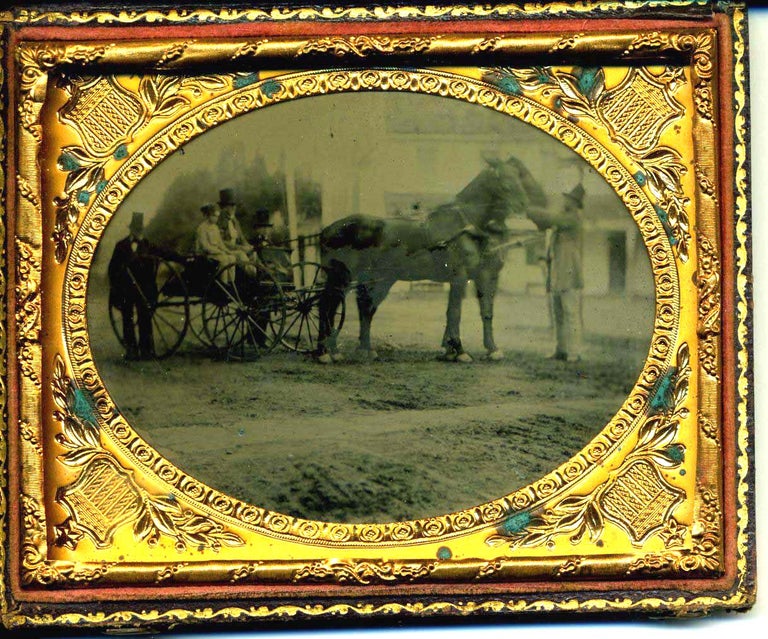
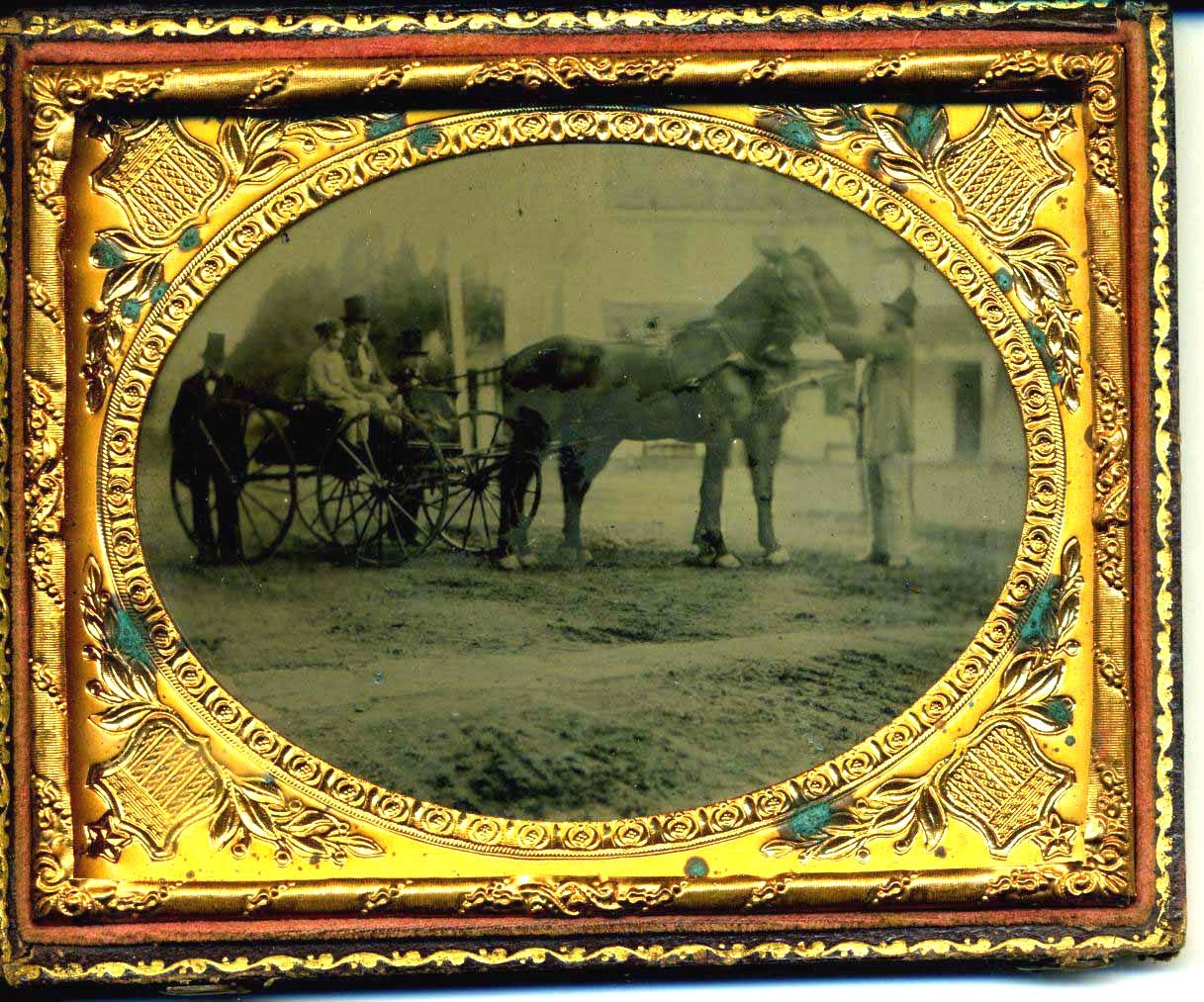
Horse and carriage ambrotype, circa 1850–1859, documents mid-19th century American civilian transportation and rural social life during the decade immediately preceding and encompassing the early Civil War period. The image holds research value for the study of early photographic practice, particularly outdoor ambrotype production, as well as material culture relating to horse-drawn mobility, family presentation, and dress in pre-industrial and wartime America. Ambrotypes were typically produced in controlled studio environments due to technical limitations; the presence of an outdoor composition situates this image within a less common subset of early American photography.Quarter plate ambrotype photograph showing a family seated within a horse-drawn carriage accompanied by two large horses, with an adult man standing at the front holding the animals. The man wears a broad-brimmed hat consistent with mid-19th century rural or frontier attire. The group is positioned outdoors, likely on unpaved ground, with no visible studio backdrop, emphasizing natural light exposure. The composition centers the carriage and team, with human figures arranged to present both transport and family unit simultaneously. The photograph is housed in its original leather presentation case with red velvet interior lining and a decorative copper mat framing the image. The ambrotype process, a glass-based photographic technique introduced in the early 1850s, produces a unique, non-reproducible positive image, distinguishing it from later paper-based photographic formats such as cartes de visite.
Ambrotypes emerged during a transitional period in photographic history, bridging earlier daguerreotype practices and the rise of reproducible paper photography. By the late 1850s and into the Civil War era, photographic documentation expanded alongside technological shifts, yet outdoor images remained comparatively uncommon due to exposure constraints and equipment limitations. This image contributes to the visual record of civilian life during a period often dominated by military imagery, offering insight into transportation, clothing, and social presentation outside formal studio settings. Light wear to case exterior, minor rubbing at edges; interior velvet intact with moderate compression; glass plate and mat remain well-preserved with clear image visibility. Overall very good condition.
Item #9956
Price: $450.00
See all items in Western Americana, Photography
See all items in American History & Americana, Art, Photography & Visual Culture
See all items by Horse Carriage Photograph
Suggested Western AmericanaBrowse All


Suggested PhotographyBrowse All