Japanese Cross-Dressing Performance: Kabuki and Onnagata in Taishō and Early Shōwa Japan, Photo Archive, ca. 1910s–1920s
Archive
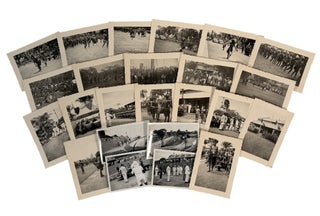
[Cross dressing] [Japan] [Kabuki] Japanese Kabuki onnagata portrait archive documenting male actors specializing in female roles, a codified theatrical practice central to Kabuki performance history since the early Edo period. Gender play in Kabuki was not only an aesthetic convention but also a cultural commentary as onnagata roles shaped ideals of femininity in Edo- and Meiji-era Japan, blurring distinctions between performance, gender, and desire at a time when women were prohibited from stage performances. The archive features richly detailed studio portraits and dynamic stage scenes depicting both onnagata, or male actors in female roles, and tachiyaku, or male heroic roles, dressed in elaborately patterned kimono and hakama, with sword props, wigs, and symbolic gestures that capture the stylized theatricality of the form. Scholars note that these portrayals influenced broader conceptions of femininity in Japanese society and became part of Japan’s cultural export to the West during the late 19th and early 20th centuries. Although women can now perform kabuki, the onnagata tradition remains dominant in mainstream performances.Archive of 50 Taishō and Early Shōwa-era real photo postcards depicting Kabuki and onnagata performers in studio portraits, staged interiors, and on stage. Each measure approximately 4" x 6". Most with original inscriptions in Japanese en verso. The photographs include both full-stage production scenes and studio portraits of celebrated performers in full costume including elaborate kimono, wigs, and theatrical makeup, with poses emphasizing controlled posture, fan gestures, and stylized movement associated with female roles. Several images show the same actor in different roles or costume variations. Verso inscriptions in Japanese include handwritten notes and partial printed postcard backs; visible elements include dates such as “16.9.12”, and character strings referencing locations and possibly theater venues or sender-recipient information.
This archive situates onnagata performance within both theatrical and social frameworks, demonstrating how gender was constructed, circulated, and consumed visually in early modern and modern Japan. Kabuki’s prohibition of female performers led to the development of onnagata as a highly refined art form rather than mere substitution, shaping audience expectations of femininity through male performance. The postcards function as both theatrical documentation and mass media artifacts, reflecting the commercialization of Kabuki actors and the broader circulation of gendered imagery. Light edge wear, scattered spotting, and minor discoloration consistent with age. Overall in very good condition. Together, they provide material evidence for the study of performance, gender identity, and visual culture in Japan, particularly in relation to codified cross-gender representation.
Item #23095
Price: $4,500.00
See all items in Theatre & Performing Arts, Drag History & Cross-Dressing, LGBTQ+ Photography, Japan
See all items in Film & Entertainment, LGBTQ+ History, Photography, World History by Geography, Archive
See all items by Japanese Onnagata Kabuki
See all items in Japan
Suggested LGBTQ+ PhotographyBrowse All



Suggested JapanBrowse All



Suggested LGBTQ+ HistoryBrowse All





Suggested PhotographyBrowse All