


Lesbian Pulp Fiction and Sexual Nonconformity in Cold War American Mass-Market Paperbacks, 1950–1967
Collection
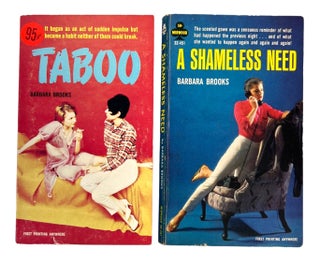
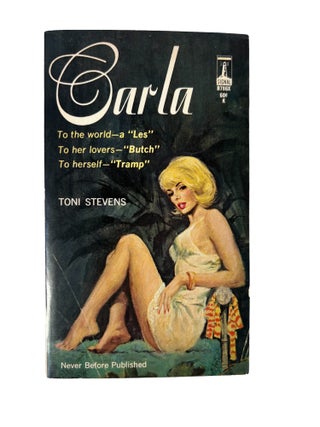
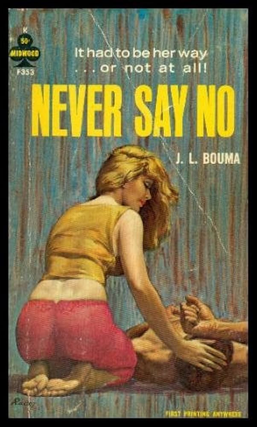
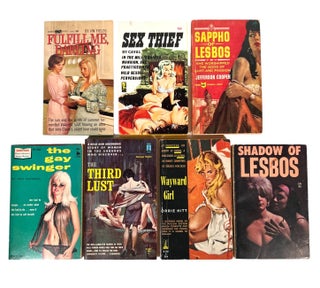
Mid-20th century American lesbian pulp novel archive documents representations of same-sex female desire and bisexual identity within mass-market publishing between 1950 and 1967, when homosexuality was widely stigmatized and regulated in law and popular discourse. Produced during a period shaped by censorship and moral scrutiny, these works circulated as some of the most accessible printed material depicting relationships between women, often framed through sensational or exploitative narratives while still providing points of recognition for readers exploring sexual identity. The archive reflects a spectrum of approaches, from overtly moralized depictions of deviance to more sustained portrayals of emotional and interpersonal relationships. It supports research in LGBTQ print culture, Cold War social norms, and the commercialization of sexuality in American publishing.Wood, Clement. Desire. New York: Berkley Publishing, 1950. Clark, Dorene. Different. New York: Beacon Books, 1960. Lake, Lester. Lady Lovers. Hollywood: All Star Books, 1962. Hunt, Gerald. Love Queen’s Remake. Royal Lines, 1964. Burgess, Michael. Playgirl. New York: Tower Publications, 1964. Muller, Irma. Never Again. Buffalo, New York: Boro Magazine Distributors, 1967. Six volumes, standard mass-market paperback format. Illustrated covers employ pulp conventions of provocative imagery and declarative taglines emphasizing taboo desire, moral conflict, and sexual experimentation. Narrative structures include small-town secrecy, romantic and exploitative relationships between women, intersections of sexuality and economic survival, and depictions of bisexual identity. Several works situate lesbian relationships within broader frameworks of social deviance or personal crisis, while others introduce more developed characterizations and emotional complexity.
These works were produced within a publishing environment shaped by obscenity enforcement and the legacy of the Comstock Laws, which required depictions of non-normative sexuality to be mediated through cautionary or sensational framing. Lesbian pulp fiction functioned simultaneously as commercial exploitation and as a limited but significant site of visibility for same-sex desire prior to the emergence of organized gay liberation movements. By the late 1960s, shifting cultural attitudes and activism began to alter both representation and reception, culminating in events such as the Stonewall Riots. Clean covers and pages with tight textblocks; light handling wear consistent with age; overall good to very good condition. A representative grouping illustrating the range of lesbian and bisexual representation in mid-century American pulp publishing.
Item #22712
Price: $750.00
See all items in Lesbian Literature & Pulp
See all items in LGBTQ+ History, Mass Media & Popular Culture, Archive
See all items by Dorene Clark
Suggested Lesbian Literature & PulpBrowse All




Suggested LGBTQ+ HistoryBrowse All



Suggested ArchiveBrowse All



Suggested Mass Media & Popular CultureBrowse All


