World War II in the Aleutians: U.S. Army Engineers and Military Operations in Alaska's North Pacific Frontier.
Photograph
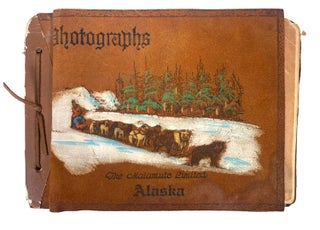
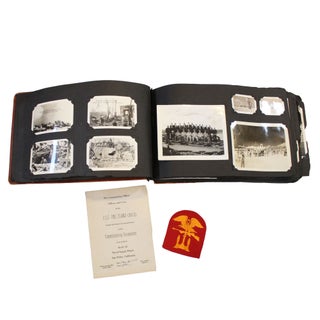
AArchive of 64 original black-and-white photographs documenting American military operations and engineering activities in the Aleutian Islands during World War II. Photographs measure approximately 4.5" x 3.5" and provide an extensive visual record of one of the most remote and environmentally challenging theaters of the war. The images chronicle the daily work of U.S. Army personnel and Army Engineers stationed across the Aleutian chain, where military forces confronted not only the threat of enemy action but also some of the harshest conditions faced by American troops anywhere during the conflict. Soldiers appear throughout the archive wearing cold-weather gear, field jackets, heavy boots, and M1 steel helmets while working, patrolling, and constructing infrastructure amid windswept volcanic landscapes.A significant portion of the collection documents the enormous logistical effort required to sustain military operations in the islands. Engineers are shown surveying terrain, operating equipment, cutting and processing timber, and building facilities essential to maintaining isolated military outposts. Several striking photographs depict large timber-log chutes descending steep hillsides toward the shoreline, apparently designed to move heavy equipment and supplies through terrain where conventional transportation proved difficult. Other images record lumber operations, construction projects, and the continual adaptation of military infrastructure to the rugged environment. The archive also contains numerous panoramic views of the Aleutian landscape itself. Snow-covered mountains, barren volcanic ridges, isolated coastlines, glacial valleys, and treeless tundra dominate many photographs, illustrating why the campaign became as much a battle against geography and weather as against enemy forces. The Aleutian chain, stretching deep into the North Pacific and containing dozens of active and dormant volcanoes, represented one of the most isolated regions under American military control during the war.
Naval and maritime operations are likewise represented. Several photographs show transport and supply vessels anchored offshore or approaching remote coastal installations, highlighting the dependence of Aleutian bases upon sea-borne logistics. Military camps consisting of Quonset huts and tent encampments appear throughout the collection, while one particularly notable image captures an aircraft flying above a military installation, underscoring the importance of aerial reconnaissance and patrol operations in protecting the northern approaches to Alaska. Although often overshadowed by campaigns in Europe and the Central Pacific, the Aleutian campaign held considerable strategic importance. Following the Japanese occupation of Attu and Kiska in 1942, American forces undertook a costly effort to secure the islands and maintain control of the northern Pacific. These photographs document the infrastructure, manpower, and determination required to operate in a theater where extreme weather, isolation, and difficult terrain shaped every aspect of military life. A substantial and visually compelling archive documenting the engineering, logistical, and environmental realities of America's northernmost front during World War II. Photographs remain in very good condition with minor surface wear and occasional light creasing.
Item #21578
Price: $550.00
See all items in Other (American History), Alaska, Environment & Resources, World War II
See all items in American History & Americana, American History by State, Labor, Environment & Industry, Military & War, Archive
See all items by Army Engineers in Aleutian Islands Alaska
See all items in Alaska
Suggested World War IIBrowse All




Suggested Other (American History)Browse All








Suggested AlaskaBrowse All




Suggested ArchiveBrowse All