World War II Japanese American Internment Photographs from Heart Mountain Wyoming and Amache Colorado
Photograph
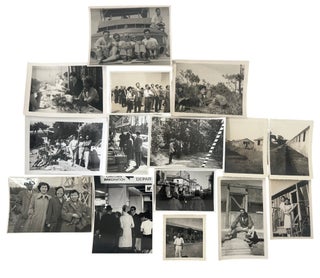
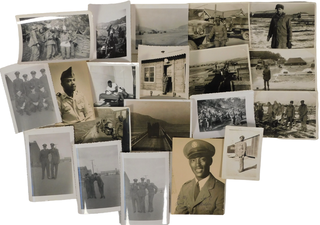
Japanese American incarceration photographs dating from World War II document daily life among families confined in War Relocation Authority camps in the United States. Following Executive Order 9066 in 1942, more than 120,000 people of Japanese ancestry were removed from their homes on the West Coast and placed in a network of relocation centers administered by the federal government. The images focus on women and children at two of these sites, Heart Mountain in Wyoming and Amache in Colorado, and preserve visual evidence of family life within the camps during the war. These photographs illustrate the lived experience of Japanese American civilians confined under wartime policy while attempting to maintain ordinary social and family life.Archive consists of eight items including six original silver gelatin photographs, one photographic negative, and one postal envelope measuring approximately 2 × 2 inches to 3 × 4 inches. The photographs depict Japanese American women and children standing together outdoors with barracks style camp buildings visible in the background. Several images show mothers posed with young children in front of the wooden housing units typical of War Relocation Authority camps. Clothing and hairstyles reflect contemporary 1940s American fashion. The postal envelope was sent from Poston War Relocation Center in Arizona and addressed to Mrs. Asoko Kudon at Heart Mountain in Wyoming, bearing a postmark dated June 4, 1943. One small wallet photograph included in the group shows an American soldier standing before a stone monument during service in Japan.
Heart Mountain Relocation Center in Park County, Wyoming, was one of the largest of the ten major camps operated during the war, housing nearly fourteen thousand people at its peak population. Amache, located near Granada, Colorado, held more than seven thousand internees, the majority of whom were United States citizens by birth. Living quarters typically consisted of small rooms within hastily constructed barracks assigned to individual families. Heart Mountain later became notable for organized resistance to the wartime draft imposed on incarcerated Nisei men, an episode that raised broader questions about citizenship rights for Japanese Americans during the conflict. The photographs provide a small but direct visual record of families living within these wartime confinement sites. Light age wear consistent with vernacular photographs; images remain clear and well preserved. Very good condition overall and a poignant record of Japanese American family life in wartime relocation centers.
Item #21143
Price: $1,850.00
See all items in Colorado, Wyoming, Japanese American Internment, World War II, Military & War Photography
See all items in American History by State, Asian American History, Military & War, Photography
See all items by WWII Internment Camp
Suggested Japanese American InternmentBrowse All




Suggested World War IIBrowse All



Suggested ColoradoBrowse All




Suggested WyomingBrowse All