Black Army Transportation Corps Soldiers from Segregated World War II Service to the Truman Desegregation Era, Occupied Japan, Belgium, and Germany in 100 Photographs, 1941-1952
Photography
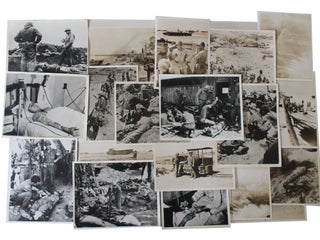
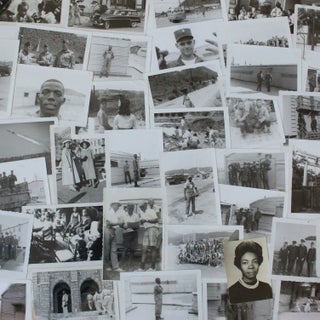
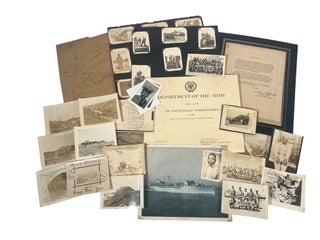
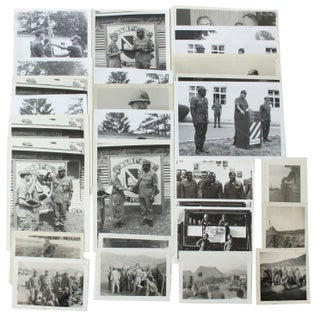
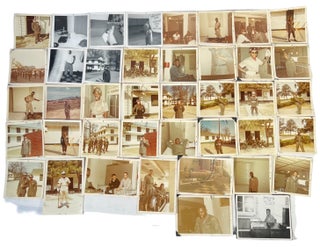
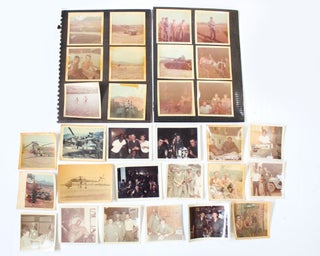
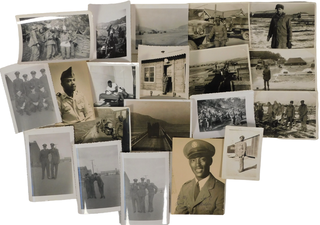
African American Army Transportation Corps photo archive depicting Black enlisted men and noncommissioned officers in wartime transport service, occupation duty, and domestic training between 1941 and 1952. The strongest identified material centers on the 3528th Transportation Corps Truck Company, active from 1943 to 1946, and its successor, the 551st Transportation Corps Truck Company, active from 1946 to 1947. A captioned portrait places Joseph Galloway “somewhere in Belgium” on December 6, 1944, ten days before Germany opened the Ardennes offensive that became the Battle of the Bulge. President Harry S. Truman issued Executive Order 9981 on July 26, 1948, requiring “equality of treatment and opportunity” in the armed services, but Army integration unfolded gradually through the occupation years and into the 1950s.Photo archive of 100 silver gelatin photographs, ranging from 1.75 x 2.25 inches to 3.75 x 5.5 inches, United States, Belgium, Japan, and West Germany, circa 1941-1952. More than half show Black soldiers in uniform, including studio and outdoor portraits, weapons training, field scenes, recruits, and senior noncommissioned officers. Galloway poses with a pistol in Belgium; transport trucks appear in operation and maintenance; unit facilities, domestic training camps, interregimental competitions, a 155 mm howitzer, and soldiers beside a Sherman tank marked “Barbra” extend the record beyond portraiture. Occupation-era scenes include bombed urban landscapes in Japan, locations identified as Osumi and Kyoto, Black troops with Japanese civilians, Buddhist monks at a temple, and later service in West Germany including Bonn and Karlsruhe. Approximately one quarter bear manuscript captions identifying individuals, dates, or locations.
In WWI, many Black troops were denied combat roles and assigned to stevedore work, labor battalions, butchery companies, road work, hauling, unloading ships, and other manual support duties. The National Archives specifically notes that many Black units were kept from front-line fighting and “relegated to support duties.” These Black soldiers served heavily in transportation, engineering, construction, and supply roles during World War II, making Army logistics one of the central places where African American military labor sustained Allied movement while the armed forces remained segregated. Several scenes place Black and White soldiers working alongside one another, preserving the transitional military culture between wartime segregation and the uneven implementation of Truman’s desegregation order. Light edge wear, occasional creasing, and minor surface abrasions to several prints; manuscript captions legible where present; no significant losses observed. Overall in very good condition. The archive gives named faces, unit evidence, vehicles, weapons, occupation landscapes, and manuscript identifications across the decade when Black military service moved from segregated wartime labor toward formal integration.
Item #19692
Price: $2,800.00
See all items in African American Military Service, World War II, African American Photography, Japan
See all items in African American History, Military & War, Photography, World History by Geography
See all items by W W. II identified Black soldier Archive
Suggested African American Military ServiceBrowse All





Suggested World War IIBrowse All



Suggested African American PhotographyBrowse All



Suggested JapanBrowse All