

African American Representation and Independent Film in John Cassavetes’ Shadows, 1959
Pamphlets
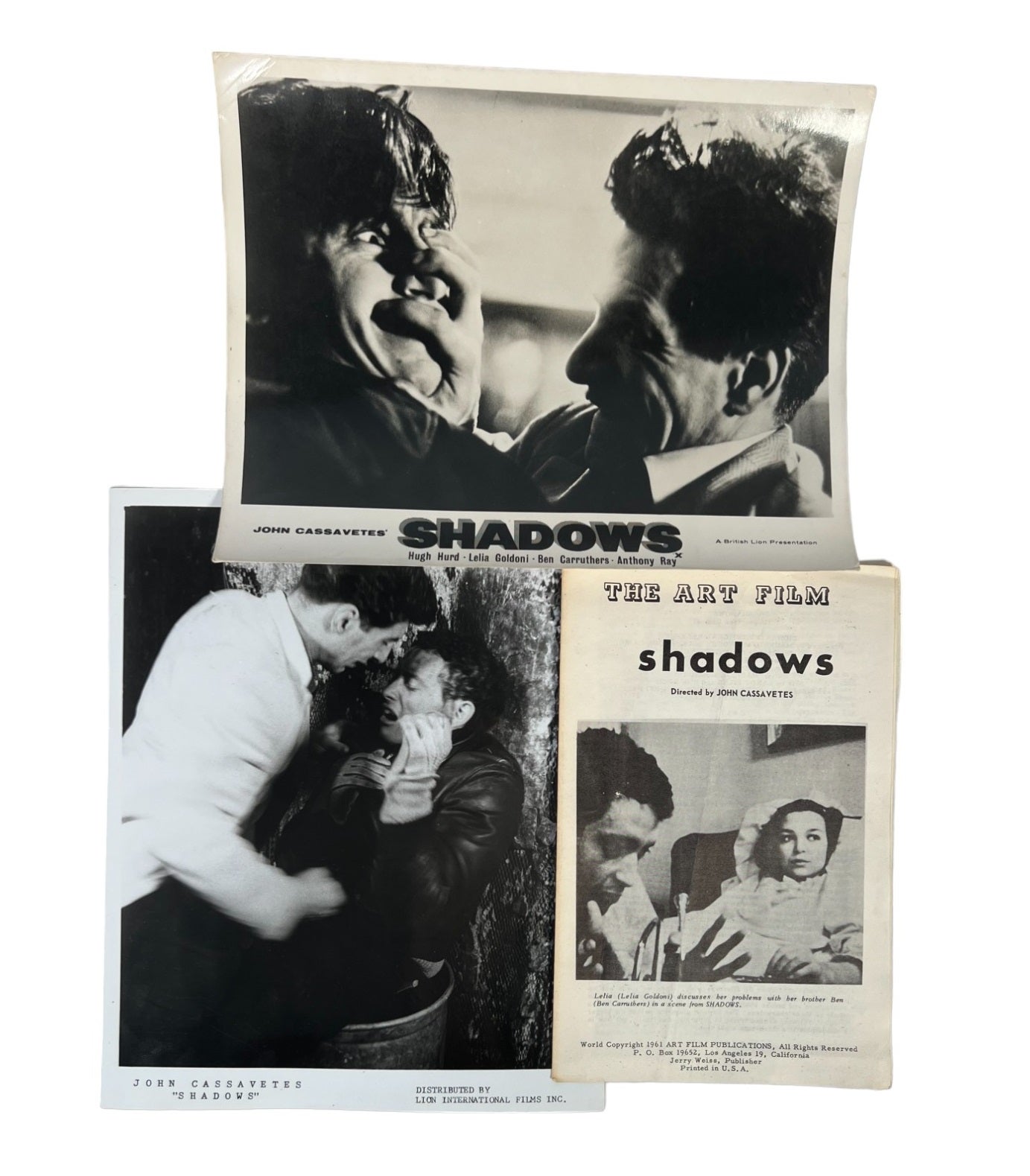
Cassavetes, John. Shadows (1959) introduced a foundational work of American independent cinema through its direct engagement with racial identity, interracial social dynamics, and urban life in Beat Generation-era New York. Centered on three Black siblings navigating differing social perceptions of race based on skin tone, the film departs from studio conventions through improvised structure and non-professional performance, contributing to early developments in independent production outside Hollywood systems. Its recognition, including the Critics Award at the Venice Film Festival, and later critical assessment by Leonard Maltin as a milestone in independent filmmaking, situates the work within research on African American representation, postwar urban culture, and the emergence of alternative cinematic practices.John Cassavetes’ Shadows. New York: Lion International, 1959. Archive consisting of 2 original silver gelatin photographic lobby stills and 1 softcover Art Film Critic Review pamphlet. The black-and-white photographs, each measuring approximately 8 x 10 inches, depict scenes from the film featuring the central sibling characters in urban interiors and street settings, emphasizing interpersonal tension and social interaction. Both stills retain printed lower margins with the film title and distribution information, consistent with their use as theatrical display materials. The accompanying pamphlet features an illustrated cover and contains a two-page critical essay by Colin Young, then affiliated with UCLA, who writes: “Shadows shows us once again how to see. Its structure is simple and surprisingly uncluttered for a film which had no script. It's concern, quite simply, is to take us under the skin of a small group of people living on the fringes of conventional New York society.”
Produced during a period of increasing attention to race relations in the United States, Shadows aligns with contemporaneous cultural movements exploring identity, visibility, and social boundaries within urban environments. Its improvisational method and focus on marginalized lives contributed to the development of American independent cinema and influenced subsequent filmmakers working outside institutional frameworks. Light handling wear and minor surface markings; overall very good condition. A compact grouping of visual and critical materials associated with a key early independent film addressing race and representation.
Item #19643
Price: $450.00
See all items in African American Film, Art & Entertainment, New York, African American Film, Art & Entertainment, Production Stills, Lobby Cards, & Posters, Film & Television, Documentary & Press Photography
See all items in African American History, American History by State, Film & Entertainment, Mass Media & Popular Culture, Photography
See all items by John Cassavetes
See all items in New York
Suggested New YorkBrowse All





Suggested PhotographyBrowse All

Suggested African American HistoryBrowse All


Suggested American History by StateBrowse All