Early American Motorsports History: Daytona Beach Photographic Archive of Ralph De Palma’s World Straightaway Records, 1919
Archive
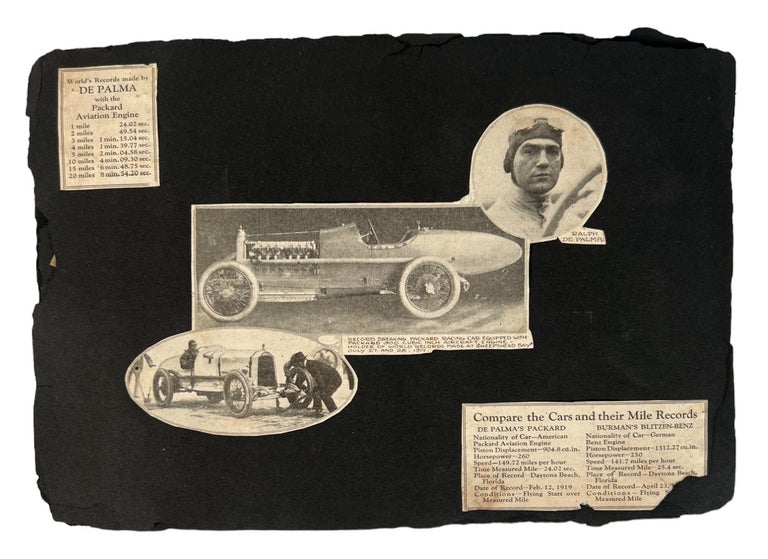
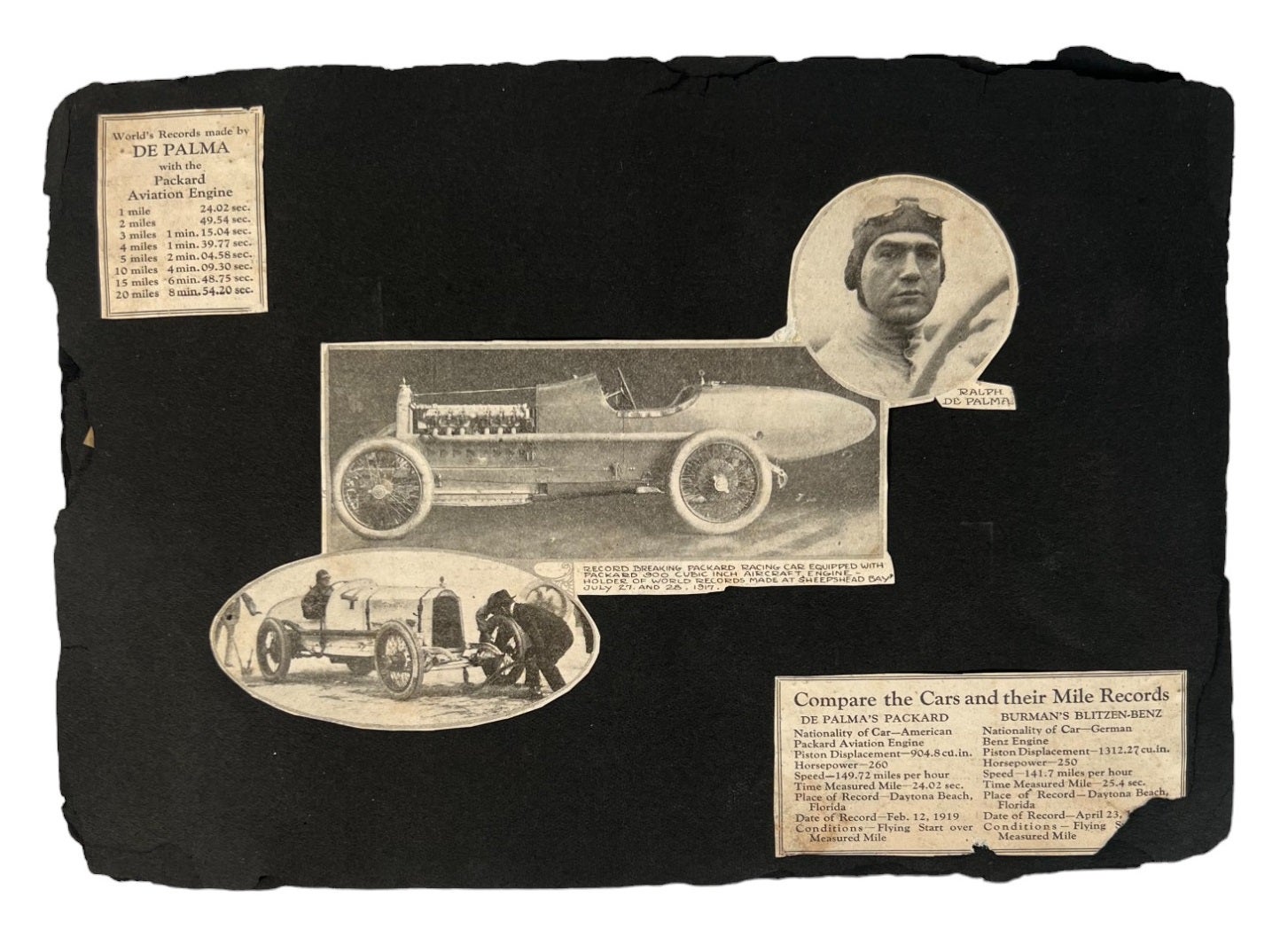
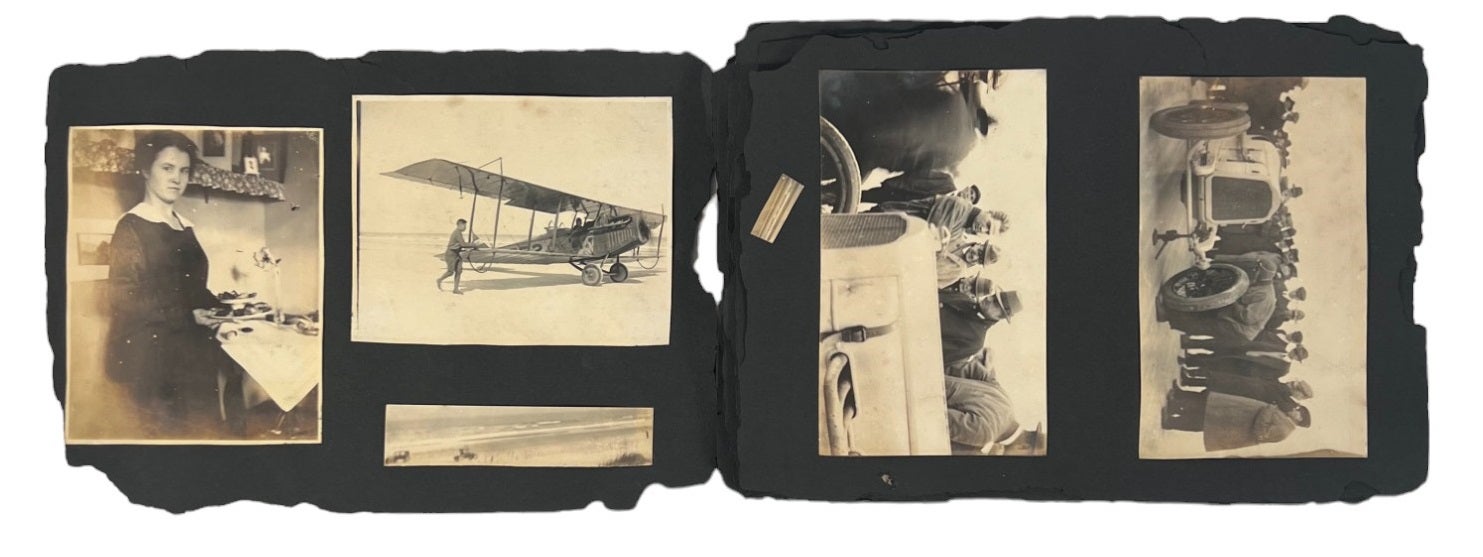
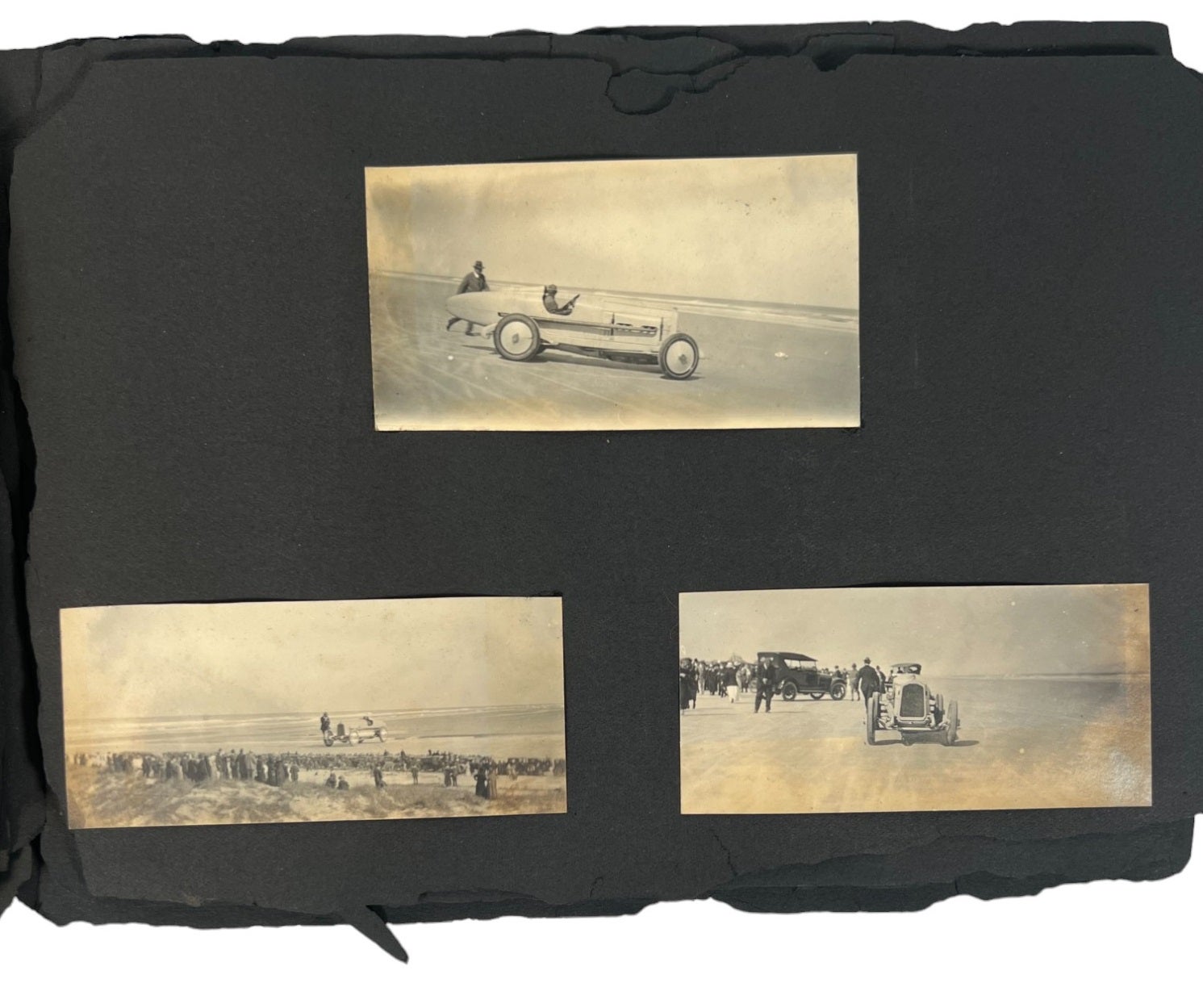
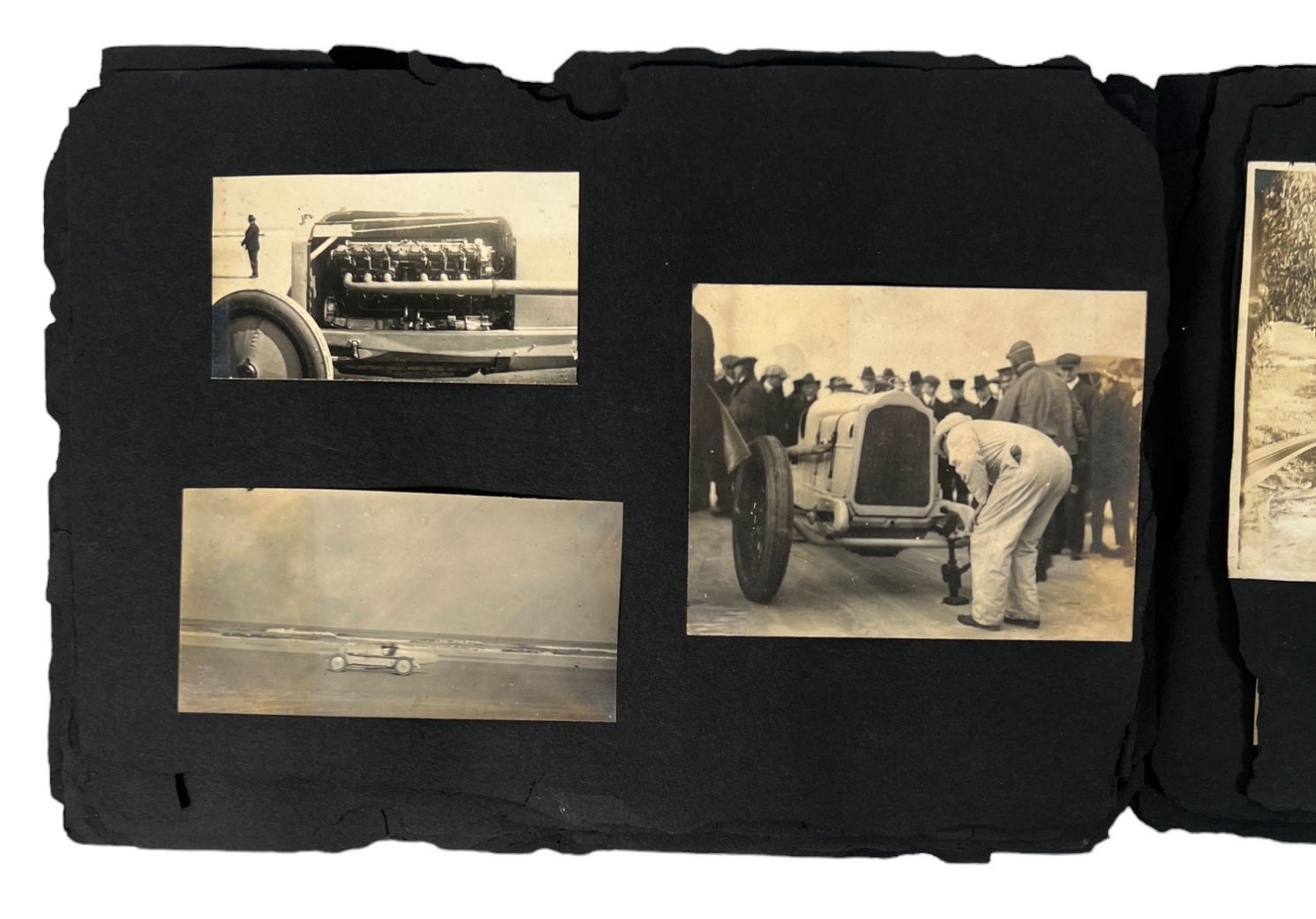
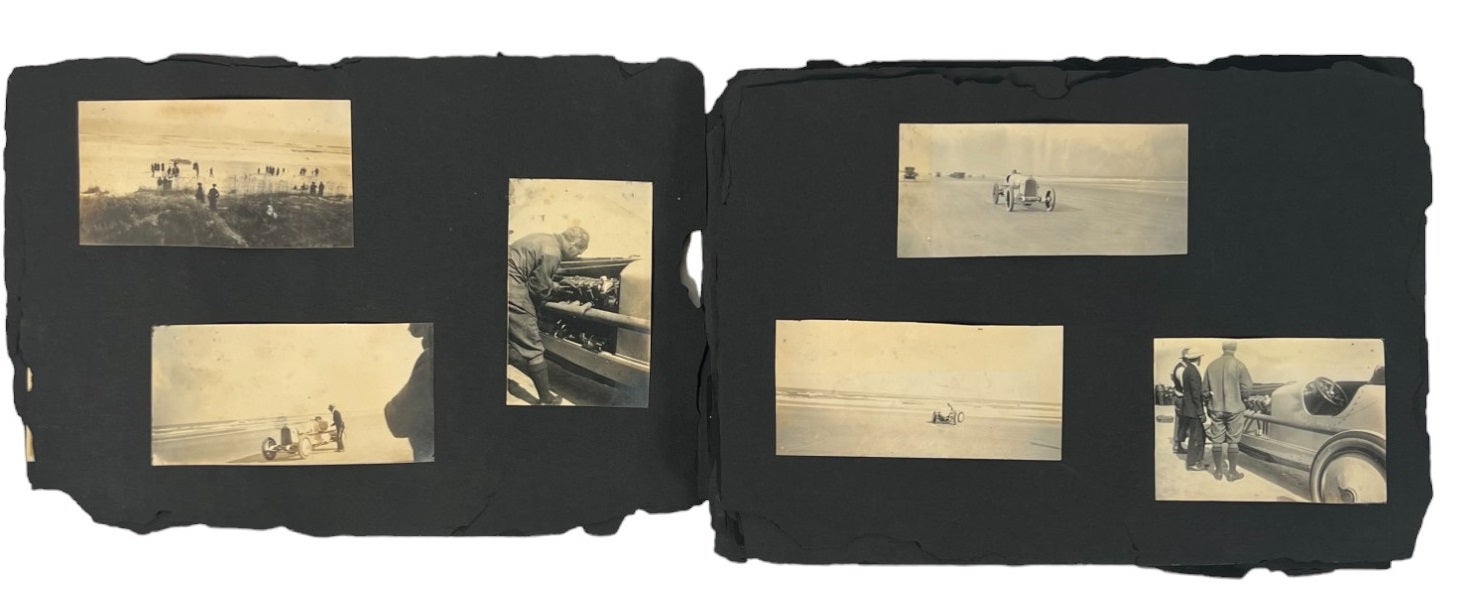
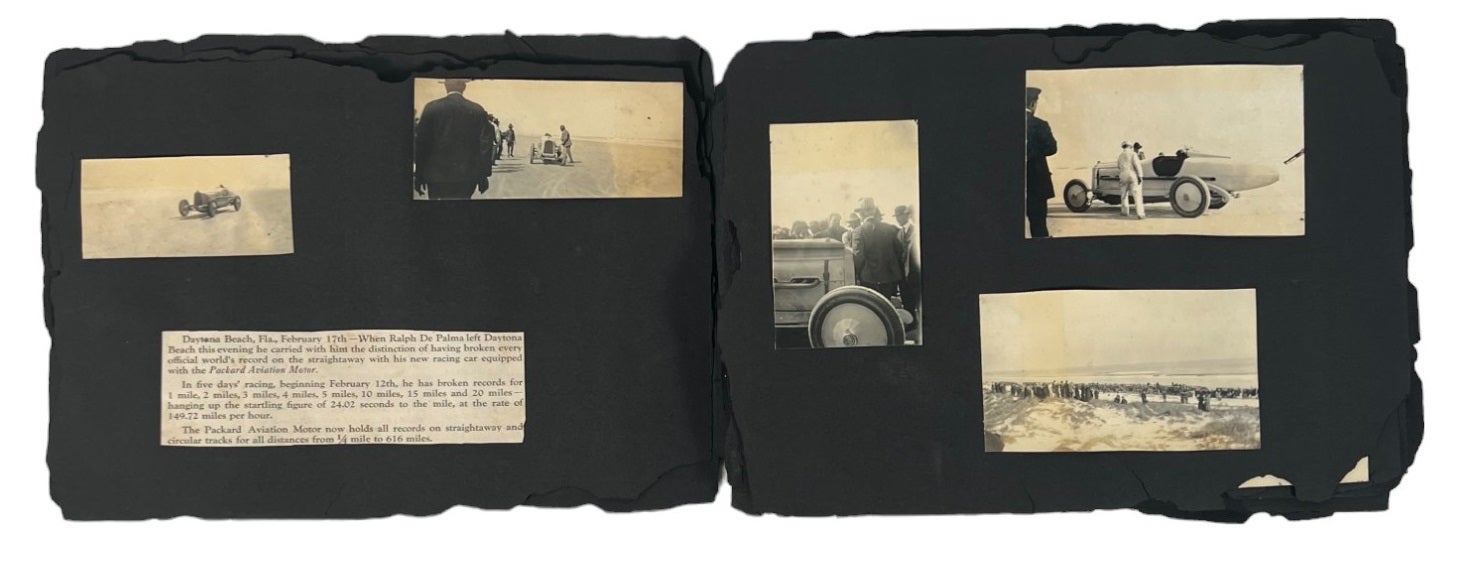
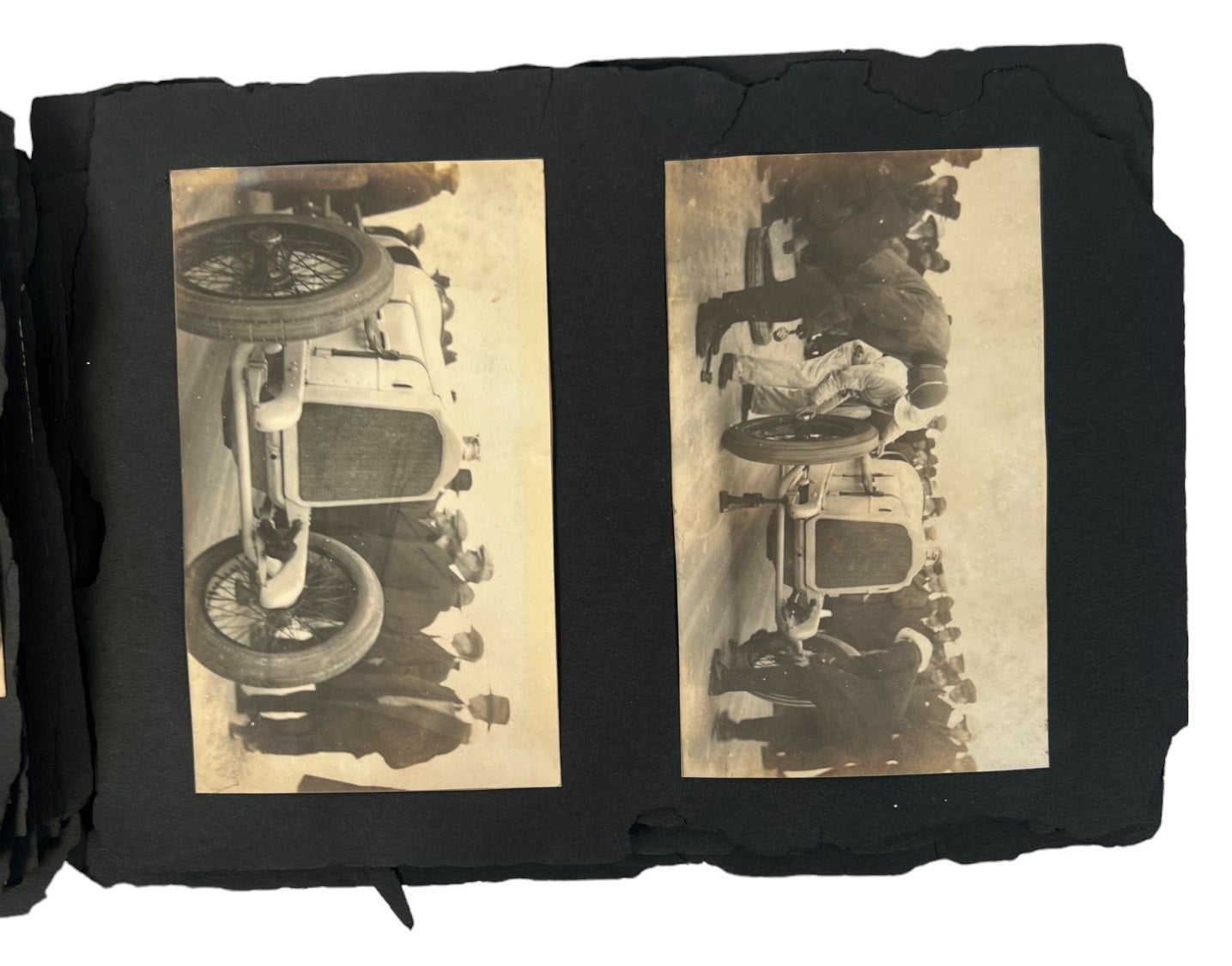
Photographic archive documenting Ralph De Palma’s February 12–17, 1919 Daytona Beach straightaway record runs captures a pivotal episode in early American motorsports and post–World War I mechanical experimentation. De Palma, one of the most prominent drivers of the era, set world straightaway records in a Packard race car powered by a 260-horsepower aviation engine, demonstrating the transfer of wartime aeronautical technology into civilian speed competition. The photographs record De Palma racing along the hard-packed sands of Daytona, breaking records for 1, 2, 3, 4, 5, 10, 15, and 20 miles at a time when Packard held national straightaway and circular track records from a quarter mile to 616 miles. Created in the immediate aftermath of World War I, the archive situates beach racing within broader histories of industrial innovation, spectacle culture, and the development of American automotive identity that would later culminate in organized stock car racing and the founding of NASCAR.Archive consists of 122 original photographs mounted on 24 loose, double-sided black album pages, accompanied by newspaper clippings referencing De Palma’s straightaway record and printed statistics describing the Packard vehicle. Photographs generally measure approximately 3 x 2 inches to 5.5 x 3.5 inches. Images include action views of De Palma driving at speed along the shoreline, changing a tire, and tuning the engine; close views of the Packard automobile, including an image showing exterior engine paneling secured with a leather belt; and scenes of approximately one hundred spectators gathered on the beach during the February record attempts. Additional photographs depict a biplane, steamboats, a Ford Model T, a U.S. M1917 light tank, a crowd assembled around a plane crash on the beach, and expansive views of Daytona’s coastal topography with palm-lined beaches, marshes, bays, and groves of oranges and palmettos.
Daytona Beach in this period functioned as a natural proving ground for speed trials, attracting drivers who sought stable, flat terrain for record attempts before the widespread construction of purpose-built tracks. The presence of aviation technology in De Palma’s Packard underscores the fluid exchange between military engineering and peacetime competition in 1919, while the assembled crowds and press clippings document the growing popular fascination with mechanized speed. Loose album pages exhibit edge chipping and handling wear; photographs themselves remain clean and well preserved with strong clarity. Overall very good condition. Cohesive visual record of early twentieth-century American racing culture at the moment when beach speed trials helped shape the trajectory of modern motorsport.
Item #17529
Price: $1,200.00
See all items in Florida, Biker Subculture & Auto Racing, Sports, Cooking & Hobbies
See all items in American History by State, Mass Media & Popular Culture, Photography, Archive
See all items by Daytona Beach NASCAR
See all items in Florida
Suggested FloridaBrowse All


Suggested PhotographyBrowse All




Suggested ArchiveBrowse All




Suggested American History by StateBrowse All