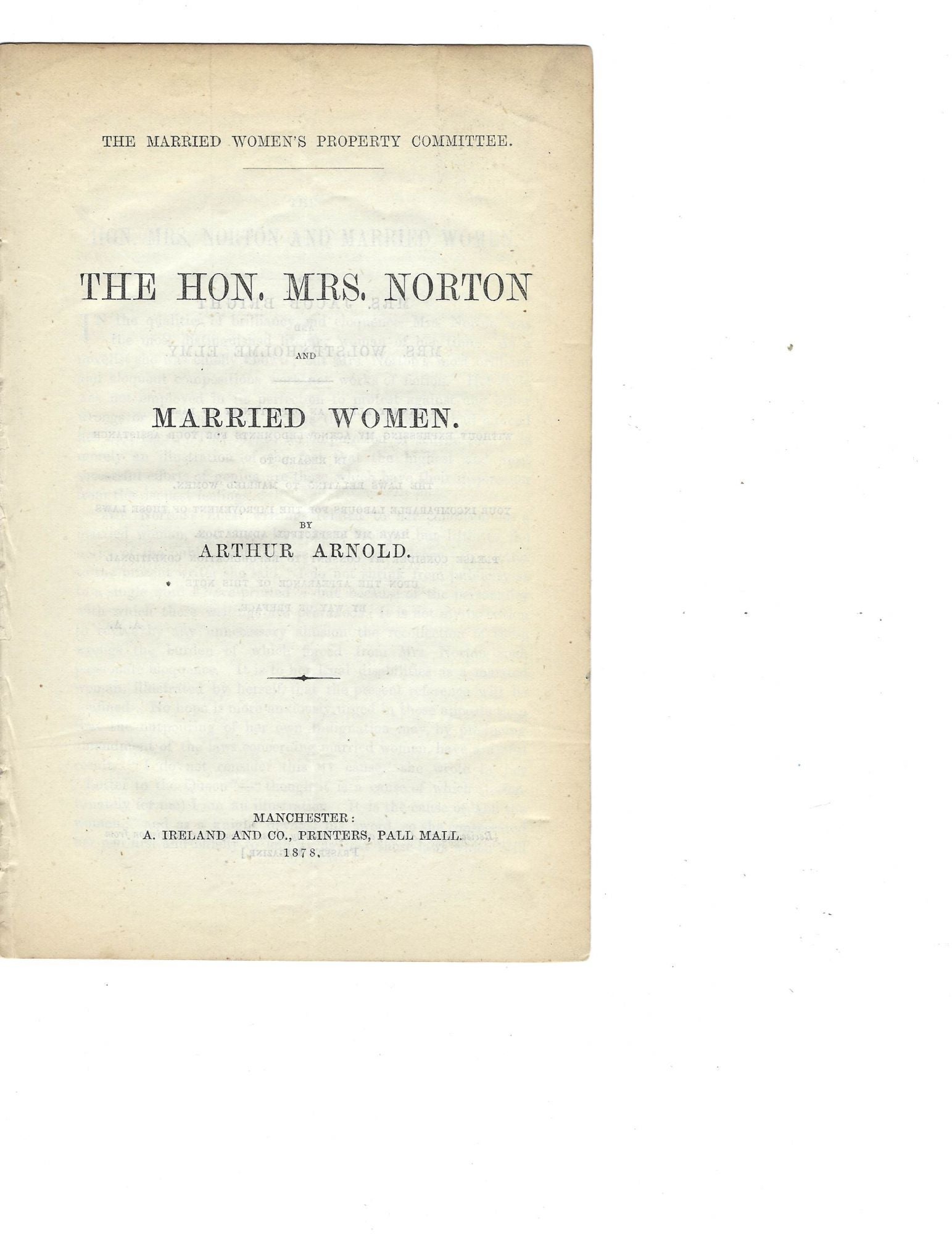
Feminism and Women’s Property Rights in Arthur Arnold’s The Hon. Mrs. Norton and Married Women, 1878
Pamphlets
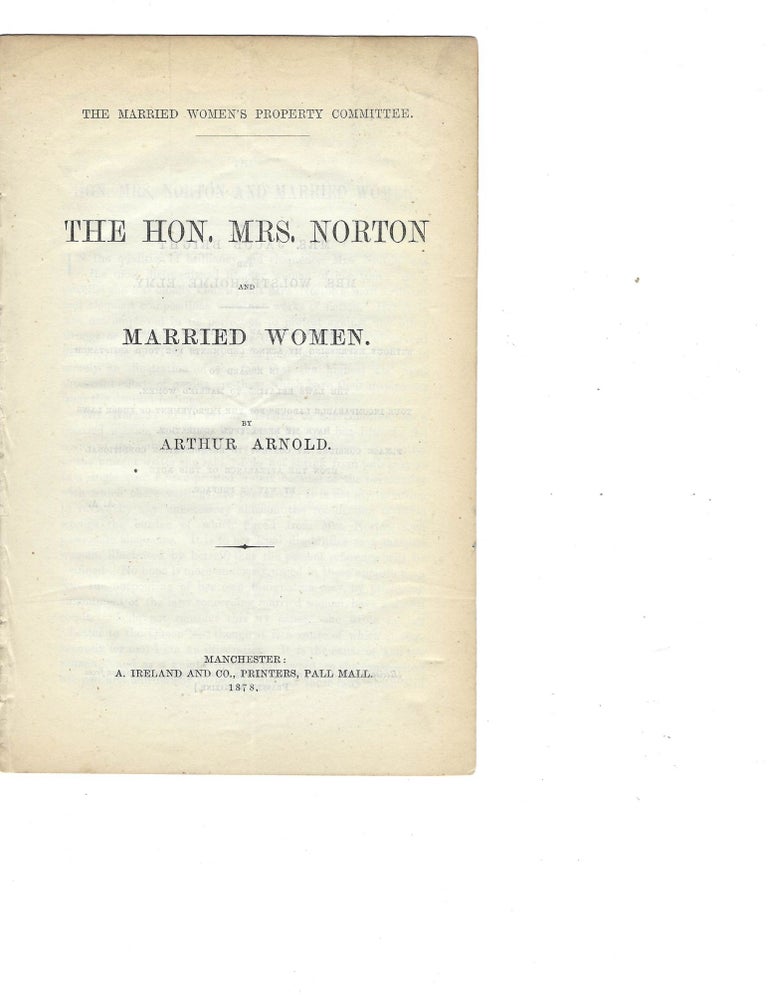
Arnold, Arthur. The Hon. Mrs. Norton and Married Women, 1878, documents the legal reform campaign for married women’s property rights through the public memory of Caroline Norton’s conflicts over marriage, custody, and economic autonomy. The pamphlet belongs to the organized legal reform system that challenged coverture and the legal subordination of married women, showing how reformers used Norton’s case to explain the practical consequences of laws that gave husbands control over wives’ property and children. Norton’s campaign for custody reform helped produce the Custody of Infants Act of 1839, which allowed mothers to petition for custody of young children and access to older children, and later reform work addressed property and marital law more broadly.Arnold, Arthur. The Hon. Mrs. Norton and Married Women. Manchester: The Married Women’s Property Committee, A. Ireland and Co., Printers, 1878. 15 pages. 7 x 5 inches. Pamphlet issued by the Married Women’s Property Committee, presenting Norton’s legal and personal struggles as evidence for continued reform after the Married Women’s Property Act of 1870. The text explains the consequences of married women’s limited legal identity, including the denial of access to children and the dependence of women’s property rights on marital status. Its committee imprint and argumentative structure demonstrate the process by which women’s rights advocates translated individual injustice into legislative pressure, providing evidence for the study of feminist legal organizing, Victorian marriage law, and the public uses of women’s life writing in reform campaigns.
The pamphlet appeared between the 1870 Married Women’s Property Act, which allowed married women to keep earnings as their own property, and the 1882 extension that gave married women broader control over property in their own right. Its 1878 date places it within an active period of legal agitation, when reformers treated the 1870 act as an incomplete measure rather than a settled victory. Vertical fold down center with creasing, some losses, adhesive residue at edge from previous binding, and light toning; good. Focused evidence of how Caroline Norton’s case remained useful to feminist legal reformers seeking fuller economic and civil autonomy for married women.
Item #16241
Price: $480.00
See all items in Europe, Law & Public Policy, Social Activism, Women’s Liberation & Feminism, Women’s Suffrage & Early Women’s Rights
See all items in International & Global Culture, Law, Incarceration & Public Policy, Social Activism & Protest, Women’s History & Feminism
See all items by Married Women Property Rights
See all items in England
Suggested Social ActivismBrowse All



Suggested EuropeBrowse All