Women’s Education History Female Seminary Letters and Educational Reform Lecture 1813 to 1926
Archive
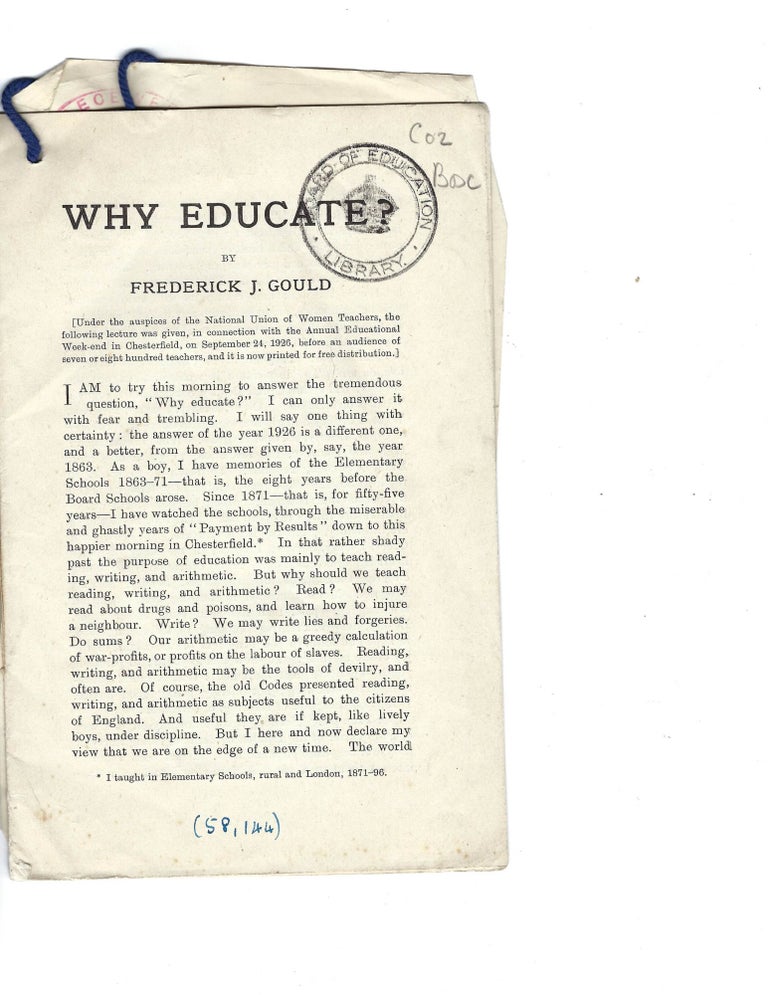
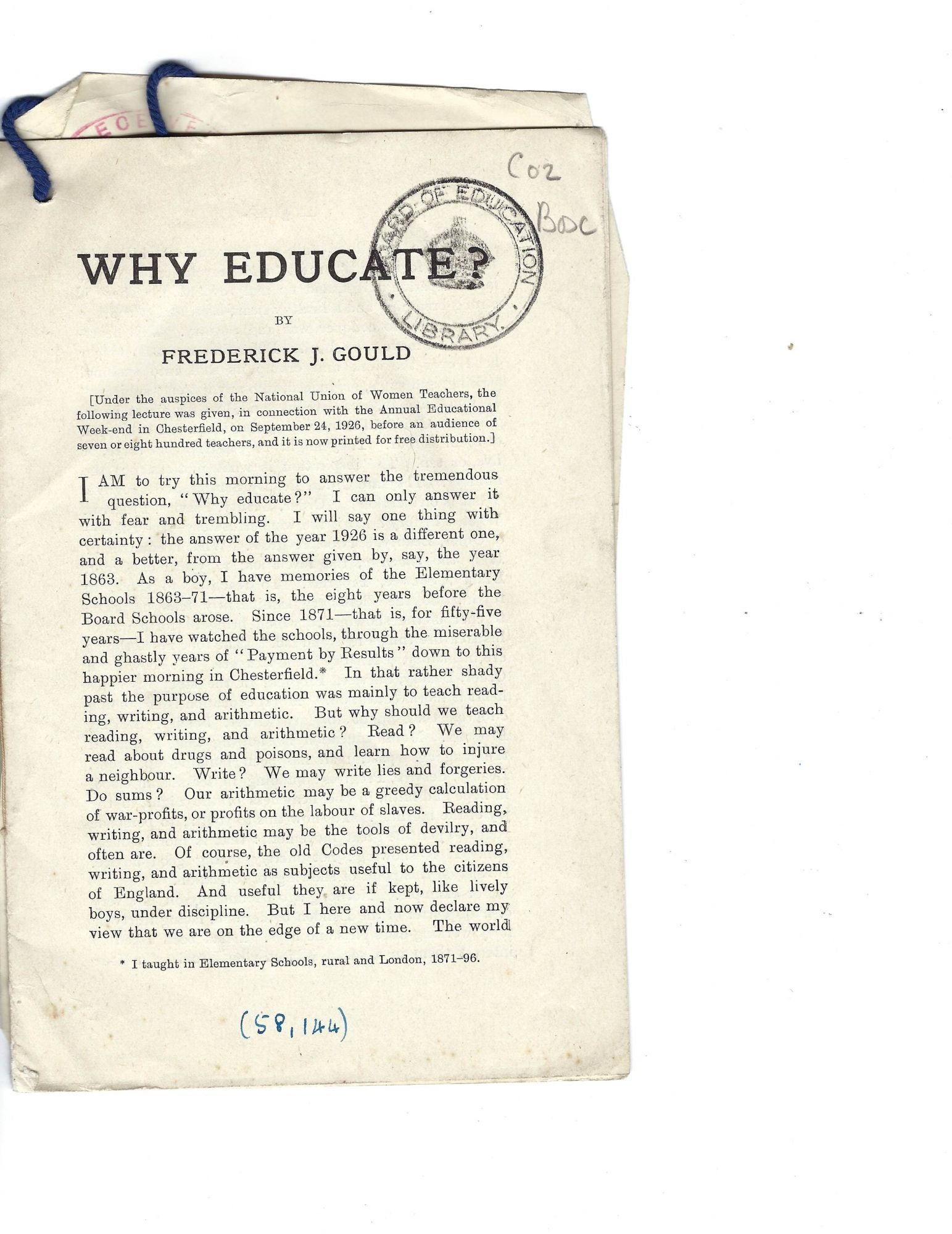
Women’s education materials, 1813–1926, document the lived experience of female schooling across the nineteenth and early twentieth centuries, including seminary training, scientific study, and political awareness prior to national suffrage. The grouping places early republic religious education alongside mid-nineteenth-century academic instruction and late nineteenth-century political consciousness, concluding with a twentieth-century pedagogical lecture directed toward women teachers. Together, the materials capture women’s direct engagement with intellectual, scientific, and civic life through personal correspondence and formal educational discourse.Four items, 1813–1926, consisting of three Autograph Letters Signed and one printed pamphlet. [1] Hillner, Louis. Autograph Letter Signed in response to guardian of Eliza Climer. Bethlehem, April 22, 1813. Two letters on one sheet, including a request from Climer’s guardian for her removal from the Bethlehem Female Seminary and Hillner’s reply noting that she “lamented and wept” at the prospect of leaving and petitioned to remain, which he supports as “for her best” if permitted to continue her studies. [2] Hemstreet, Eloise. Autograph Letter Signed to her mother, 1854. Letter describing her school as “the best of schools and one of the edens of the earth,” with specific reference to scientific instruction and anticipation of viewing “the eclipse through the telescope,” indicating active participation in astronomy. [3] Unidentified student. Autograph Letter Signed. Western Female Seminary, Oxford, Ohio, October 19, 1879. Letter discussing recent gubernatorial elections and public political discourse, stating, “The principal topic here for the last week has been the election…It will be so nice to be at home next Presidential Election,” documenting student engagement with electoral politics prior to the ratification of the Nineteenth Amendment. [4] Gould, Frederick J. Why Educate? Chesterfield: National Union of Women Teachers, 1926. Printed pamphlet of a lecture delivered before women educators advocating intellectual breadth beyond rote instruction, declaring, “Education must no longer bend over the desk and cramp its soul into spelling, writing, and sums…It must live in, and live by, and live for, great ideas.”
Female seminaries in the early nineteenth century, including Bethlehem Female Seminary, operated within religious institutional frameworks that emphasized moral discipline alongside academic study, while mid-century curricula increasingly incorporated scientific subjects such as astronomy. By the late nineteenth century, women students were actively observing and discussing electoral politics despite lacking formal voting rights, indicating participation in public discourse prior to the ratification of the Nineteenth Amendment to the United States Constitution. Gould’s 1926 lecture reflects interwar educational reform movements that advocated broader intellectual development for both teachers and students. Minor fold lines and light handling wear to manuscript letters; pamphlet with slight edge wear and light toning; text throughout clear and legible; overall very good condition. A chronologically layered grouping demonstrating continuity and change in women’s educational experience from early seminary culture to modern pedagogical theory.
Item #15036
Price: $485.00
See all items in Women’s Education
See all items in Women’s History & Feminism, Archive
See all items by Early Women’s Education
Suggested Women’s EducationBrowse All



Suggested Women’s History & FeminismBrowse All




Suggested ArchiveBrowse All