Album of 115 Photographs of Xochimilco, Indigenous Markets, and Postrevolutionary Mexico, circa 1948-1952
Photograph
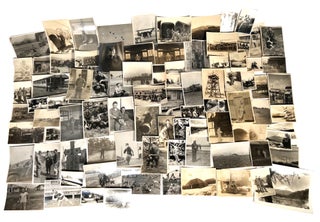
Central Mexico photo archive depicting markets, transportation, public celebration, and regional life during the early postwar decades, when the social and economic reforms initiated after the Mexican Revolution continued to reshape the country while older commercial traditions remained firmly embedded in daily life. The photographs concentrate on the interaction between long established Indigenous and mestizo communities, expanding urban centers, and the transportation corridors that linked agricultural production, regional markets, archaeological monuments, and Mexico City. While photographed by a group of American tourists traveling through Mexico, the album repeatedly returns to the people whose labor sustained thes documented cities: market vendors, boatmen, musicians, farmers, muleteers, artisans, ranch workers, and performers whose occupations formed the everyday economy of central Mexico during one of the country's most transformative periods.Photo archive of 115 silver gelatin photographs, approximately 3 x 4.5 inches, central Mexico, circa late 1940s to early 1950s. The photographs depict extensive views of Xochimilco, including trajineras navigating the canals, mariachi ensembles performing aboard boats, boatmen poling passengers through waterways lined with ahuejote trees, canal landings, floating gardens, and excursion boats marked "Castan Tours." Numerous photographs record crowded regional markets where Indigenous and rural vendors sell vegetables, pottery, woven baskets, hats, textiles, and household goods beneath temporary awnings, while commercial signs identify businesses including "La Perla," "Salón Veracruz," "La Metalúrgica," and "La Surtidora." Other photographs show women carrying produce, burros transporting agricultural loads, charros in Chapultepec Park, roadside villages, railroad tracks, civic buildings, hotels, swimming facilities, gardens, panoramic views of Puebla and Guanajuato, the Mexico City Cathedral, Teotihuacán including the Pyramids of the Sun and Moon, and a substantial sequence documenting a bullfight from the opening procession through the corrida and removal of the bull. Numerous versos carry contemporary handwritten captions including "Outside Xochimilco," "Mexican charro in Chapultepec Park with girl," "Jolueo market," "Market at San Martin," "Cathedral Mexico City," "Puebla house," "Burro with hay," "Xochimilco floating gardens," "The beginning of the fight," "The procession," "Bull fight," "Party at bull fight," and "The dead bull being dragged out of the arena."
The album records central Mexico during the decades commonly identified as the Mexican Miracle, when rapid industrial expansion, highway construction, and urban growth transformed the national economy without displacing older regional systems of exchange that had operated for centuries. Xochimilco remained both an agricultural landscape and an active commercial water network supplying Mexico City through its chinampas, while regional markets continued to function as centers where Indigenous producers, merchants, and consumers exchanged agricultural products, livestock, manufactured goods, and household necessities. The repeated attention given to vendors, transportation, agricultural labor, canal traffic, public festivals, mariachi musicians, bullfighting, archaeological monuments, and provincial streets creates a broad documentary record of the coexistence of traditional commerce and accelerating modernization across central Mexico immediately after the Second World War. Leather album binding worn but sound with no loose pages; several photographs removed from album leaves, numerous captioned versos, photographs remaining in very good condition.
Item #23624
Price: $850.00
See all items in Latino Community & Immigration, Travel & Cultural Photography, Mexico, South & Central America
See all items in Chicano & Latin American History, Photography, World History by Geography
See all items by Postrevolutionary Mexico Photograph Album
See all items in Mexico
Suggested PhotographyBrowse All


Suggested World History by GeographyBrowse All