U.S. Navy Helicopter Rescue Training with Women in Operational Rescue Roles, 1970s
Photograph
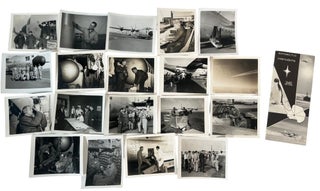
[Navy][Women and Military Rescue Operations] U.S. Navy helicopter rescue training photo archive, circa 1970s-1980s, documenting over-water emergency recovery drills during the early period when women were beginning to participate more visibly in naval rescue support, shipboard emergency work, and aviation-adjacent training. The archive documents women as active participants in the handling of a rescued person: preparing the litter, assisting with stretcher movement, working around the helicopter rescue opening, and participating in the shipboard transfer of a restrained casualty. Women participation in rescue missions had just started at the time. The sequence records coordinated marine rescue between aircraft crews, rescue swimmers, and shipboard medical personnel during a period when helicopters had become central to recovering downed pilots, injured crewmen, and personnel lost overboard from aircraft carriers, amphibious ships, and support vessels. In a rescue environment still largely associated with male rescue swimmers, aircrew, and deck personnel, the presence of women within the operational rescue sequence gives the archive added importance as a record of gender integration into the practical, physical, and technical emergency work that supported Cold War naval operations.Photo archive of 26 silver gelatin photographs, each about 4 x 5 inches, San Diego area, circa 1970s-1980s. Flight-helmeted personnel prepare a litter, secure a body with straps, guide hoist lines, and move a stretcher through a helicopter side opening marked with a large “RESCUE” arrow. Several scenes show rescue swimmers and crewmen working at the aircraft door, with oxygen cylinders, harnesses, flotation gear, helmets, communications equipment, and stretcher rigging visible. A rescue basket hangs above open water from a crane or hoist line; another basket carries a helmeted crewman inside a rope net. Interior views show uniformed personnel at communications stations and personnel inspecting chute-like equipment marked “PULL DOWN,” while deck scenes record hands-on medical handling and lift coordination. Women visible within the sequence participate directly in the rescue environment itself, appearing alongside male personnel during casualty stabilization, stretcher handling, and aircraft-door transfer procedures.
The archive preserves the practical choreography of naval rescue: equipment inspection, hoist transfer, aircraft-door loading, casualty stabilization, and movement on deck. It is a close procedural record of Cold War naval rescue training, with a focus on litter rigging, rescue hatch access, and the physical labor of moving a restrained casualty between aircraft and ship. The archive documents naval emergency procedure and women’s visible participation at the beginning of their broader integration into rescue-support and technical military work in the 1970s, making the archive relevant to collections on women in the military, naval aviation support operations, emergency medicine, military labor, and gender integration within technical service roles. Provenance from the estate of a Navy flight surgeon living in the San Diego area. Complete, with all 26 photographs present; light handling wear only. Overall in very good condition.
Item #23371
Price: $685.00
See all items in California, Other (Military), Military & War Photography, Women & the Military
See all items in American History by State, Military & War, Photography, Women’s History & Feminism, Archive
See all items by U S. Navy Rescue
See all items in California
Suggested Other (Military)Browse All




Suggested CaliforniaBrowse All






Suggested PhotographyBrowse All






Suggested ArchiveBrowse All