Angola Prison Documentary Press Photograph Archive Depicting Inmate Living Conditions and Institutional Control at Louisiana State Penitentiary 1930–1976
Photograph
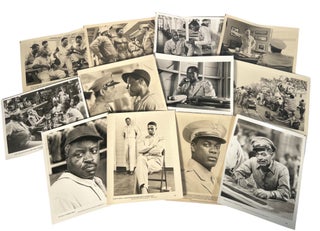
[Prison & Incarceration] Angola Prison Documentary Press Photograph Archive Depicting Inmate Living Conditions and Institutional Control at Louisiana State Penitentiary 1930–1976Former plantation, Angola prison press photographs documenting Louisiana State Penitentiary, the former Angola plantation turned state prison, one of the most historically significant and controversial carceral institutions in the United States. Established on the grounds of a former slave plantation along the Mississippi River, Angola developed into the largest maximum-security prison in the United States and became widely known during the twentieth century for forced agricultural labor, racial segregation, and persistent investigations into prison conditions. Photographs in this archive record inmate life, security practices, and the physical structure of the prison during the mid-twentieth century, including images produced during the period when prison reform and incarceration policy became subjects of national debate.Archive of nine silver gelatin press photographs dating from 1930–1976 documenting the Angola prison complex and its inmates. Most photographs measure approximately 6 x 9 inches to 8 x 10 inches. Images include views of cell interiors with bunk beds and barred doors, prisoners standing or moving through institutional corridors, and groups of inmates assembled outdoors within the prison grounds. One photograph from 1973 shows a Black inmate seated on an upper bunk reading a book inside a crowded cell. Another 1973 image shows an unnamed Black prisoner wearing a bandana while looking outward through barred windows. A 1975 press photograph depicts a guard scanning Black inmate Kenny Johnston with a metal detector following a federal court order requiring the prison to adopt new security procedures. A 1976 image shows Black and white prisoners walking along a railway path within the prison yard dressed in everyday work clothing. The earliest photograph, dated 1930, shows a group of white businessmen standing outside a wooden structure near a large stack of boxes reportedly constructed by prison labor. Several photographs retain original press captions or news articles attached verso, including commentary on prison reform calling for a shift away from large centralized maximum-security institutions toward smaller community-based correctional facilities.
Louisiana State Penitentiary at Angola emerged during the twentieth century as one of the most widely studied American prisons because of its origins as a former plantation and its long association with forced agricultural labor performed by incarcerated men. Convicts were historically housed in buildings originally constructed for enslaved people and compelled to work the surrounding fields. Public scrutiny intensified during the twentieth century as journalists, courts, and reform advocates documented violence, racial inequality, and inadequate living conditions inside the prison. By the 1970s, the period represented most strongly in this archive, the American criminal justice system faced growing calls for reform as federal courts intervened in prison administration and journalists published investigations into inmate treatment and overcrowding. Minor editorial markings and light edge wear consistent with press handling; overall condition very good. A cohesive documentary archive illustrating the lived environment of incarceration at one of the most historically consequential prisons in the United States.
Item #20900
Price: $850.00
See all items in Other (American History), Louisiana, Prison & Prison Reform
See all items in American History & Americana, American History by State, Law, Incarceration & Public Policy, Photography
See all items by Louisiana Prison Penitentiary Archive
See all items in Louisiana
Suggested Prison & Prison ReformBrowse All



Suggested Other (American History)Browse All




Suggested LouisianaBrowse All




Suggested Law, Incarceration & Public PolicyBrowse All