World War II Pacific Theater Black Troops of the 43rd Amphibian Battalion During the Battle of Iwo Jima, 1945
Archive
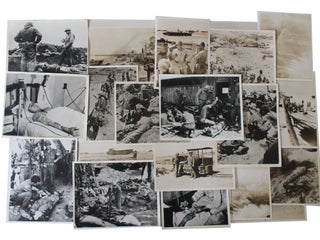
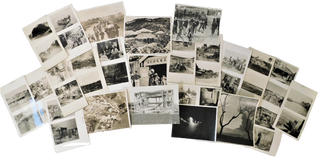
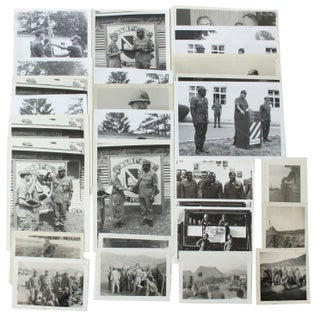
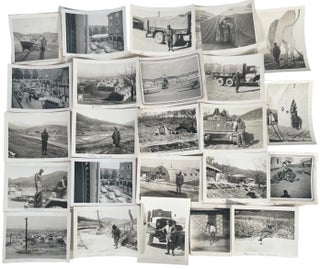
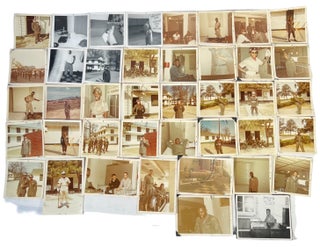
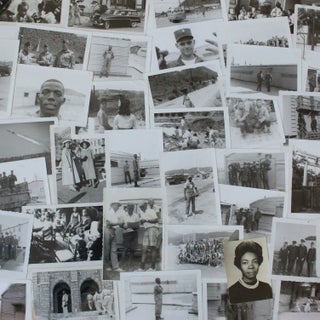
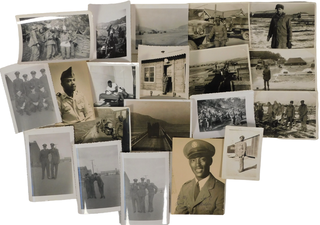
[African American Military][World War II] World War II photographic and document archive relating to service in the 43rd Amphibian Truck Battalion, 1945, a firsthand visual and documentary record of African American participation in the Battle of Iwo Jima. Taken during the climactic Pacific campaign of February–March 1945, the archive documents the labor of a segregated Transportation Corps unit whose amphibious operations were indispensable to sustaining the Marine assault on one of the most heavily fortified positions of the war. The 43rd Amphibian Truck Battalion, one of several all-Black logistics formations deployed to Iwo Jima, operated amphibian vehicles ferrying ammunition, fuel, rations, and personnel from offshore ships to the volcanic beachhead under direct enemy fire. In a racially segregated Army that limited advancement and recognition, these soldiers performed essential and hazardous work central to Allied success. The archive supports research in African American military history, segregated logistics units, Pacific Theater operations, and the social history of wartime service.Archive comprises approximately 40 black and white silver gelatin photographs, most measuring about 3.5 x 5 inches, together with a small group of contemporary documents. Included are a period map of Iwo Jima annotated with major landmarks and military positions, including the battalion’s base area and Japanese defensive zones, as well as a 50 yen Imperial Japanese banknote retained as a battlefield souvenir. The photographs document amphibious trucking operations, beachhead conditions, equipment, terrain, and fellow servicemen within the 43rd Amphibian Truck Battalion. A significant combat image depicts the initial landing phase at Iwo Jima, showing American troops crouched beneath a sand embankment under Japanese fire, smoke rising across the beach, landing craft exposed along the shoreline, and Mount Suribachi visible in the background. Other images portray the operational environment of amphibian vehicles navigating unstable volcanic sand while maintaining supply lines critical to the assault. The documents and photographs appear to have been preserved by Mrs. Bertha Carter of Howell, New Jersey, linking the wartime materials to postwar family stewardship. Also present is a later Department of the Army commendation issued to James E. Carter for service in 1960–1961, extending the archival narrative into a subsequent generation of military and civic service.
The Battle of Iwo Jima represented one of the most intense engagements of the Pacific War, with success dependent upon uninterrupted logistical support amid sustained artillery and small arms fire. African American transportation battalions, though frequently omitted from popular commemorative accounts centered on frontline assault units, were structurally indispensable to the campaign’s outcome. By preserving images of amphibious supply work under combat conditions, this archive complicates simplified narratives of the battle and foregrounds Black military labor within a segregated institution. The juxtaposition of combat photography, annotated cartography, and personal provenance strengthens its interpretive value for examining both battlefield experience and the longer arc of African American service. Light handling wear consistent with age; photographs retain strong clarity and contrast; paper materials stable and legible; overall very good. A cohesive and research substantive archive documenting segregated African American logistics troops at Iwo Jima during a decisive moment in World War II.
Item #19088
Price: $1,250.00
See all items in African American Military Service, World War II, African American Photography, Japan
See all items in African American History, Military & War, Photography, World History by Geography, Autographs, Manuscripts & Letters
See all items by Black Segregated Troops 43rd Amphibian Battalion
See all items in Japan
Suggested African American Military ServiceBrowse All



Suggested World War IIBrowse All



Suggested African American PhotographyBrowse All



Suggested JapanBrowse All