Slavery and Southern Cotton Economy Shipping Documents and Commercial Records of Cotton Trade 1815 to 1850
Archive
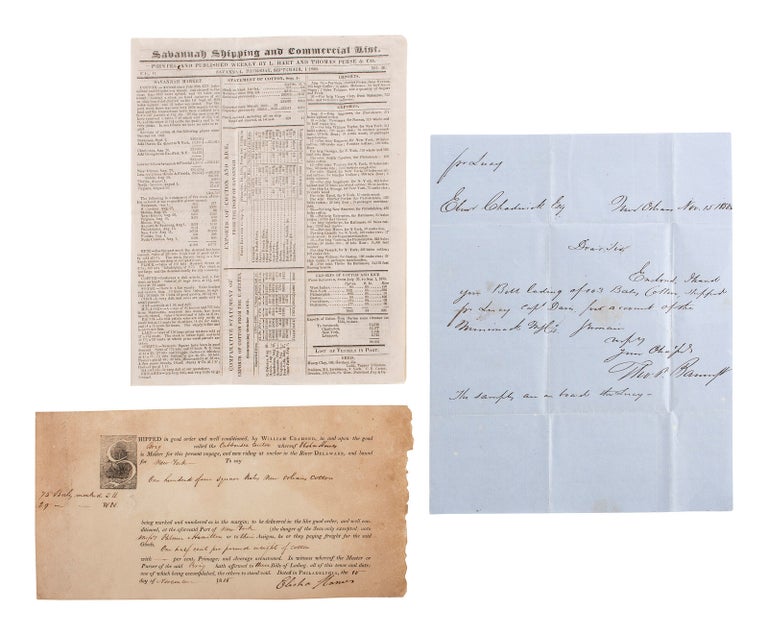
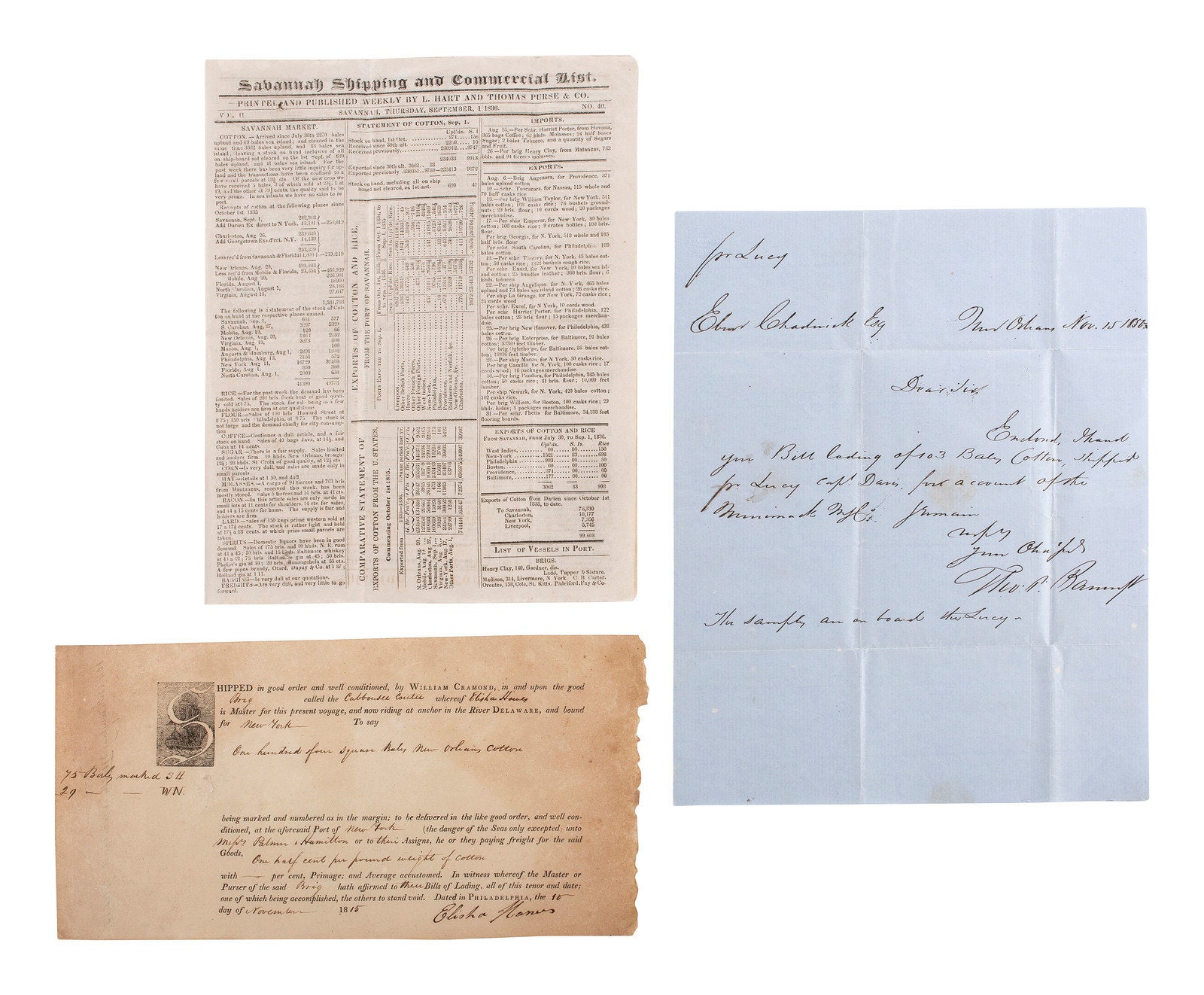
Southern cotton commerce documents spanning 1815 to 1850 recording the shipment, pricing, and commercial circulation of cotton during the formative decades of the antebellum cotton economy. These records document the infrastructure of the American cotton trade connecting southern ports such as Savannah and New Orleans with northern commercial centers including Philadelphia, New York, and Boston. Cotton exports formed the foundation of the southern plantation economy during the early nineteenth century and were closely tied to the expansion of enslaved labor across the American South following the rapid growth of cotton cultivation after the invention of the cotton gin in the late eighteenth century. The documents record specific shipments of cotton bales, maritime transport arrangements, and market information circulated through commercial bulletins used by merchants participating in Atlantic and domestic trade networks.Group of three documents relating to the southern cotton trade between 1815 and 1850. The archive includes one issue of the Savannah Shipping and Commercial List, printed and published weekly by L. Hart and Thomas Purse & Co., Savannah, dated September 1, 1836. The two page publication lists vessels in port, arriving ships, and commodities imported and exported through Savannah, alongside market prices for goods including cotton, chocolate, bread, butter, candles, coffee, flour, hay, molasses, pepper, rice, soap, tobacco, teas, and writing paper. Also included is a shipping document dated November 1815 recording the transport of 104 square bales of New Orleans cotton. The document identifies ship’s master Elisha Howes and notes the cargo traveling from Philadelphia via the Delaware River toward New York. A manuscript note on the verso records the shipment weight of 37,170 pounds and calculates the value of the cotton at one half cent per pound for a total value of $185.85. The shipper, William Cramond, was a Philadelphia merchant involved in Atlantic trade. The archive also contains a letter postmarked New Orleans and dated 1850 concerning the shipment of 103 bales of cotton carried aboard the steamship Lucy, a vessel operating along the Mississippi River before the Civil War. The letter, signed by T. P. Bancroft and addressed to Boston, reports that Captain Davis commanded the vessel and notes that cotton samples were included with the shipment.
These documents illustrate the commercial systems that moved raw cotton from southern production regions into national and international markets during the decades when cotton exports became the dominant force in the American economy. Savannah and New Orleans served as principal ports for cotton export, linking plantation regions of the lower Mississippi Valley and coastal South to financial and manufacturing centers in the North and Europe. Surviving merchant correspondence, shipping papers, and commercial circulars such as these preserve the operational details of the cotton trade, including bale counts, vessel assignments, cargo valuation, and commodity markets. Together the documents provide direct evidence of the commercial networks that supported the expansion of cotton production in the slaveholding South prior to the Civil War. Light wear consistent with age; overall condition very go.
Item #18589
Price: $1,250.00
See all items in Slavery & Abolition, Urban Development & Industrialization, Georgia, Pennsylvania
See all items in African American History, American History & Americana, American History by State, Autographs, Manuscripts & Letters
See all items by Savannah New Orleans
See all items in Georgia; Pennsylvania
Suggested GeorgiaBrowse All




Suggested Slavery & AbolitionBrowse All





Suggested Urban Development & IndustrializationBrowse All





Suggested PennsylvaniaBrowse All