British Naval Culture and Anti-Slavery Discourse in Cruikshank and Barker’s Greenwich Hospital, 1826
First Edition
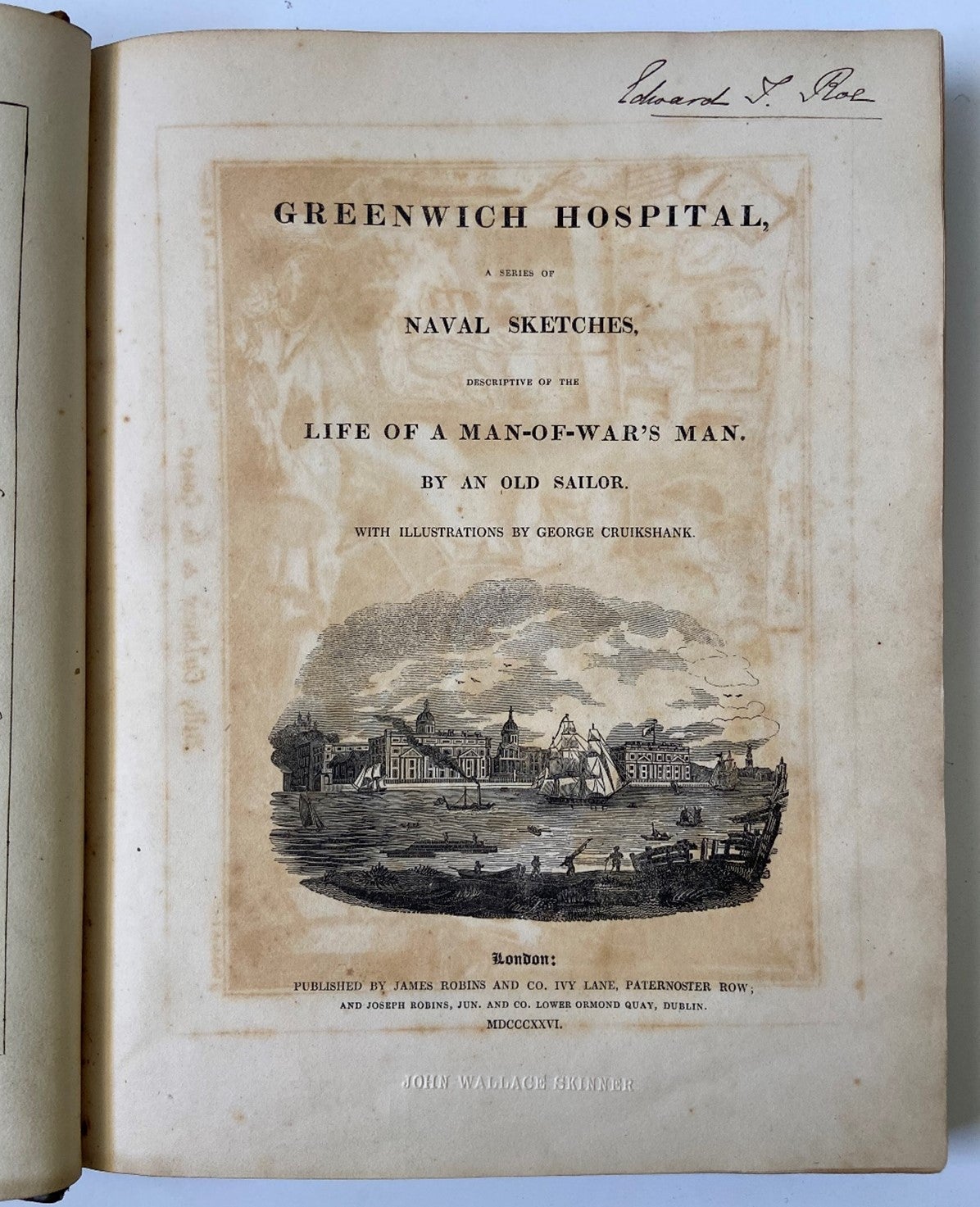
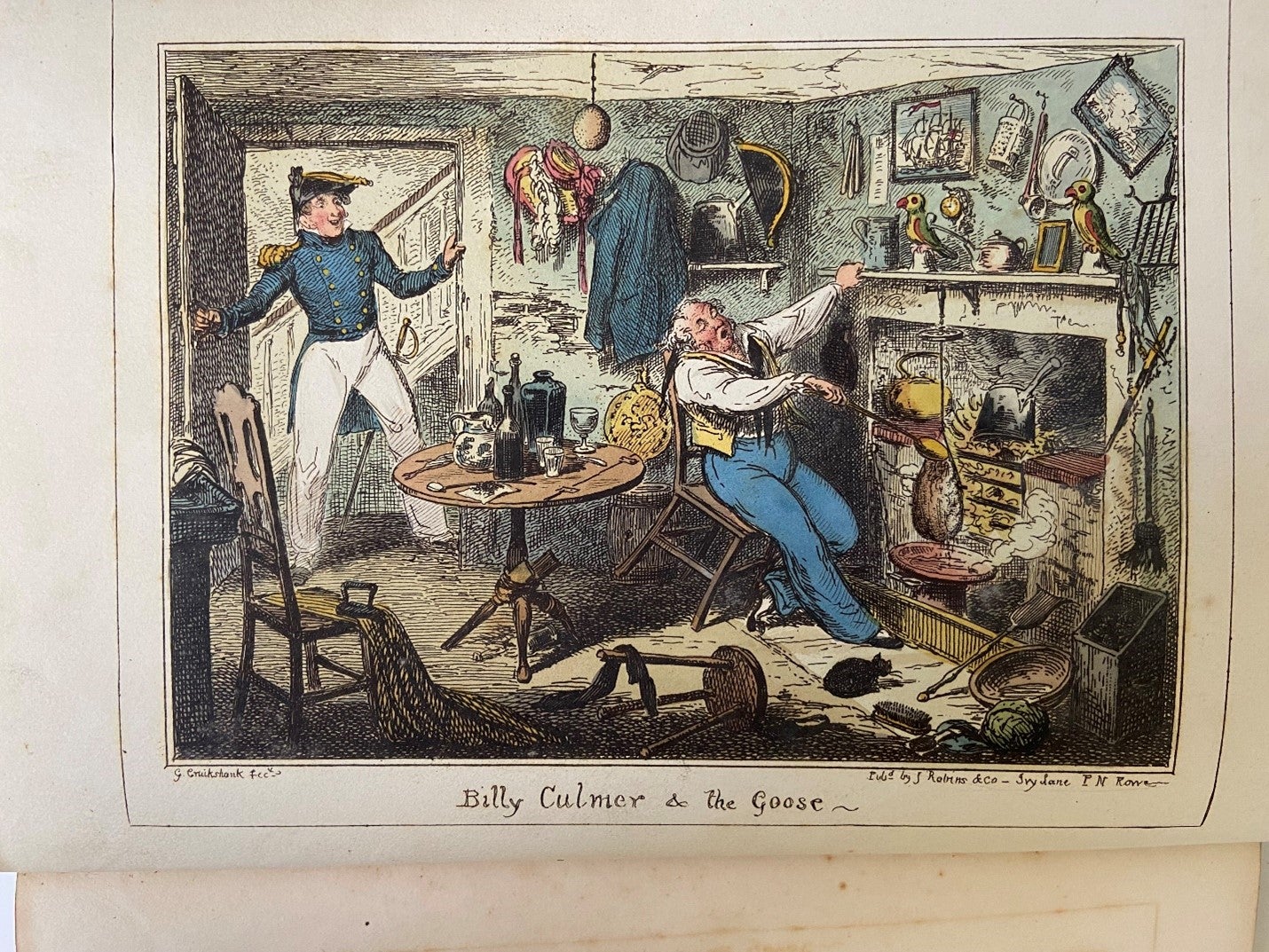
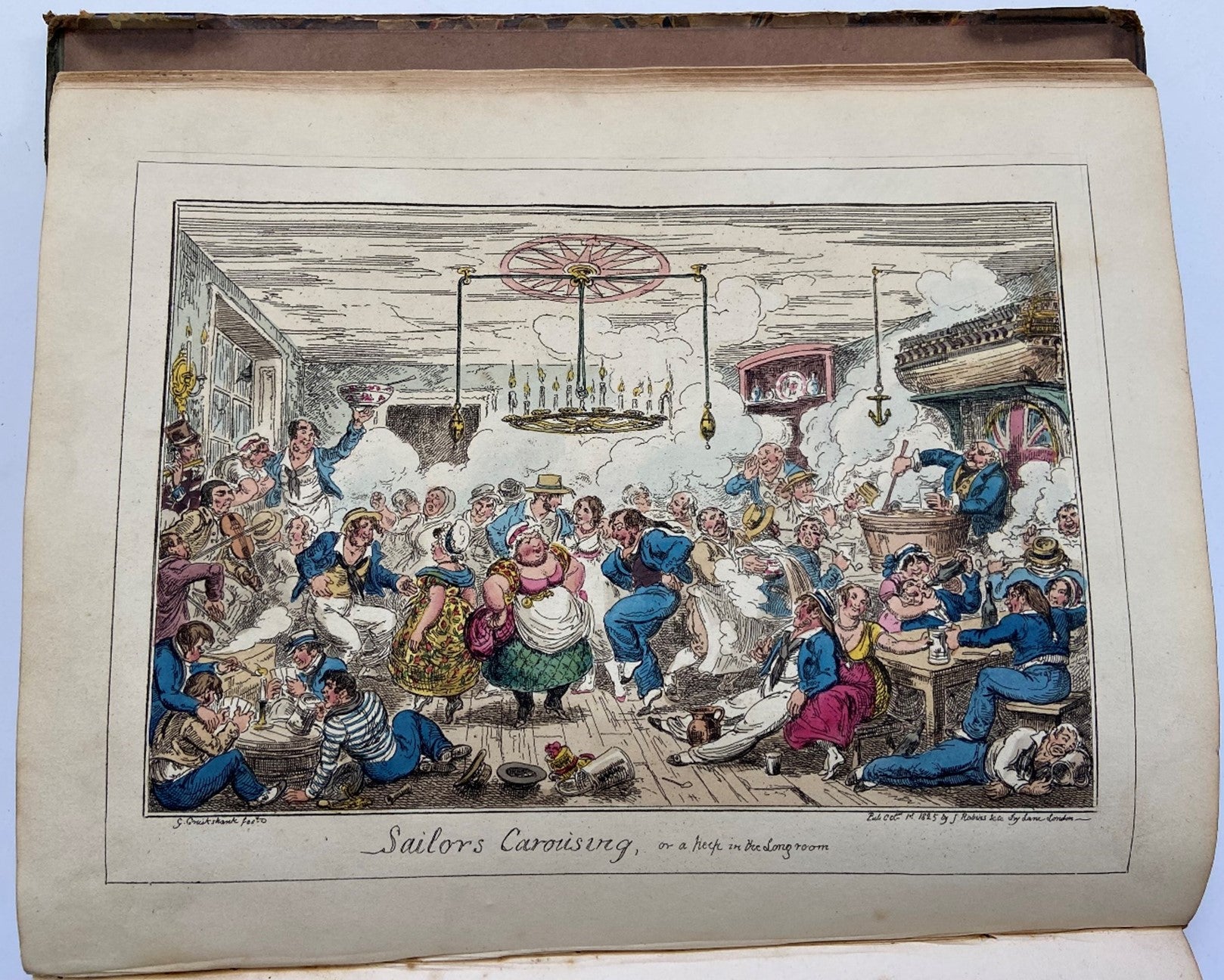
Cruikshank, George; Barker, Matthew Henry. Greenwich Hospital, A Series of Naval Sketches. Descriptive of A Man-of-War’s Man, 1826, combines illustrated naval satire with firsthand narrative material that includes direct testimony of British participation in the Atlantic slave trade. Issued during the period between the 1807 Slave Trade Act and the 1833 Slavery Abolition Act, the work provides evidence of how naval literature circulated both popular entertainment and moral critique within British society. Barker, writing under the name “An Old Sailor,” drew on his experience as a seaman who entered maritime service as a teenager, and his accounts move between humor and confrontation with the realities of imperial maritime labor, warfare, and slavery. One narrative titled “The Slave Ship” describes captives “brought aboard in droves” and “stowed away below… many of them in irons,” documenting the violence of the trade while also framing an explicit moral appeal: “Aren’t they all flesh and blood, sir?” The presence of such passages situates the volume within the broader cultural production that contributed to public awareness and critique of slavery in the decades preceding full abolition across the British Empire.Cruikshank, George; Barker, Matthew Henry. Greenwich Hospital, A Series of Naval Sketches. Descriptive of A Man-of-War’s Man. London: James Robins and Co.; Dublin: Joseph Robins, 1826. First edition. Quarto. Illustrated with 12 hand-colored plates by George Cruikshank, with additional wood-engraved tailpieces. Text authored by Matthew Henry Barker, who published under the pseudonym “An Old Sailor,” and contributed to periodicals including Bentley’s Miscellany under the editorial direction of Charles Dickens. Volume presents a sequence of narrative sketches depicting life aboard naval vessels and on shore, combining comic treatment of sailors’ conduct with episodic accounts grounded in lived maritime experience.
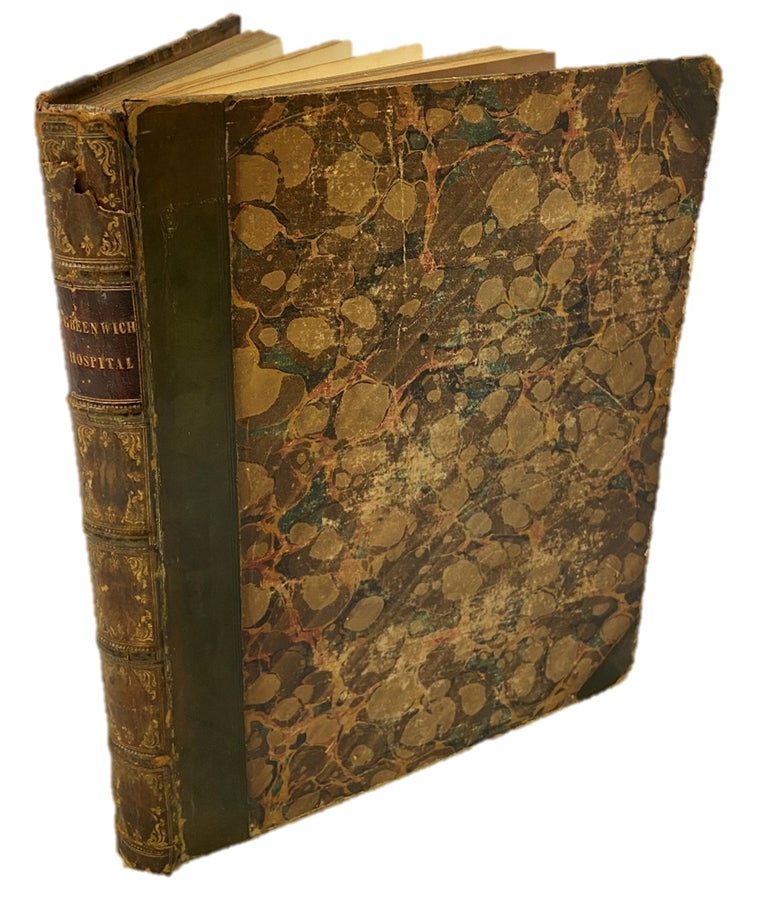
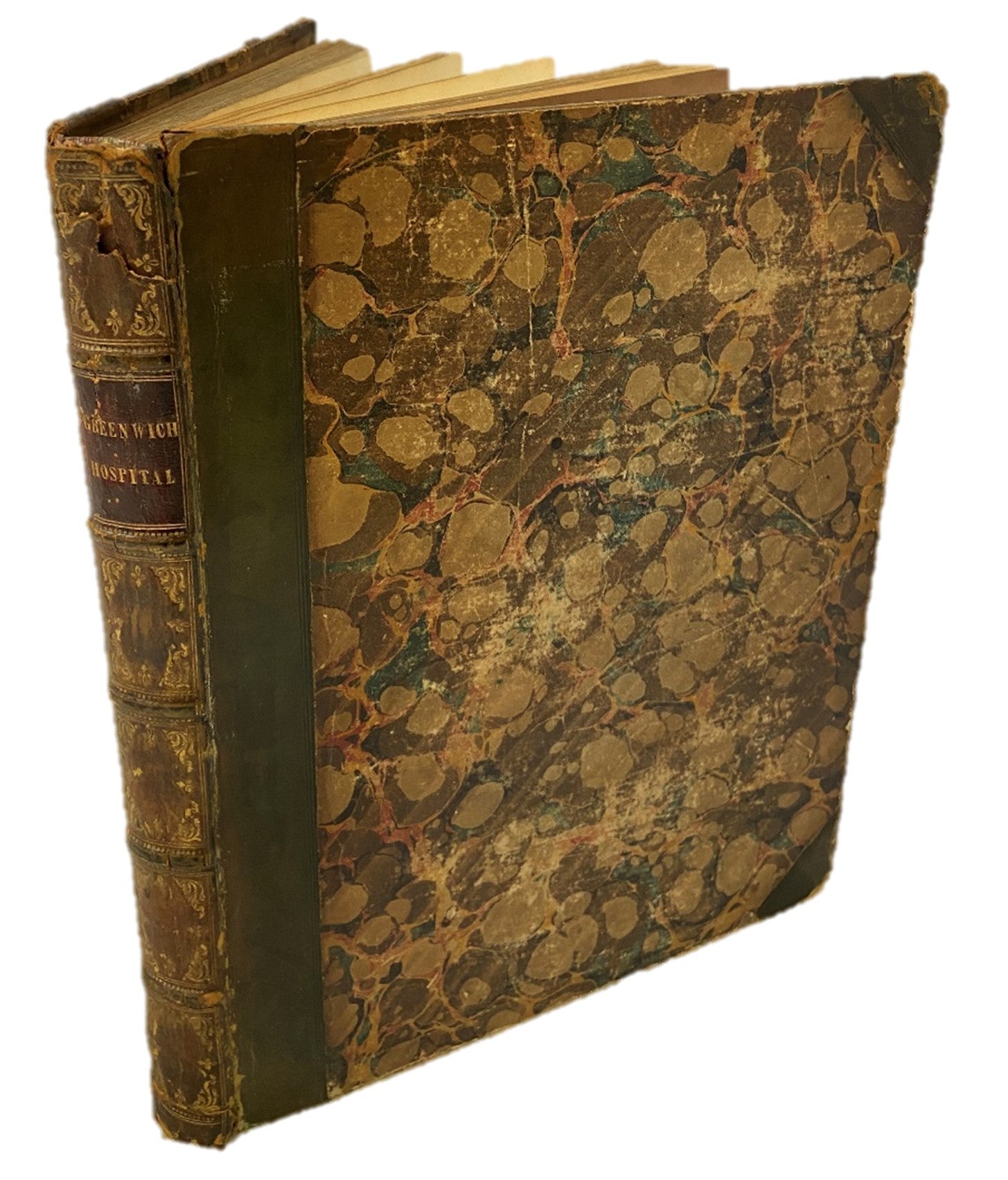
The work emerges from a period of expanding British naval power and intensified public debate over slavery, empire, and moral responsibility within maritime systems. Cruikshank’s illustrations, noted for their animated treatment of sailors both ashore and at sea, operate alongside Barker’s narratives to produce a layered depiction of naval culture that includes discipline, labor, leisure, and violence. The inclusion of a detailed slave ship account within an otherwise humorous collection underscores the permeability between entertainment literature and political discourse in early nineteenth century Britain, where printed narratives helped shape public understanding of imperial practices. Three volumes. Approximately 200 pages total. Illustrated with 12 hand-colored plates and wood-engraved tailpieces. Bound in marbled boards with gilt compartments to spine. Some soiling to pages with occasional offsetting from plates; textblock remains tight. Corners bumped, hinges cracked but holding, boards scuffed, with later brown endpapers. Overall very good.
Item #17910
Price: $780.00
See all items in Slavery & Abolition, Other (Military)
See all items in African American History, Military & War
See all items by George Cruikshanks Navy
Suggested Other (Military)Browse All



Suggested African American HistoryBrowse All