LGBTQ+ History Lesbian Pulp Fiction and Literary Treatments of Same Sex Desire in American Print Culture 1951 to 1965
Collection
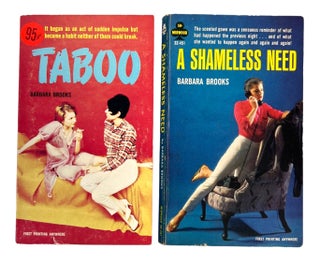
Baker, Dorothy; Wimberly, Gwynne; Kemp, Kimberly; Hytes, Jason; Hitt, Orrie; Smith, William Gardner. Fiction published between 1951 and 1965 documents the treatment of lesbian desire and gender nonconformity within mid twentieth century American literary and mass market publishing, including both pulp narratives and more sustained literary engagement. These works situate same sex relationships within frameworks of psychological conflict, social deviance, and interpersonal power while also providing some of the limited textual spaces in which queer women appeared in print during a period when homosexuality was widely criminalized and medically pathologized. The inclusion of Dorothy Baker’s Trio, alongside pulp and hybrid texts, establishes a continuum between literary and commercial representations of lesbian identity, supporting research into gender norms, censorship, authorship, and the circulation of queer themes across different strata of midcentury publishing.Archive consists of five mass market paperback volumes published between 1951 and 1965 in the United States, each in illustrated wrappers and standard 12mo format. Titles are as follows: [1] Smith, William Gardner. Anger at Innocence. New York: Signet, 1951. A novel centered on a young woman’s emotional and sexual uncertainty, including moments of intense same sex intimacy and gender ambiguity within a broader narrative of alienation. [2] Wimberly, Gwynne. One Touch of Ecstasy. Derby, CT: Monarch, 1960. Promoted with the question “Who would release her frozen passions: A man or a woman,” the narrative frames erotic awakening within competing heterosexual and same sex possibilities. [3] Hitt, Orrie. Sin Doll. New York: Beacon Signal Books, 1963. Includes a subplot involving a dancer drawn into a coercive relationship with another woman, presenting lesbian desire within a context of exploitation and moral decline. [4] Kemp, Kimberly and Hytes, Jason. Immoral / Forbidden. New York: Midwood Books, 1964. Two in one edition; Forbidden follows a woman entering a relationship with her female employer, structured through domestic proximity and escalating intimacy, representative of Midwood’s production of lesbian themed fiction under house pseudonyms. [5] Baker, Dorothy. Trio. New York: Avon Books, 1965. First paperback edition of the 1943 novel; follows a college age protagonist negotiating relationships with both a male suitor and an older woman, offering one of the earlier sustained American literary treatments of lesbian desire written by a woman author.
These works were produced within a cultural environment shaped by legal restrictions on homosexuality, psychiatric classification of same sex desire as disorder, and expanding paperback distribution networks that enabled wide circulation of both sensational and literary texts. Pulp publishers relied on coded language, moral framing, and scenarios involving surveillance, authority, and age asymmetry to structure narratives that could pass obscenity scrutiny while still appealing to reader curiosity. At the same time, novels such as Trio demonstrate the presence of more complex and interiorized depictions of lesbian relationships within mainstream publishing. Light edge wear, rubbing, and occasional spine creasing with age toning to pages; bindings intact; overall very good condition. This grouping provides a concentrated view of how lesbian identity was negotiated across literary and commercial forms in midcentury print culture.
Item #21965
Price: $750.00
See all items in Lesbian Literature & Pulp
See all items in LGBTQ+ History, Archive
See all items by Kimberly Kemp
Suggested LGBTQ+ HistoryBrowse All


Suggested ArchiveBrowse All