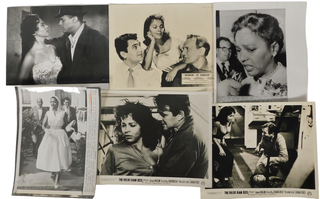
African American Film History and the All Black Cast of Porgy and Bess, 1959
Ephemera and pamphlets
Columbia Pictures Corporation. Porgy and Bess pressbook, 1959, documents the marketing of Samuel Goldwyn’s large-scale screen adaptation of the Gershwin opera through images and biographies of an exceptional Black cast led by Sidney Poitier, Dorothy Dandridge, Sammy Davis Jr., Pearl Bailey, Brock Peters, and Diahann Carroll. Produced near the end of the Hollywood studio era, the film placed Black performers at the center of an expensive roadshow musical while continuing long-running disputes over whether Porgy and Bess, created principally by white authors, dignified or stereotyped African American life. The pressbook supports research into Black film history, studio publicity, musical adaptation, celebrity representation, and the restricted but expanding space available to African American actors in mainstream cinema during the 1950s. The film was adapted from George Gershwin, DuBose Heyward, and Ira Gershwin’s 1935 opera, itself derived from Heyward’s novel and stage play.Columbia Pictures Corporation. Porgy and Bess. United States: Columbia Pictures Corporation, 1959. First edition pressbook. Approximately 10 by 8 inches. The illustrated promotional publication contains color stills from the production, plot information, and biographies of cast and production personnel. Visible scenes include Poitier as Porgy riding in a horse-drawn wagon surrounded by a crowd; Poitier kneeling while singing; Poitier, Dandridge, and Davis performing together; and two images of Bailey as Maria, including a portrait in a floral hat. These images emphasize ensemble performance, music, costume, movement, and the communal setting of Catfish Row. N. Richard Nash’s screenplay replaced much of the opera’s recitative with spoken dialogue, while André Previn supervised and conducted the music and Hermes Pan provided choreography.
The film’s production and afterlife reveal the tensions surrounding Black representation in mid-century Hollywood. Several cast members expressed reservations about the material, and contemporary Black critics questioned its depiction of African American life; at the same time, its leading roles gave Poitier, Dandridge, Davis, Bailey, Peters, and Carroll unusual visibility within a major studio production. The film later became largely inaccessible because of complicated rights restrictions, but it survives: the Library of Congress records a 35mm archival positive as well as preservation, master, and viewing copies. Its inclusion in the National Film Registry recognized both its studio craftsmanship and its importance to debates over race, authorship, and representation. Clean, with colorful images and text remaining clear; no significant defects reported. Very good. A substantial piece of studio publicity preserving how Hollywood marketed one of the most ambitious and controversial Black-cast musicals of the postwar period.
Item #20098
Price: $285.00
See all items in African American Film, Art & Entertainment, African American Film, Art & Entertainment, Film & Television, Film & Television
See all items in African American History, Film & Entertainment, Mass Media & Popular Culture
See all items by Sidney Poitier Film
Suggested African American HistoryBrowse All