
History of Reproductive Science Gregory Pincus Embryology and Fertilization Research Preceding the Development of the Birth Control Pill 1926–1939
Archive
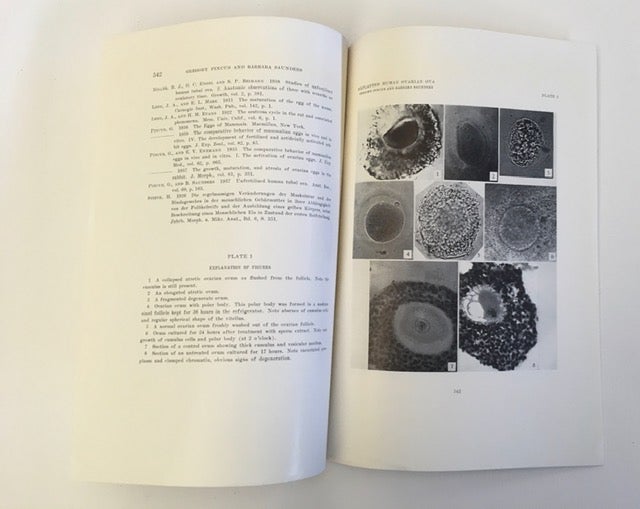
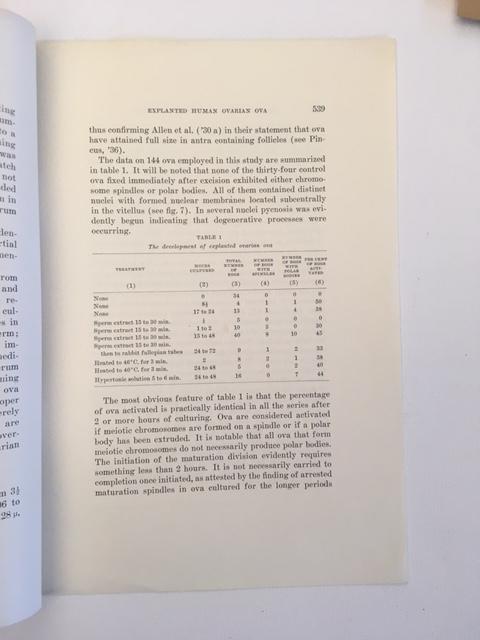
Pincus, Gregory. Scientific offprints documenting early experimental work in mammalian reproduction, embryology, and fertilization between 1926 and 1939. These publications record the formative research career of Gregory Pincus, the biologist whose later work in hormonal regulation of ovulation contributed directly to the development of the first oral contraceptive approved by the U.S. Food and Drug Administration in 1960. The papers trace Pincus’s transition from physiological and genetic studies of animal behavior to pioneering investigations into mammalian fertilization and embryonic development, including experiments demonstrating the possibility of in vitro fertilization in rabbits. Together the publications document the scientific groundwork of modern reproductive endocrinology during the interwar period.Pincus, Gregory; Crozier, W. J.; Castle, William Ernest; Werthessen, Nicholas T.; Saunders, Barbara. Archive of ten scientific offprints published between 1926 and 1939 in journals including The Journal of General Physiology, Journal of Experimental Zoology, The American Journal of Physiology, Proceedings of the National Academy of Sciences, and The Anatomical Record. Early papers coauthored with W. J. Crozier examine behavioral physiology in rodents, including “Stereotropism in Rats and Mice” (1926), “The Geotropic Conduct of Young Rats” (1926), and a multi part series titled “Analysis of the Geotropic Orientation of Young Rats” published between 1931 and 1933. A 1928 article coauthored with geneticist William Ernest Castle titled “Hooded Rats and Selection: A Study of the Limitations of the Pure Line Theory” addresses questions of heredity and experimental breeding. Later publications mark Pincus’s shift toward embryological experimentation, including “The Maintenance of Embryo Life in Ovariectomized Rabbits” (1938) and several papers from 1939 examining fertilized and artificially activated rabbit eggs as well as the maturation of human ovarian ova. Several copies bear ownership signatures or institutional stamps associated with geneticists including Sewell Wright and Robert H. Foote, with occasional highlighting and marginal annotation.
During the 1930s Pincus became a central figure in experimental embryology through studies demonstrating that mammalian eggs could be fertilized and experimentally activated outside the body, work that generated significant public controversy when first reported. These experiments established fundamental biological principles about ovulation, fertilization, and embryonic viability that later informed hormonal approaches to fertility regulation. In the early 1950s Pincus collaborated with reproductive health advocate Margaret Sanger and researchers in reproductive endocrinology to apply hormonal control to ovulation, leading to the development of the first oral contraceptive. The offprints assembled here therefore document the intellectual and laboratory origins of one of the most consequential biomedical developments of the twentieth century. Ten offprints totaling multiple paginated articles from scientific journals of the period. Light age toning, occasional fold lines, minor chipping, and small edge tears visible; several copies show annotations from earlier researchers. Overall condition very good.
Item #15237
Price: $1,250.00
See all items in Medicine & Public Health, Contraception & Reproductive Rights, Women’s Liberation & Feminism
See all items in Science, Medicine & Technology, Women’s History & Feminism, Archive
See all items by Gregory Pincus
Suggested ArchiveBrowse All